
Operational Bottlenecks and Throughput Challenges in A3 Edible Food Printing for Scalable Businesses
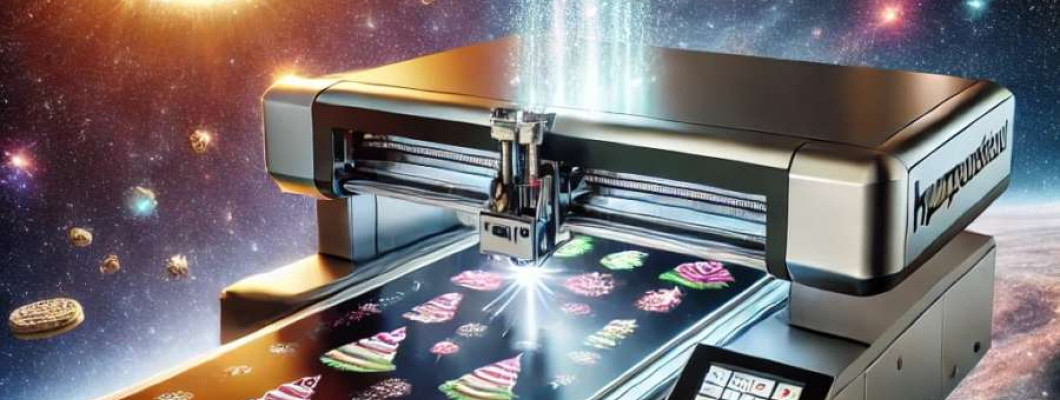
The Industrial Reality of Integrating A3 Edible Food Printers in High-Volume Food Production
Consider a mid-sized bakery aiming to scale from artisanal output to a high-throughput operation producing printed cakes and cookies for regional chains. The integration of an A3 edible food printer designed for cakes and cookies introduces a series of operational challenges often overlooked during procurement. While the concept of edible printing appears straightforward, industrializing the process demands a granular understanding of mechanical throughput, print head durability, substrate preparation, and labor synchronization.
One central technical challenge is the printer's rate of production versus demand cycles. The A3 form factor inherently caps the maximum printable area per cycle, so businesses must manage batch sizes, drying times, and printhead reliability to prevent bottlenecks. Mechanical wear on precise mechanical parts due to increased print runs impacts maintenance frequency and downtime, directly affecting output schedules.
Moreover, edible inks introduce their own operational complexity. Ink viscosity changes with temperature fluctuation in a commercial kitchen, potentially clogging print nozzles or impacting droplet consistency. This calls for strict environmental controls coupled with rigorous calibration to maintain micron-level precision necessary for high-quality color fidelity on food substrates.
Workforce adaptation is a non-trivial factor. Operators require cross-disciplinary skills spanning food safety compliance, printer maintenance, and digital workflow management. The learning curve affects uptime during scale-up phases.
Technical Deep Dive Into Throughput Limitations and Mechanical Stress Points
Printhead Performance and Failure Modes
The most critical component limiting continuous operation is the printhead. Equipped with piezoelectric nozzles capable of 5 pl droplet sizes, the printhead's lifetime correlates inversely with operating hours and ink chemistry aggressiveness. Assuming an average cycle time for an A3 print of 120 seconds and a rated printhead fault tolerance of 10,000 hours, continuous operation without scheduled maintenance yields a maximum throughput of approximately 1800 prints per month before degradation symptoms appear.
Substrate Feed Mechanisms in an Edible Environment
Handling cakes and cookies requires precise mechanical gripping without damaging delicate surfaces. The feed mechanism uses vacuum-assisted trays with a tolerance of ±0.5 mm positioning accuracy. Deviations cause print misalignments exceeding the 300 dpi resolution threshold, degrading visual output. Frequent mechanical recalibration is necessary to maintain print quality over extended runs.
Ink Rheology and Environmental Controls
Edible inks are shear-thinning fluids tailored for food safety standards, with viscosity ranging between 20-40 mPa·s at room temperature. However, kitchen ambient temperatures can range from 15°C to 30°C, causing viscosity fluctuations up to 25%, affecting droplet formation consistency and potentially clogging nozzles. Incorporation of thermal regulation systems maintaining ±1°C stability in ink reservoirs is required to ensure consistent deposition.
Energy Consumption and Thermal Management
The printer operates at an average power draw of 150 Watts during printing. However, thermal buildup around printheads can increase ambient temperature internally up to 45°C, risking accelerated mechanical wear and ink degradation. Active heat dissipation via integrated micro-fans consuming an additional 30 Watts is mandatory to maintain operational thermal equilibrium.
Maintenance Cycles and Effect on Availability
Routine maintenance includes printhead cleaning, nozzle diagnostics, and mechanical recalibrations occurring approximately every 40 operational hours, requiring 20 minutes of downtime. Factoring these into a 24/7 operation reduces net operational availability to approximately 93%. Predictive maintenance algorithms can optimize scheduling but require integration with printer software.
| Parameter | Batch Feeding Mechanism | Continuous Belt Feeding |
|---|---|---|
| Substrate Handling Precision | ±0.5 mm positioning | ±1.0 mm positioning |
| Maximum Throughput (Prints/hr) | 30 prints/hr | 45 prints/hr |
| Maintenance Downtime per 40 hrs | 20 min | 25 min |
| Risk of Print Misalignment | Low | Moderate |
| Integration Complexity | Medium | High |
Scenario Analysis Across Business Use Cases
Mid-Size Bakery Expanding Regional Distribution
For this business, throughput and uptime translate into meeting fixed delivery quotas. Batch feeding mechanisms reduce complexity in substrate preparation but limit throughput. Implementing environmental ink controls and scheduled maintenance reduces risk of print defects, directly impacting waste and reprint costs.
Custom Cake Shop Focused on High-Precision Visuals
Here, micron-level color precision and substrate versatility dominate priorities over sheer throughput. The A3 edible food printer's capability to produce 300 dpi with 5 pl droplets supports intricate designs on diverse cake surfaces. However, slower print speeds and frequent breaks to recalibrate are acceptable trade-offs.
Industrial Scale Cookie Manufacturer Automating Packaging Print
For automated production lines, continuous belt feeding adaptations might be necessary to meet output requirements. This imposes challenges on print alignment and increases mechanical complexity. Integration of real-time monitoring and predictive maintenance becomes vital to minimizing downtime.
Expert FAQ Addressing Advanced Technical Concerns
How does ink viscosity variation impact droplet placement accuracy?
Variations in viscosity alter the fluid dynamics inside the printhead nozzles, potentially causing inconsistent droplet ejection velocities. This leads to positional shift on substrates, reducing effective DPI and causing color bleed, especially in high-detail prints.
What are the primary failure modes for the printhead under continuous operation?
The leading failure modes include nozzle clogging due to residue buildup, piezoelectric element fatigue reducing droplet consistency, and micro-cracks in the nozzle plate from thermal cycling.
Can environmental humidity affect edible print quality?
Yes, high humidity increases substrate moisture content, altering ink absorption and drying times, which can cause smearing or irregular color saturation. Maintaining relative humidity below 60% is recommended.
What preventive maintenance measures extend printhead life?
Periodic nozzle purging with cleaning solvents compatible with edible inks, thermal stabilization of ink temperature, and scheduled recalibration of droplet volume optimize printhead longevity.
How does integrating the printer into existing production workflows impact labor?
The printer requires operators to manage digital files, perform environmental monitoring, and carry out mechanical maintenance. This multidisciplinary role necessitates staff training and may require workflow redesign to avoid production bottlenecks.
Strategic Verdict and Recommendation
Industrial-scale edible printing for cakes and cookies remains a nuanced intersection of mechanical precision, chemical stability, and operational discipline. The A3 Edible Food Printer For Printing Cakes Cookies stands out as a technically rigorous solution that balances precision with manageable throughput for scalable business applications. Although throughput limits and maintenance cycles impose operational constraints, these are well within the scope of industrial process engineering to optimize.
The printer’s hardware architecture, focusing on durable printheads, micron-level substrate alignment, and environmental controls for ink rheology, makes it a definitive choice for businesses targeting reliable, high-quality edible printing. For scalable business owners intent on minimizing labor bottlenecks while maintaining print fidelity, this product justifies capital investment due to its design maturity and comprehensive industrial readiness.