
Operational Costs and Maintenance Realities of Roll Laminators in Industrial Settings
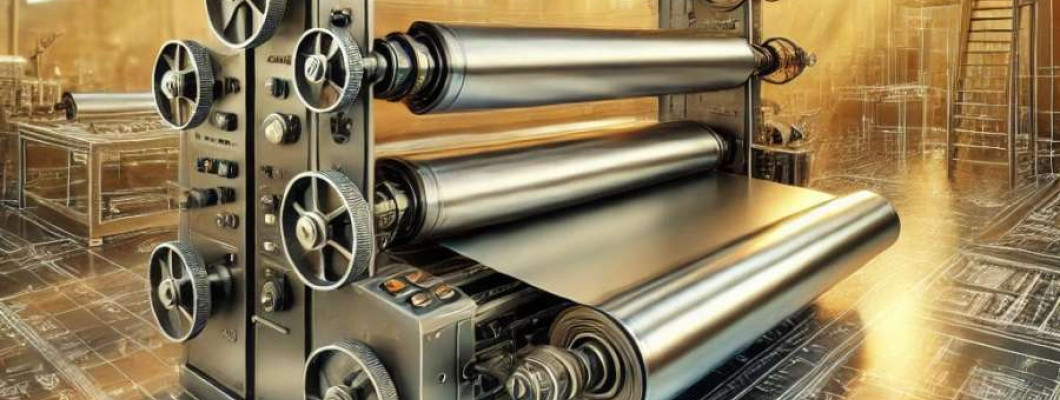
The Industrial Reality of Roll Laminators in High-Volume Environments
In industrial production lines, the application of single-side lamination is a critical finishing process that ensures product durability and visual appeal. Roll laminators are a staple equipment class in factories producing signage, printed packaging, and large-format printed materials. However, despite their apparent simplicity, these machines reveal complex operational and maintenance challenges when integrated into continuous workflow systems.
Consider a mid-sized manufacturing facility processing over 1,000 laminated units daily. The single-side roll laminator must consistently handle a range of substrates and thicknesses, maintaining high throughput without compromising lamination integrity. Mechanical wear, lamination temperature control, and roller tension calibration become pivotal factors influencing quality and uptime. Neglecting these elements leads to output inconsistencies, increased scrap rates, and costly downtime.
Furthermore, asset depreciation and maintenance cycles impact the total cost of ownership significantly. The absence of preventative maintenance or poor environmental control—such as dust infiltration and humidity variance—accentuates component degradation, shortening the equipment lifecycle. Thus, technical managers must adopt rigorous monitoring protocols and data-driven maintenance scheduling to optimize operational returns.
Technical Deep-Dive into Roll Laminator Core Systems and Failure Modes
Roller Mechanics and Pressure Distribution Analysis
Roll laminators rely on precise roller pressure to bond films onto substrates without air bubbles or wrinkles. The pressure (P) between rollers is a function of applied force (F) over the roller contact area (A), given by P = F / A. For example, a 500N force over a 50 sq mm contact area yields 10 MPa pressure. Excessive pressure can deform delicate substrates; insufficient pressure results in weak adhesion.
Wear on roller bearings affects the uniformity of pressure application. Repeated cycling causes micro-deformations, altering the gap and introducing quality variances over time. Using high-grade bearings with sealed lubrication extends service life, which can be mathematically modeled by bearing life L10 = (C/P)^3, where C is dynamic load rating and P is equivalent dynamic bearing load.
Thermal Regulation and Film Adhesion Chemistry
Temperature control is critical, with optimal lamination temperatures typically ranging from 80 to 120 degrees Celsius, adapted to film types. Thermal sensors integrated into the heater rollers provide real-time feedback loops. Fluctuations greater than ±2 °C lead to non-uniform adhesion and delamination risks.
Films have activation thresholds related to adhesive chemistry. For instance, solvent-based adhesives require consistent heat to cure properly. Temperature cycling accelerates adhesive degradation, necessitating empirical monitoring of roller surface temperature profiles using infrared thermography to detect hotspots.
Substrate Thickness and Speed Compatibility
Substrate thickness (0.1 – 1.5 mm) impacts roller gap settings and feed speed. The feed speed (v) interacts with dwell time (t) under rollers, t = roller length / v. Thin substrates moving too fast experience insufficient bonding time; thick media require slower speeds to ensure full adhesion. Implementing variable frequency drives (VFDs) enables precise speed modulation based on substrate metrics.
Comparative Analysis of Single Roller vs. Dual Roller Systems
| Specification | Single Roller System | Dual Roller System |
|---|---|---|
| Pressure Uniformity | Lower, depends on counter-pressure | Higher, balanced from both sides |
| Maintenance Complexity | Simpler, fewer components | Higher, more bearings and alignment |
| Throughput Potential | Moderate | Higher, due to better control |
| Cost | Lower CAPEX | Higher initial investment |
| Risk of Substrate Damage | Higher if misadjusted | Lower, more even pressure |
Maintenance Scheduling and Lifecycle Cost Modeling
To optimize the total cost of ownership (TCO), proactive maintenance is essential. Mean time between failures (MTBF) for critical parts such as rollers and heating elements can be statistically analyzed via Weibull distribution. Predictive analytics using vibration monitoring and thermal imaging reduces unscheduled downtime.
Depreciation schedules follow straight-line or accelerated models depending on usage intensity. For instance, a laminator with a 5-year life and initial cost of $25,000 depreciates at $5,000 annually. Factoring in annual maintenance costs around $1,200 and estimated repair costs of $800, the total annual operational cost approaches $7,000. Proper maintenance can extend service life by 20%-30%, significantly improving asset utilization.
Scenario Analysis of Roll Laminator Application in Different Business Contexts
High-Volume Packaging Manufacturer
In this scenario, throughput and reliability are paramount. The facility runs the laminator 24/7 with minimal downtime windows. The machine's ability to maintain consistent pressure and speed modulation ensures minimal scrap rates. Maintenance scheduling is aligned with production shifts to avoid conflicts, using predictive sensors to flag part wear.
Custom Print Shop with Diverse Substrate Needs
Here, versatility dominates requirements. The laminator must accommodate substrates from thin films to rigid boards with rapid setup changes. Precision in roller gap adjustment and thermal profiles ensures quality across heterogeneous runs. The shop benefits from modular controls enabling quick adaptation to new materials without compromising throughput.
Educational Institution Technical Lab
This environment prioritizes operator safety and ease of use. The laminator’s safety interlocks and clear feedback systems reduce human error. Simpler maintenance protocols and lower operational complexity suit limited technical support staff. While throughput demands are lower, reliability supports project deadlines effectively.
Expert FAQ on Roll Laminator Single Side Laminating Machine
How does roller surface material influence lamination quality and maintenance intervals?
Roller coatings such as silicone or PTFE reduce film sticking and abrasion, extending intervals between cleaning and reducing substrate damage. Steel rollers require frequent polishing but provide higher pressure tolerance.
What sensor technologies enable precise temperature regulation in industrial laminators?
PT100 RTDs and thermocouples are standard, integrated with PID controllers for closed-loop feedback maintaining ±1°C accuracy, critical for adhesive activation.
How can vibration analysis anticipate mechanical failures in the laminator?
Accelerometers mounted on rollers detect bearing wear and misalignment via frequency domain analysis, enabling early intervention before catastrophic failure.
Which film thickness ranges are optimal for single side roll laminators versus alternative lamination methods?
Single-side roll laminators perform best with films 20–250 microns thick; thicker films may require cold press or pouch lamination for uniform adhesion.
How do ambient environmental factors affect lamination consistency?
Humidity alters adhesive cure dynamics and substrate expansion, while dust ingress can cause surface defects, necessitating controlled cleanroom conditions for critical output.
Strategic Verdict and Recommendation for Industrial Adoption
Given the multifaceted operational demands and maintenance nuances, the Roll Laminator Single Side Laminating Machine stands as a robust solution tailored for industrial environments where precision, throughput, and asset longevity are non-negotiable. Its engineered design balancing mechanical simplicity with advanced thermal controls and pressure management delivers high-quality lamination with minimized downtime risks.
Facilities that invest in well-planned maintenance regimes and environment control will find this laminator to be cost-effective over its lifecycle, with reduced unexpected failures. Its adaptability across substrate types and thicknesses enables scaling from batch to mass production efficiently.
Industrial stakeholders seeking to optimize lamination workflows can confidently integrate this machine with existing systems, assured of technical reliability and manageable operational expenditures. From a total cost of ownership perspective, it outperforms lower-tier alternatives by combining build quality with measurable performance stability.