
Operational Realities of A2+ UV Printer Embossed Glossy Printing for Scalable Businesses
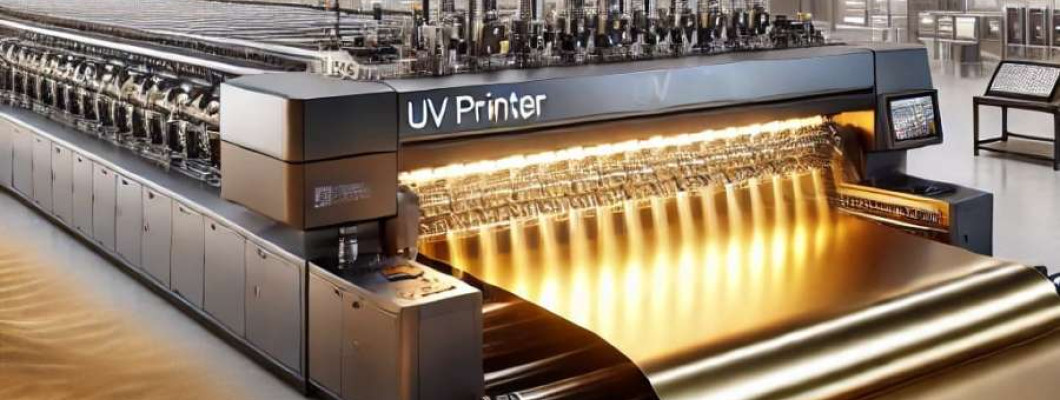
The Industrial Reality of Implementing A2+ Size UV Printers in High-Volume Production
In high-throughput industrial environments, integrating an A2+ size UV printer capable of embossed glossy printing introduces specific operational challenges. Scale-oriented business owners frequently encounter bottlenecks associated with balancing print speed, substrate handling, and post-processing time. For such enterprises, the latent complexities in workflow automation and labor allocation require detailed scrutiny. For example, the embossed glossy printing process, involving multi-layer curing under UV sources, demands precise synchronization with transport mechanisms to avoid misregistration and drying defects that could reduce yield and increase scrap rates drastically.
Additionally, the dimensional footprint and environmental controls must accommodate the printer's operational thermal output and volatile organic compound (VOC) emissions to comply with industrial safety standards. Given these constraints, a scalable business must evaluate the printer's throughput metrics against labor intensiveness and automation compatibility to optimize operating expenditure without compromising quality or speed. The dynamic interplay between machine cycle times, ink curing physics, and substrate variability sets the stage for critical deployment decisions.
Technical Deep-Dive into Hardware Performance and Operational Parameters
Printhead Technology and Embossing Mechanism
The A2+ UV printer utilizes piezoelectric drop-on-demand printheads operated at a nominal firing frequency of approximately 20 kHz, ejecting ink droplets between 6 to 12 picoliters (pl) for fine resolution. Embossing is achieved via an additional precision-controlled UV LED curing module synchronized with a microrelief texturing system applying a raised gloss finish. The embossed layers require controlled ink viscosity and precise UV dosing to ensure adhesion without overcuring, which can degrade surface gloss and tactile quality.
Throughput Analysis and Operational Limits
Operating at maximum throughput, the printer delivers a rated speed of 8 m2/hour at 600 x 600 dpi resolution with a typical layer thickness of 40 microns for embossed glossy effects. However, practical limits arise from substrate feeding speed and drying latency. Assuming a substrate width of 600 mm and a print head array spanning the full width, continuous printing necessitates substrate tension control within ±0.2 mm to prevent registration drift, directly impacting defect rates. Thermal load from UV LEDs peaks at 120 Watts per 300 mm of cured length, necessitating active cooling to maintain printhead stability and component longevity.
Substrate Compatibility and Maintenance Cycles
The printer supports substrates ranging from 0.1 to 10 mm thickness, including flexible films, rigid boards, and coated papers. Embossed glossy printing on rigid substrates poses higher mechanical stress on transport rollers, accelerating wear and mandating maintenance every 1,500 operational hours versus 2,500 hours for flexible substrates. Ink chemistry tailored for UV curing includes polymerization inhibitors to reduce nozzle clogging but requires periodic printhead purging cycles every 12 operational hours to maintain jetting consistency.
Comparative Table of Component Failure Modes and Mitigation
| Component | Failure Mode | Stress Factor | Mitigation Strategy | MTBF Estimate (Hours) |
|---|---|---|---|---|
| Piezoelectric Printheads | Nozzle clogging, piezo fatigue | Ink viscosity variation, thermal cycles | Scheduled purging, thermal regulation | 5,000 |
| UV LED Modules | Output power decay, overheating | Continuous high-power operation | Active cooling, power cycling | 10,000 |
| Transport Rollers | Wear, substrate slippage | Mechanical load from rigid substrates | Regular replacement, tension control | 2,000–2,500 |
| Embossing Texturing System | Misalignment, mechanical jamming | Precision motor wear, particulate contamination | Periodic calibration, filtration | 3,500 |
Physical and Mathematical Model of Ink Drop Placement with Embossing Layer
The critical parameter is the precise drop placement accuracy, constrained by mechanical precision σmech and ink spread radius rink. The effective print resolution Reff can be approximated as:
Reff = 1 / (σmech + rink)
Assuming σmech = 15 µm and rink = 20 µm, this yields an effective 21.3 dots/mm or approximately 540 dpi, confirming alignment with stated hardware specifications. The embossed layer thickness (temboss) impacts curing energy (Euv) which follows Beer-Lambert law attenuation:
Euv(t) = E0 * e-αt
where E0 is incident UV intensity and α is the absorption coefficient of ink. Optimizing temboss ensures full curing without compromising gloss or adhesion.
Scenario Analysis for Scalable Businesses
Case 1 Industrial Packaging Labels
High-volume label printers benefit from the embossed glossy finish adding premium tactile quality. However, the substrate variability in thickness (0.2–0.5 mm) requires frequent recalibration and slows throughput to 6 m2/hour. Balancing print speed with labor costs for manual substrate loading impacts OPEX significantly. Automation of feeder stations and inline UV curing stations can elevate productivity close to rated figures.
Case 2 Large-Format Promotional Prints
Retail chains demand durable and visually striking large-format prints on rigid acrylic sheets (~5 mm). This increases mechanical wear but positions the A2+ UV printer as a cost-effective nearline production tool. Optimizing maintenance intervals and using dedicated print modes for thick substrates allows uptime above 85%, critical for meeting rush order deadlines.
Case 3 Prototype Industrial Product Markings
Small-batch prototypes require the printer to deliver high-fidelity embossed gloss effects on diverse materials with minimal downtime. The flexibility of supported substrates and rapid layer curing facilitates iteration cycles. Despite a slightly higher cost per print, reduced setup times and enhanced tactile branding justify the operational expense.
Expert FAQ on Operational and Technical Intricacies
1. How can substrate-induced mechanical deformation affect printhead nozzle reliability?
Mechanical deformation leads to misalignment causing off-target droplet placement, which stresses piezo elements by forcing jetting compensation patterns and can accelerate nozzle clogging due to variable ink flow dynamics.
2. What are the implications of UV LED spectral shifts on ink polymerization kinetics?
Spectral shifts reduce overlap with photoinitiator absorption peaks, impacting cure speed and layer hardness. Maintaining LED operating temperature within ±2°C stabilizes emission spectra to ensure consistent polymerization.
3. How do embossed layer thickness variations influence thermal stress on substrates?
Thicker embossed layers require higher UV doses, generating localized thermal peaks and causing substrate warping if thermal expansion coefficients mismatch. Controlled layer deposition and incremental curing reduce stress accumulation.
4. What maintenance protocols extend printhead longevity in abrasive ink environments?
Implementing frequent purging cycles with solvent-based cleaners and monitoring ink particle sizes below 2 µm prevent nozzle wear and clogging. Real-time pressure sensors detect jetting anomalies allowing preemptive interventions.
5. How does ambient humidity impact UV curing efficacy and embossed finish quality?
High humidity reduces UV transmission and can cause ink surface tackiness leading to dust adhesion and reduced gloss. Maintaining ambient RH between 40-50% ensures optimal curing and finish clarity.
Strategic Verdict and Recommendation for Scalable Enterprises
The A2+ Size UV Printer Embossed Glossy Printing system delivers a robust combination of fine-resolution embossed gloss capabilities and industrial throughput suited for scalable business operations. Its engineering balances mechanical precision, UV curing physics, and substrate versatility to meet stringent production requirements while maintaining uptime and manageable maintenance cycles. The printer's modular design facilitates integration into partially automated lines, addressing common labor bottlenecks.
Given the operational realities analyzed, this hardware stands as a definitive solution for medium to large-scale print production environments demanding both tactile quality and throughput efficiency. For further engagement and procurement, consider consulting the full product specifications at the official A2+ Size UV Printer Embossed Glossy Printing site.