
Operational Realities of the A3 Spot UV Printing Machine and Its Lifecycle Maintenance Costs for Scalable Business Owners
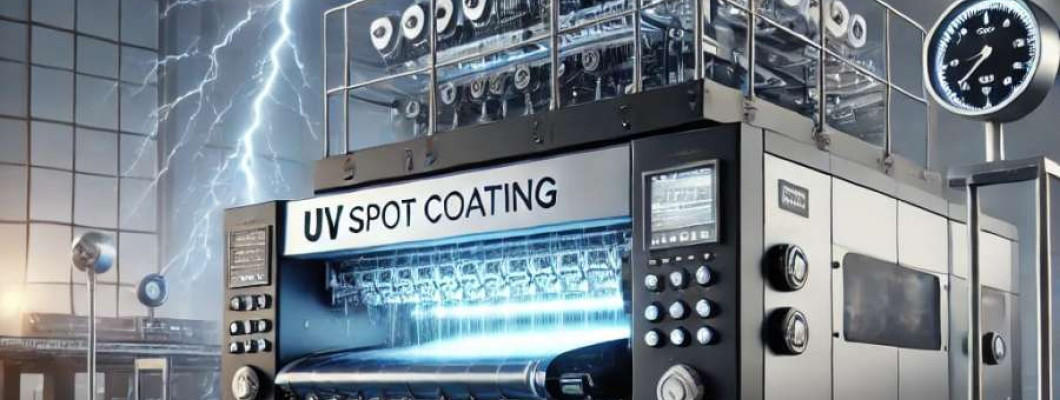
The Industrial Reality of Scaling UV Spot Coating in Medium-Volume Production
In a mid-sized print production environment, integrating a specialized device like the A3 Spot UV Printing Machine UV Coating Printer presents a confluence of operational challenges and maintenance considerations that directly impact throughput and cost control. Unlike general flatbed or roll-to-roll printers, UV spot coating requires precision alignment and exact dosing of UV curable varnish to achieve consistent gloss and tactile effects on a variety of substrates. The industrial scenario often involves fluctuating batch sizes and substrate mix, ranging from coated art paper to synthetics, necessitating rapid setup changes and minimal downtime.
The core bottleneck frequently arises from the curing process and printhead synchronization, which can impose hidden constraints on machine uptime beyond nominal operational speed. The UV LED curing units must maintain precise thermal profiles to prevent substrate warping or varnish overcuring, mandating rigorous environmental controls within the workspace. Maintenance scheduling becomes critical because the varnish delivery system—specifically the microfluidic valves and printhead nozzles—faces accelerated wear due to the abrasive properties of the coating material and potential ink coagulation, leading to clogging and print defects.
From the standpoint of the scalable business owner, the need to offset labor costs while maintaining continuous production run times drives an emphasis on automation readiness and integration with upstream prepress operations. Delays caused by mechanical recalibration or manual cleaning intervals can erode margins substantially. Hence, understanding the lifecycle maintenance costs and operational bottlenecks is essential for achieving a rapid return on investment and minimizing unexpected downtime.
Technical Deep-Dive into Lifecycle Maintenance and Performance Constraints
Printhead and Varnish Delivery Dynamics
The A3 Spot UV Printing Machine uses a piezoelectric printhead design specialized for UV curable coating fluids. These fluids typically exhibit viscosities between 50 and 150 centipoise at room temperature, demanding precise pressure regulation for consistent droplet formation. Assuming a droplet volume of 20 picoliters and a maximum firing frequency of 20 kHz per nozzle, the effective varnish deposition rate caps the maximum printable spot area per minute.
Hypothetically, if the machine incorporates 128 nozzles per printhead and operates with a print speed of 8 meters per minute at 600 dpi resolution, the varnish flow rate can be approximated as:
Flow Rate (ml/min) = Nozzle Count × Droplet Volume (pl) × Firing Frequency (Hz) × 60s / 1,000,000,000 (pl to ml)
Substituting: 128 × 20 × 20,000 × 60 / 1,000,000,000 = 3.07 ml/min varnish consumption approximately.
This requires a varnish recirculation system capable of maintaining consistent fluid properties to prevent micro-channel clogging and ensuring consistent deposition thickness, generally targeted around 10 microns per pass.
Thermal Management and UV LED Curing Unit Analysis
UV LEDs in this application typically operate at a wavelength of 395 nm with power output around 15 Watts per cm2. The curing time must balance between undercure (leading to tacky surfaces) and overcure (substrate damage). Thermal dissipation calculations indicate a heat load of approximately 120 Watts localized at the curing head, necessitating active cooling solutions. The machine’s thermal management system is rated for a maximum ambient operational temperature of 35°C, above which substrate deformation risks increase.
Comparative Asset Depreciation and Maintenance Cost Table
| Aspect | A3 Spot UV Printing Machine | Conventional Roll-to-Roll UV Printer |
|---|---|---|
| Initial CAPEX | ~$35,000 | ~$50,000 |
| Printhead Replacement Cycle | 18-24 months (avg. 2,000 operational hours) | 12-18 months |
| Maintenance Downtime per Quarter | ~12 hours | ~20 hours |
| Varnish Fluid Consumption | 3.1 ml/min | 4.5 ml/min |
| Energy Consumption | 450 Watts avg. | 700 Watts avg. |
Operational Bottlenecks and Setup Time Reduction Techniques
Setup time is a critical factor that influences machine up-time and effective throughput. The A3 Spot UV unit's firmware supports pre-configured substrate profiles that reduce manual calibration time by up to 30%. However, operators need to perform nozzle health diagnostics regularly, which takes approximately 10 minutes per session. Preventive maintenance routines focusing on varnish filtration and printhead flushing are recommended every 250 operational hours, effectively mitigating unscheduled downtime.
Integration Challenges in Workflow Automation
Integrating the machine within existing automated workflows involves synchronization with RIP software and inventory management systems. The printer supports standard PANTONE mapping and ICC color profiles for spot coating consistency, but requires operator expertise to fine-tune the overlay registration to within ±0.1 mm positional accuracy. Network throughput and communication latency can create delays during high-volume batch imports, suggesting the need for dedicated control hardware or isolated network segments.
Scenario Analysis of Three Scalable Business Use Cases
Case 1 Medium Batch Packaging Runs
A packaging manufacturer running batches of 500-1000 units of premium boxes values consistent spot UV gloss application without substrate deformation. The A3 machine’s ability to manage varying substrate thicknesses (up to 5 mm) and quick switching between matte and gloss varnish modes enables rapid changeovers with minimal waste. The maintenance cycle aligns well with production scheduling, resulting in less than 3% downtime monthly.
Case 2 Custom Print-on-Demand Art Prints
For an art print house specializing in small runs with high tactile quality requirements, micron-level thickness control of the UV coating is critical. The printer’s advanced microfluidic varnish system enables this precision, while the thermal management prevents color shift due to heat. Although throughput is secondary to quality here, the reduced setup complexity supports agile production.
Case 3 Labeling and Promotional Material Production
Label manufacturers running frequent design changes benefit from the machine’s fast profile switching and automated nozzle cleaning. The printhead's CMYK compatibility for spot UV allows seamless integration with existing multi-channel print setups. However, operational bottlenecks can emerge when changing between flexible and rigid substrates due to calibration overhead.
Expert FAQ on the A3 Spot UV Printing Machine from a Scalable Business Perspective
What is the expected nozzle clogging frequency and how can it be minimized?
Nozzle clogging typically occurs every 150-200 operational hours if varnish is not filtered properly. Utilizing inline microfilters and conducting automated purge cycles after every print job significantly reduce this risk.
How does environmental temperature fluctuations affect print quality?
Operational stability requires maintaining ambient humidity between 45%-55% and temperature below 35°C. Deviations can cause varnish viscosity changes and curing inconsistencies, impacting gloss uniformity.
Can the machine handle specialty substrates like PET or polypropylene?
Yes, substrates up to 5 mm thickness and flexible films including PET and polypropylene are supported, but require specific curing profile adjustments to prevent warping or adhesion failure.
What are the recommended maintenance intervals for key consumables?
Printheads should be inspected every 500 hours and replaced around 2,000 hours. Varnish filters and recirculation pumps need servicing every 250 hours to maintain flow consistency.
How does the printer support automation for reducing labor costs?
The integration with standard workflow software and support for automated cleaning cycles allows operators to manage multiple machines simultaneously, reducing manual intervention and labor expenses.
Strategic Verdict and Recommendation
Considering the A3 Spot UV Printing Machine UV Coating Printer through the lens of scalable business operations reveals a solution engineered for balancing precision with robust lifecycle maintenance. Its moderate CAPEX combined with significantly lower operational energy consumption and varnish usage presents a favorable total cost of ownership compared to conventional alternatives. While bottlenecks in setup and nozzle maintenance exist, these are mitigated by firmware-supported automation features and preventive servicing protocols.
From an integration standpoint, the printhead’s compatibility with industry-standard color profiles and networked workflow software positions this printer as a practical asset for medium-to-high volume enterprises seeking to optimize labor costs without sacrificing quality. The thermal management system ensures substrate integrity across diverse materials, making it suitable for packaging, labels, and custom art print sectors.
For business owners aiming to scale UV spot coating operations while closely managing lifecycle costs and production uptime, the A3 Spot UV Printing Machine UV Coating Printer emerges as the definitive industrial-grade solution with a proven balance of performance and operational efficiency.