
Overcoming Infrastructure Integration Challenges with the A3 Roll DTF Printer for Scalable Businesses
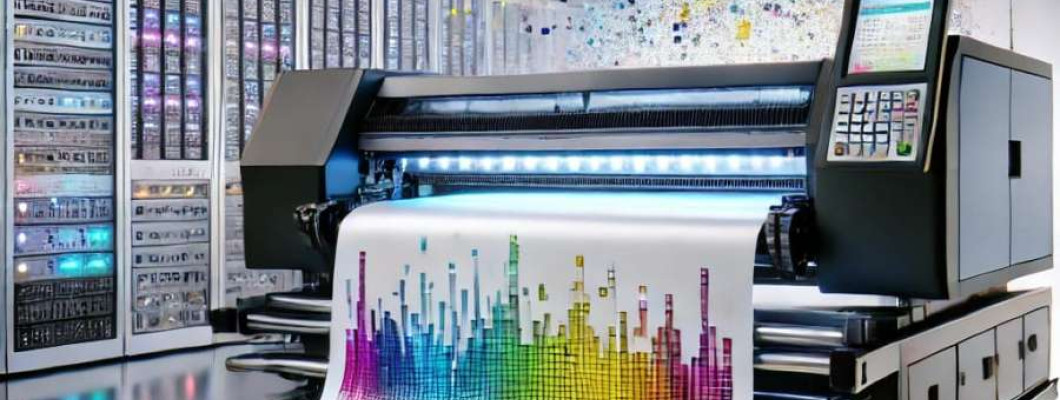
The Industrial Reality of Integrating A3 Roll DTF Printers in Production Environments
In high-output industrial environments, the integration of specialized printing hardware such as the A3 Roll Direct-to-Film (DTF) printer presents nuanced challenges that extend beyond initial acquisition costs. When addressing scalability in production workflows, infrastructure integration hurdles become particularly critical due to the printer's deployment parameters. The A3 Roll DTF printer, by virtue of its roll-to-roll mechanism and precision inkjet technology, demands stable environmental conditions, robust network connectivity, and power considerations that directly affect throughput and reliability.
Consider a mid-sized garment decoration facility tasked with expanding its production lines. Introducing the A3 Roll DTF printer to replace or complement existing flatbed or screen-printing machinery requires addressing footprint constraints and workflow synchronization. The printer's physical dimensions, typically around 1500 mm width and 1200 mm depth, impose floor space requirements that must be balanced with conveyor and curing station placement. Furthermore, the printer's thermal management system and electrical load—frequently peaking at 800-1200 Watts during active printing cycles—necessitate dedicated circuits compliant with industrial safety standards.
Network infrastructure is paramount for operational stability. Industrial throughput optimization depends on consistent data transfer rates to avoid bottlenecks; the A3 Roll DTF printer supports gigabit Ethernet connection standards but is sensitive to latency and packet loss. Integration with existing print management software or Enterprise Resource Planning (ERP) systems requires middleware compatibility and often software drivers that can become integration choke points if improperly managed. This complexity is compounded when multiple printers operate concurrently, demanding robust network segmentation and dedicated VLANs to isolate traffic and ensure print job prioritization.
Additionally, environmental parameters such as humidity and temperature play critical roles in print quality and substrate handling. The A3 Roll DTF printer’s ink chemistries exhibit viscosity changes outside optimal ranges of 20°C–25°C and relative humidity between 45%–60%, meaning industrial HVAC systems must be evaluated or upgraded to maintain stability. Failure to control these factors can introduce print defects, increased downtime for head maintenance, and ultimately reduce asset longevity and ROI.
Technical Deep-Dive on Infrastructure Integration Factors
Network Throughput and Latency Impacts on Print Job Execution
The A3 Roll DTF printer utilizes high-resolution inkjet heads capable of up to 1440 dpi at print speeds of 1.2 meters per minute. Data packets representing bitmap files at this resolution can reach sizes of approximately 40 MB per print job for a full 297 mm x 420 mm A3 sheet at full color depth (4-color CMYK + White ink layers). Assuming a print queue of 10 jobs, the network must sustain at least 400 MB of data transfer per cycle with latency under 10 milliseconds to maintain a seamless feed and avoid buffer underflow scenarios.
Mathematically, given a gigabit Ethernet speed (1 Gbps or 125 MB/s), data transfer for 400 MB theoretically requires 3.2 seconds. In practice, overheads reduce effective throughput to ~80%, approximately 2.5 seconds. If print preparation and drying cycles average 30 seconds, network-induced delays under 10% of cycle time are acceptable, but higher latency or packet loss leads to print stalls and increased waste.
Power Draw and Thermal Management Considerations
The printer’s onboard thermal regulation involves resistive heating elements for ink curing and precise printhead temperature stabilization. Peak power consumption can reach 1200 Watts with average operational consumption around 800 Watts. Industrial circuit designs should provide at least 20% overhead to accommodate inrush currents and transient loads, implying dedicated 15 Amp circuits at 230 Volts.
Heat dissipation calculations indicate that at 800 Watts continuous use, approximately 2730 BTU/hr (British Thermal Units per hour) must be extracted from the local environment to maintain ambient working temperatures. HVAC capacity must be scaled accordingly, or the printer can contribute to increased environmental temperatures, affecting printhead reliability and ink viscosity.
Substrate Handling and Environmental Controls
The A3 Roll printer’s feed mechanism operates with tension control systems calibrated for film thicknesses between 100 and 150 microns. Variations beyond tolerated mechanical limits cause registration errors or print defects. Environmental humidity fluctuations influence the film’s dimensional stability, exacerbating alignment drift over long print runs. Industrial dehumidifiers or HVAC humidity control systems ensure substrate consistency within ±3% relative humidity variance.
Middleware and Software Compatibility
For streamlined operations, the A3 Roll DTF printer integrates with print management suites via standard drivers compliant with TWAIN or proprietary APIs. Nevertheless, latency in job submission or driver abstraction layers can cause queue delays, particularly in multi-printer environments. Network isolation strategies such as VLAN implementation reduce packet collisions and prioritize print job traffic, but require network engineering expertise.
Hardware Comparison Table of Integration Requirements
| Specification | A3 Roll DTF Printer | Industrial Large-Format Flatbed Printer |
|---|---|---|
| Maximum Footprint (WxD mm) | 1500 x 1200 | 2500 x 1800 |
| Power Consumption (Watts) | 800–1200 | 1500–2200 |
| Network Interface | Gigabit Ethernet | Gigabit Ethernet / Wi-Fi |
| Print Speed (m/min) | 1.2 (A3 Roll) | 0.6 (A2 Flatbed) |
| Environmental Requirements | 20°C–25°C, 45%–60% RH | 18°C–24°C, 40%–55% RH |
Scenario Analysis of Business Use-Cases
Scenario 1: Mid-Sized Apparel Manufacturer Expanding Capacity
The apparel business aims to double output by integrating A3 Roll DTF printers alongside existing screen printing lines. The printer’s roll-to-roll functionality allows continuous production with minimal operator intervention, significantly reducing labor costs. However, without upgrading network infrastructure and power circuits, throughput gains plateau due to bottlenecks. Meeting the environmental control specs ensures stable ink performance and reduces downtime from maintenance cycles. The printer’s integration supports scalable growth with predictable operational expenditures.
Scenario 2: Customized Promotional Goods Provider
For a business specializing in rapid turnaround for personalized merchandise, the A3 Roll DTF printer enables high-resolution, color-accurate prints on polyester films efficiently. The critical factor is integration with order management systems and print queue optimizers to handle variable job sizes. Deploying dedicated low-latency network segments and redundancy reduces downtime risk. The footprint and power demand are manageable within typical small workshop layouts.
Scenario 3: Industrial Print Service Provider Leveraging Multi-Printer Deployment
A service provider operating multiple printers for diverse substrates faces higher complexity in integrating the A3 Roll model. Network segmentation, VLAN prioritization, and real-time monitoring platforms become indispensable to prevent print job collisions. HVAC systems must be industrial-grade to maintain strict environmental tolerances across the facility. While CAPEX is higher, the modular scalability and print speed increase allow rapid ROI through volume throughput.
Expert FAQ on Integrating A3 Roll DTF Printers within Industrial Infrastructure
What network topology best supports multiple A3 Roll DTF printers?
A star topology with dedicated switches supporting VLAN segmentation ensures isolated, prioritized print traffic and simplifies troubleshooting.
How do power fluctuations impact printhead longevity?
Voltage spikes or drops cause thermal stress on resistive elements, leading to premature failure. Using uninterruptible power supplies (UPS) with surge protection is recommended.
What maintenance schedule minimizes downtime related to environmental control?
Daily calibration of tension controls and weekly environmental parameter checks maintain substrate handling precision and ink consistency.
Can the A3 Roll DTF printer integrate with cloud-based print management platforms?
Yes, but it requires compatible middleware and secure VPN connections to ensure data integrity and low latency.
How should HVAC capacity be calculated for facilities using multiple printers?
Each printer’s heat output (approx. 2730 BTU/hr) multiplied by the number of active units plus ambient load determines total HVAC tonnage requirements, allowing for at least 10% overhead.
Strategic Verdict and Recommendation
After extensive analysis, the A3 Roll DTF Printer represents a highly viable industrial-grade solution for scalable print businesses facing infrastructure integration challenges. It balances compact footprint with advanced print quality and throughput capabilities while demanding precise environmental and network conditions. When deployed with thorough planning around thermal management, power provisioning, and network segmentation, it enables manufacturers and service providers to expand capacity efficiently and maintain operational continuity.
Its modular nature and integration potential with existing process management systems make it a compelling path for enterprises poised for growth. The technology’s trajectory indicates increasing compatibility with cloud-based workflows and automation, further strengthening its position in the industrial printing sector. Therefore, the A3 Roll DTF printer is recommended as a definitive investment choice for scalable businesses needing enterprise-grade performance without excessive capital expenditure on facility redesign.