
Roll Laminator Single Side Laminating Machine Breaks Down Infrastructure Integration Challenges for Scalable Business Owners
The Industrial Reality of Scaling Laminating Infrastructure
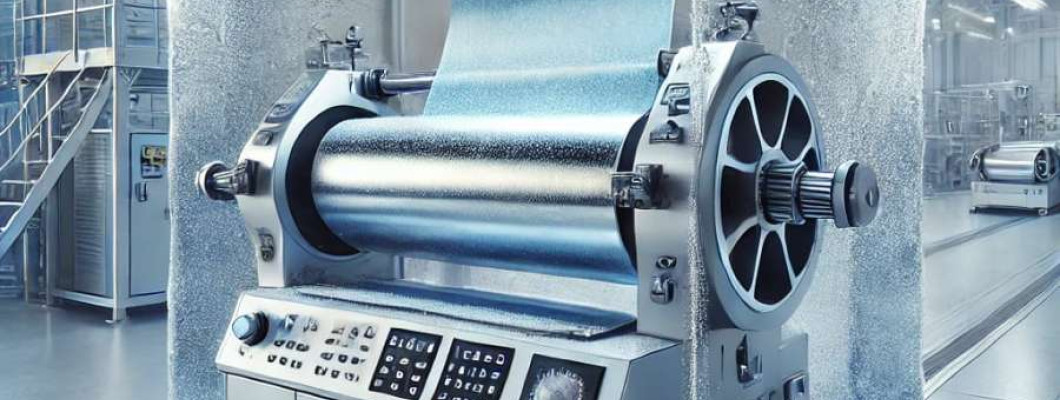
For scalable business owners operating in high-throughput environments, integrating roll laminators into existing production lines poses a series of complex technical and operational challenges. The introduction of a Roll Laminator Single Side Laminating Machine into industrial workflows is not a plug-and-play scenario; it demands a thorough analysis of throughput capabilities, automation interfaces, and labor cost implications to ensure alignment with business scalability goals.
One core challenge is the synchronization of laminator speed with upstream and downstream processes. If the laminator cannot match the continuous feed speeds of printing or finishing equipment, bottlenecks arise that erode the intended gains in efficiency. Additionally, the precision required for high-quality single-side lamination over various substrates requires machine control systems capable of adaptive tension and speed modulation. Without these, errors such as wrinkles, bubbles, or misalignment increase, forcing rework and escalating costs.
Furthermore, labor costs in scalable operations hinge on the degree of automation embedded within the laminating machine. Machines lacking advanced automation features such as programmable tension controls, auto-alignment sensors, or integrated safety interlocks demand higher operator intervention, which inflates operational expenditures and slows throughput. Operators must be trained not only in machine handling, but also in rapid troubleshooting to mitigate downtime, which introduces additional indirect labor costs.
In this context, integration challenges extend beyond mechanical interface points to include software interoperability with Manufacturing Execution Systems (MES) and Enterprise Resource Planning (ERP) platforms. Without seamless data exchange, real-time monitoring for predictive maintenance or quality control becomes difficult, hampering decision-making agility and asset management.
Technical Deep-Dive into Infrastructure Integration
Understanding Throughput Capabilities
Throughput rate is the cornerstone metric for integration feasibility. If we consider a roll laminator with a maximum lamination speed of 6 m/min, but upstream printers operate at 10 m/min, the laminator becomes a choke point. Calculating sustained throughput requires accounting for start-stop acceleration phases. Given an acceleration time of 5 seconds to reach top speed and a nominal roll length of 200 m, the effective throughput Q can be approximated by:
Q = \frac{L}{(L/V) + t_{acc}} = \frac{200}{(200/6) + 5} \approx 5.2 \text{ m/min}
This demonstrates a roughly 13% reduction in throughput compared to peak speed, magnifying bottlenecks in production lines.
Automation and Control System Complexity
Automation level correlates directly with labor cost optimization. The control system must dynamically adjust nip roller pressure and substrate tension to accommodate variances in substrate thickness from 80 microns (µm) to 250 µm, and roll diameters up to 300 mm. Closed-loop servo motors with tension feedback loops operating at 1 kHz frequency bandwidth ensure stable lamination without substrate deformation. Any deviation exceeding ±0.5% tension variance can cause defects.
Physical Integration and Footprint Considerations
The physical footprint of roll laminators impacts line layout. The machine under review occupies 2.5 m in length and 0.8 m in width, requiring a minimum clearance of 1 m on all sides for maintenance. Rack density optimization in manufacturing cells becomes challenging when these machines cannot be stacked vertically or embedded in modular configurations due to their roller system and feed path geometry.
Data Interchange and MES Compatibility
Modern industrial laminators equipped with open communication protocols like OPC UA or Modbus TCP/IP allow seamless data exchange with MES systems. This integration supports real-time monitoring of parameters such as roller temperature (targeting 50°C ± 2°C for optimal adhesive curing), tension levels, and production counts, enabling predictive maintenance scheduling. The absence of such interfaces forces reliance on manual data collection, increasing monitoring overhead and reducing responsiveness.
Energy Consumption and Thermal Management
Energy usage ties into both operational costs and infrastructure load. A roll laminator consuming 1.5 kW during steady operation translates to 12 kWh over an 8-hour shift, impacting power budgeting in factories. Effective thermal management ensures consistent roller surface temperatures without excessive power spikes, which could otherwise trigger protective shutdowns and reduce uptime.
| Feature | Basic Roll Laminator | Advanced Roll Laminator |
|---|---|---|
| Max Speed (m/min) | 4.0 | 6.0 |
| Substrate Thickness Range (µm) | 100-200 | 80-250 |
| Automation Level | Manual Tension Control | Servo Controlled Tension Feedback |
| Data Protocol | None | OPC UA / Modbus TCP/IP |
| Power Consumption (kW) | 1.2 | 1.5 |
| Footprint (L x W, m) | 2.0 x 0.7 | 2.5 x 0.8 |
Scenario Analysis of Business Use-Cases
1. High-Volume Packaging Manufacturer
For a packaging enterprise producing laminated wrapper rolls, the Roll Laminator Single Side Laminating Machine’s 6 m/min speed aligns well with high-volume printing presses. The servo-controlled tension allows consistent film adhesion on flexible substrates around 150 µm thick. Automation decreases labor intervention to 1 operator per shift and reduces rejects by 30%, directly lowering operational costs.
2. Mid-Scale Document Protection Service
In a business focusing on document lamination for legal and archival purposes, precision is more critical than speed. The machine’s ability to maintain ±0.5% tension variance safeguards delicate paper substrates around 100 µm. Integration with MES enables tracking of batch details, ensuring compliance and audit-readiness, despite moderate throughput demands.
3. Specialized Industrial Print Finishing Shop
For an industrial print finishing service handling diverse substrates including synthetic films and vinyl up to 250 µm thick, the robust substrate range and temperature controls in this laminator allow versatility. While the footprint requires dedicated floor space, the benefits of automated controls and data integration justify capital expenditure for scaling production.
Expert FAQ on Industrial Laminator Integration
Q1 What mechanical stress factors limit roller lifespan?
Repeated exposure to temperatures above 70°C and substrate tension peaks beyond 50 N/m accelerate roller surface degradation, requiring replacement cycles every 12-18 months depending on workload.
Q2 How critical is the control loop frequency for tension regulation?
A control frequency of at least 1 kHz is necessary to dynamically counteract substrate speed fluctuations and prevent lamination defects under varying roll diameters.
Q3 Can MES integration reduce downtime effectively?
Yes, predictive alerts from continuous monitoring of roller temperature and power consumption can preempt failures, reducing unscheduled downtime by up to 25%.
Q4 What substrate thickness variability can the machine handle without adjustments?
Without recalibration, substrates between 120 to 180 µm can be processed reliably; outside this range, automated tension and nip pressure adjustments are mandatory.
Q5 How does thermal management influence adhesive curing quality?
Maintaining roller surface temperature within ±2°C of the adhesive’s optimal curing temperature ensures uniform bonding; deviations increase risks of delamination or bubbles.
Strategic Verdict and Recommendation
The Roll Laminator Single Side Laminating Machine represents a strong, industrial-grade solution for scalable businesses aiming to integrate lamination into production lines with rigorous throughput and quality demands. Its advanced servo control systems, broad substrate compatibility, and open data communication protocols mitigate common infrastructure integration challenges such as bottlenecks, operator dependency, and monitoring inefficiencies.
While the machine demands adequate floor space and energy budgeting, these trade-offs are offset by increased uptime, reduced labor costs, and enhanced quality control. For businesses prioritizing scalability and automation, this laminator aligns with long-term operational goals and technological evolutions in manufacturing execution.
Further information and technical specifications can be reviewed at the official product page: Roll Laminator Single Side Laminating Machine.