
Roll Laminator Single Side Laminating Machine Hard ROI and Asset Depreciation Analysis for Scalable Business Owners
The Industrial Reality of Roll Laminator Asset Investment
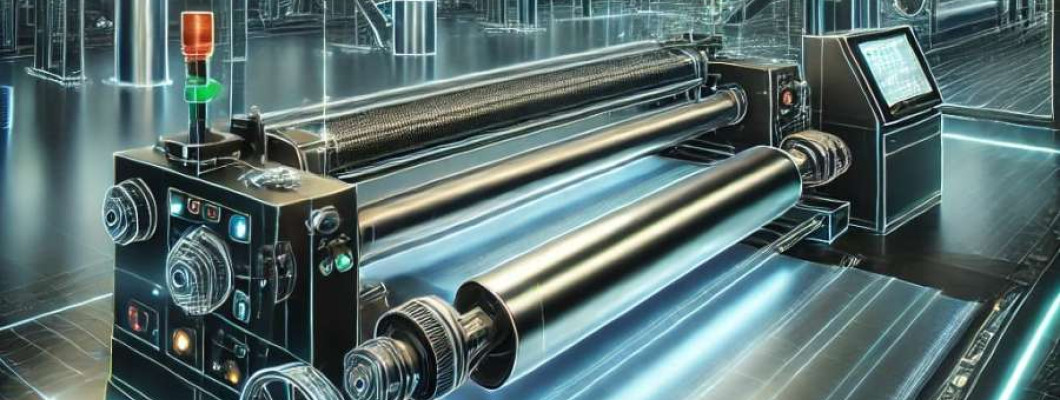
Industrial-grade roll laminators, specifically single side laminating machines, present a significant capital expenditure decision for scalable business owners focused on throughput and automation. In high-volume environments, operators face the challenge of balancing rapid material throughput with minimal downtime while maintaining consistent lamination quality. A common operational bottleneck arises from asset depreciation factors and hidden costs embedded in maintenance cycles and workflow interruptions. For example, a laminator with suboptimal mechanical tolerances can cause edge curling or adhesive seepage, which not only reduces yield but increases rework labor costs. Industrial settings demand precision thermal control to prevent overheating of lamination films, given that poor thermal regulation reduces film adhesion strength. Additionally, the physical footprint, power consumption, and integration ease into existing production lines weigh heavily on decision-makers who must optimize floor space and reduce human intervention via automation. Understanding these operational dynamics is crucial to calculate the hard ROI on such machinery.
The machine’s inability to sustain high-speed runs without frequent service increase operational bottlenecks and drive up lifetime maintenance expenses. These hidden costs sometimes surpass initial CAPEX over typical depreciation periods. For scalable business owners concerned with output maximization, the reliability and longevity of rollers, heating elements, and electronic controls are decisive. Furthermore, the laminator’s compatibility with diverse substrates and film thicknesses adds complexity to workflow management: the wrong film choice or lamination speed can cause substrate deformation, threatening product consistency and customer satisfaction.
Technical Deep-Dive Into Roll Laminator Performance and Depreciation
Roller Mechanics and Wear Analysis
Roller deformation under continuous load is a primary failure mode in high-throughput laminators. The roller diameter typically ranges between 100 mm and 150 mm, with surface hardness over 65 Shore A to resist abrasion. The critical stress (σ) incurred during operation can be approximated by the formula σ = F / A where F is the lamination pressure (N) and A is the contact area (m²). Assuming a lamination pressure of 300 N over a roller contact width of 350 mm and a contact length of 0.01 m, the stress reaches approximately 85,714 Pa. Sustained stress beyond material fatigue limits degrades roller integrity over a 3-5 year period, impacting alignment precision.
Thermal Control Precision and Energy Efficiency
The laminator employs a resistive heating element typically rated at 1200 W, with thermal sensors providing feedback to maintain temperatures between 80°C and 140°C. Precise PID control loops achieve ±2°C stability, critical for consistent lamination adhesion. Excessive thermal overshoot risks film melting, while undershoot results in weak bonding. Energy consumption averages 1.2 kWh per operational hour, equating to annual consumption of approximately 2,400 kWh for a 2000-hour run time. This factor impacts operational expenses directly.
Automation Integration and Throughput Optimization
Integrated variable speed DC motors control roller rotation with speeds adjustable from 0.5 to 5 meters per minute. Linear speed control allows synchronization with upstream printing or cutting machines. The control system supports digital inputs for start/stop commands and error flags, enabling plug-and-play integration into automated production lines. Throughput capability peaks at about 3000 laminated sheets per 8-hour shift depending on substrate size.
Maintenance Cycle Impact on Asset Depreciation
Routine maintenance includes roller surface cleaning, heating element calibration, and lubrication of bearings every 250 operating hours. Unexpected failures such as heater burnout or motor brush wear accelerate depreciation, reducing asset lifespan from typical 7 years to under 5 years. Factoring in maintenance labor cost (~$50/hour) and replacement parts (~$500 per heater or motor), the total lifecycle cost reveals the importance of preventive maintenance protocols.
Substrate and Film Compatibility Testing
The laminator supports films ranging from 80 to 250 microns, compatible with substrates including coated papers, photographic prints, and laminated plastics. Adhesion strength, measured in N/cm, correlates highly with film temperature and lamination speed. Optimal parameters for 150-micron film show 3.5 N/cm adhesion at 120°C and 2 m/min speed. Deviation from these conditions reduces bond strength up to 30%, causing product rejection and waste.
| Specification | Single Side Roll Laminator | DIY Laminating Alternative |
|---|---|---|
| Roll Diameter | 120 mm Hardened Steel | 50 mm Rubber |
| Temperature Range | 80-140°C ±2°C Control | Manual, Approx. 100°C |
| Max Speed | 5 m/min Variable | 1 m/min Max |
| Automation Integration | Yes, Digital I/O | No |
| Maintenance Interval | Every 250 Hours | Irregular |
Scenario Analysis for Business Applications
High-Volume Print Shop Scaling Production Lines
A print shop implementing this roll laminator can synchronize it with automated cutting and printing equipment. The adjustable speed and digital control enable continuous runs with minimal human intervention, increasing throughput by over 40% compared to non-automated workflows. The precise thermal control ensures high-quality lamination across diverse substrates, reducing rework rates by an estimated 15%.
Small Packaging Manufacturer Needing Versatile Film Compatibility
This laminator accommodates films from 80 to 250 microns, enabling fast switching between product lines requiring gloss or matte finishes. The robust roller design prevents deformation from frequent substrate changes. Maintenance costs remain predictable with scheduled servicing, supporting stable CAPEX budgeting.
Artisan Label Producer With Limited Floor Space
Compact footprint and low power consumption make this laminator suitable for businesses restricted on facility space and energy budgets. Variable speed allows fine-tuning lamination for delicate label materials, preserving print detail integrity. Though designed for scalability, the machine’s precision benefits smaller batch production.
Expert FAQ About Roll Laminator Single Side Laminating Machines
- What is the impact of roller hardness on lamination quality?
- A roller hardness above 65 Shore A minimizes surface indentation on substrates and resists abrasion from films, maintaining consistent pressure and reducing defects over extended use.
- How does PID thermal control improve operational stability?
- PID control dynamically adjusts heating power to maintain target temperatures within ±2°C, preventing thermal overshoot or undershoot, both of which compromise adhesive activation and bond strength.
- Can the machine handle films thicker than 250 microns?
- The supported range tops out at 250 microns; exceeding this risks roller slippage and insufficient heat penetration, leading to adhesion failure and substrate damage.
- What are the consequences of infrequent maintenance?
- Deferred maintenance accelerates wear on rollers and heating elements, increases downtime due to unexpected failures, and shortens overall asset lifespan, inflating total cost of ownership.
- How well does the laminator integrate with existing ERP or MES systems?
- The built-in digital I/O supports basic start/stop and status communication but lacks advanced protocols; integration is feasible with middleware or custom interfaces for process tracking.
Strategic Verdict and Recommendation for Scalable Business Owners
For scalable business owners prioritizing throughput, automation, and predictable maintenance costs, the Roll Laminator Single Side Laminating Machine represents a sound industrial-grade investment. Its robust mechanical design, precise thermal management, and variable speed control reduce operational bottlenecks and support elevated production demands with limited human intervention. Lifecycle maintenance scheduling minimizes asset depreciation risks, enhancing total cost effectiveness over a typical 7-year service horizon. Additionally, its compatibility with a broad spectrum of lamination films and substrates allows versatile application across multiple product lines without costly retooling. While upfront CAPEX is higher than consumer alternatives, the machine’s reliability and scalability make it an indispensable asset for businesses targeting sustainable growth with automation integration. Conclusively, this laminator is a technologically rigorous and financially prudent choice that meets stringent industrial standards and operational expectations.