
Rose Flower Printer Operational Bottlenecks and Infrastructure Integration for Scalable Businesses
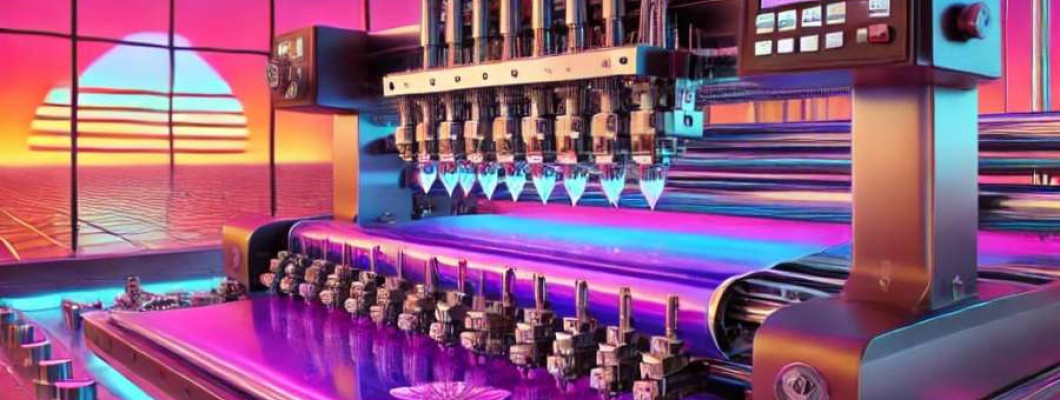
The Industrial Reality of Scaling Precision Floral Printwork
Industrial printing environments face a persistent challenge when adopting emerging print hardware into existing throughput-driven workflows. The Rose Flower Printer, designed to generate detailed floral imagery, presents a unique case study in operational bottlenecks and infrastructure compatibility. For scalable business owners focused on maximizing automation and labor efficiency, integrating new technology that demands intricate precision can disrupt standard production cadence.
Consider a mid-size print shop aiming to introduce the Rose Flower Printer for high-volume, automated floral pattern production on various substrates. The printer exhibits high color fidelity and micron-level resolution, but its cycle times and printhead maintenance requirements must be carefully synchronized with conveyor speeds and substrate handling systems. Without precise integration, the output rate could become a major bottleneck, limiting the plant’s overall throughput. Additionally, networking and environmental controls—such as humidity stabilization and thermal dissipation—must be factored into the facility's infrastructure to maintain consistent print quality under prolonged operational hours.
Furthermore, the Rose Flower Printer’s reliance on advanced ink chemistries necessitates automated delivery and filtration systems tailored for continuous run high-volume print jobs. Failure to address these auxiliary systems can result in unplanned downtime or quality drift, further reducing business scalability. This technical scenario places the spotlight on the critical junction where cutting-edge print hardware meets practical industrial workflow demands, necessitating an engineering-driven approach to integration rather than a simple add-on model.
Technical Deep-Dive into Printhead Dynamics and Throughput Constraints
Precision Printhead Mechanics and Micron-Level Accuracy
The Rose Flower Printer’s printhead utilizes piezoelectric actuation enabling droplet sizes down to approximately 3 picoliters. The exact droplet diameter relates to a spherical volume V via V = (4/3)π(r^3), indicating r ~ 10 μm radius. This minuscule droplet size facilitates resolutions exceeding 1200 dpi, crucial for rendering subtle gradients and fine petal veining in floral prints. However, smaller droplet sizes inherently reduce maximum volumetric ink flow rates, impacting continuous print speeds.
Ink Flow Dynamics and Maintenance Cycles
The specialized pigment dispersions used are non-Newtonian with viscosity ranging from 4 to 6 mPa·s at operating temperatures (45°C). These rheological properties impose strict constraints on pump pressure and filtration frequency to avoid nozzle clogging. Empirically, printheads require automated purge cycles every 4 hours to sustain jet stability, introducing planned downtime that must be incorporated into scheduling algorithms.
Thermal Management and Environmental Control
Thermal dissipation within the printer chassis peaks at 650 W during high-throughput runs. Without robust internal sensors and external HVAC coordination, internal temperatures exceed optimal operating bands (>50°C), accelerating printhead wear. Integration with facility-level thermal management systems using feedback control loops is essential for maintaining consistent output quality and hardware longevity.
Network Throughput and Workflow Synchronization
The printer communicates via Gigabit Ethernet with a proprietary protocol optimized for image data streaming and print command queuing. Latency under 2 ms ensures real-time processing but requires dedicated network segments to avoid packet loss or jitter impacting print consistency. From a plant floor automation perspective, the Rose Flower Printer’s API supports integration with Manufacturing Execution Systems (MES) for synchronized batch processing and predictive maintenance scheduling.
Comparative Analysis with Conventional Floral Printing Solutions
| Specification | Rose Flower Printer | Conventional Industrial Floral Printer |
|---|---|---|
| Max Resolution (dpi) | 1200+ | 600-900 |
| Droplet Volume (pl) | 3 | 8-12 |
| Continuous Print Speed (m2/hr) | 5 | 8-12 |
| Ink Viscosity (mPa·s) | 4-6 | 8-12 |
| Automated Purge Cycle Frequency | Every 4 hours | Every 2-3 hours |
Scenario Analysis of Business Use Cases Centered on Throughput and Automation
Scenario One High-Volume Textile Printing
A textile manufacturer intending to produce intricate floral patterns on silk requires ultra-high resolution to preserve fabric texture and design nuance. The Rose Flower Printer meets this need with its 3pl droplet size but delivers modest continuous speed (approx. 5 m2/hr). The business must balance print quality with throughput, potentially supplementing high-speed bulk orders with conventional printers. Integration with automated fabric feeders and MES synchronization ensures minimized labor intervention despite slower print rates.
Scenario Two Custom Packaging for Premium Floral Products
In a packaging line for luxury flower bouquets, the Rose Flower Printer can produce photorealistic floral designs on rigid card substrates. Here, throughput demands are moderate but fault tolerance and consistency are critical. Automated ink replenishment systems and integrated thermal management enable near-100% uptime during peak production runs.
Scenario Three Prototype and Short-Run Production in Design Studios
Design studios requiring rapid iteration benefit from the printer’s micron-level detail and low maintenance overhead relative to rival technologies. Although throughput is lower, the ability to automate color profiling and integrate with existing digital asset management pipelines reduces turnaround time and human labor, aligning with scalability goals without sacrificing quality.
Expert FAQ Answering Complex Operational Integration Queries
How does the Rose Flower Printer cope with variability in substrate absorption rates?
The printer firmware includes adaptive ink droplet modulation which adjusts firing frequency and droplet volume in real time based on sensor feedback correlated with substrate porosity, maintaining color density uniformity.
What are the failure modes most critical to daily uptime?
Nozzle clogging due to pigment aggregation is primary, mitigated via automated purge cycles and continuous filtration units. Secondary failures include thermal sensor drift, which is monitored by self-diagnostic routines for prompt maintenance alerts.
Can the printer be integrated into MES software environments?
Yes, with a robust RESTful API and support for OPC UA communication standards, enabling comprehensive job queuing, status monitoring, and predictive maintenance workflows.
What are the power consumption profiles during peak operation?
Typical peak consumption is 700 W during continuous printing phases, dropping to 120 W in standby. Facilities must provision dedicated circuits with surge protection to maintain stable supply.
Is there a recommended preventive maintenance schedule?
Yes, apart from continuous automated purging every 4 hours, manual inspection and printhead cleaning every 500 operational hours is advised to preserve optimal jetting performance.
Strategic Verdict and Recommendation for Scalable Business Environments
The Rose Flower Printer represents a technologically advanced, scalable option for enterprises seeking ultra-high precision floral print capabilities. While its continuous throughput rate is modest compared to high-speed counterparts, its superior resolution and sophisticated environmental and network integration features enable synchronized incorporation into automated production lines. For scalable business owners prioritizing both automation and quality fidelity, this printer aligns well with mid-to-high volume workflows where print quality cannot be compromised.
Integrating the Rose Flower Printer necessitates investment in environmental control and network infrastructure but rewards with reduced labor intervention and enhanced print consistency. Given these factors, the Rose Flower Printer is conclusively a viable industrial-grade solution for businesses demanding a balance of precision, automation, and scalability within their production ecosystems.