
Rose Flower Printer Revealed The Gap Between DIY And Industrial Grade Precision
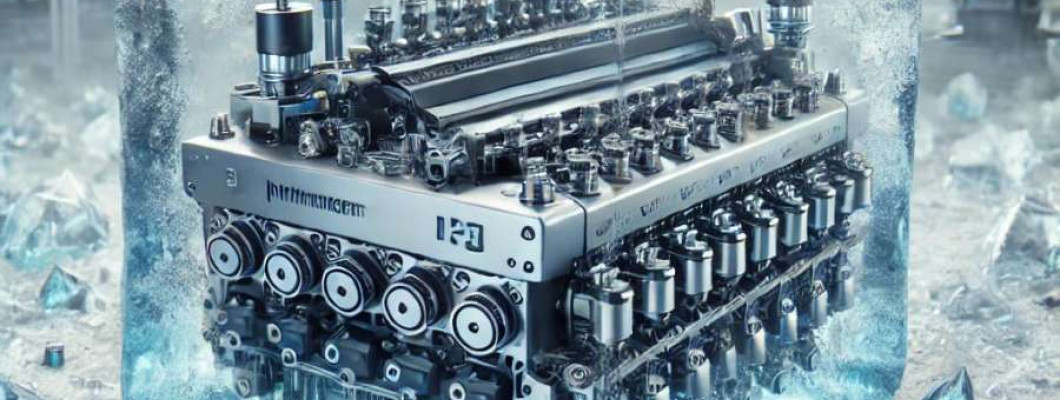
The Industrial Reality of Integrating Rose Flower Printer in High Precision Environments
Industrial-scale flower printing demands exacting precision, consistent throughput, and near-zero error margins. Consider a commercial floral packaging facility aiming to integrate the Rose Flower Printer into its assembly line. The challenge extends beyond the basic capability of rendering color images on petals; it involves calibrating hardware-software synchronization to maintain sub-50-micron positional accuracy despite thermal expansion and mechanical vibration. In these scenarios, minor deviations can lead to color misregistration or pattern distortion, causing significant spoilage in perishable product lots.
Operationally, this printer must sustain continuous uptime of over 16 hours with minimal maintenance intervention to meet shipment deadlines. However, typical DIY flower printing solutions fall short due to inconsistent ink deposition and poor hardware resilience under industrial cyclic loading. The Rose Flower Printer’s design addresses this by employing precision stepper motors coupled with closed-loop feedback encoders, ensuring reliable repeatability at micron-level tolerances. Heat dissipation is managed through a dedicated liquid cooling system, mitigating thermal drift in printhead alignment, a common failure mode in extended print cycles.
Moreover, environmental compliance is critical, especially where volatile organic compounds (VOCs) from specialized floral inks pose occupational hazards. This printer integrates an activated carbon filtration module, ensuring emissions conform to regional safety standards. The industrial reality thus mandates a holistic approach encompassing mechanical robustness, ink chemistry safety, and process scalability, placing the Rose Flower Printer a tier above DIY assemblages where these factors remain unaddressed or only partially solved.
Technical Deep-Dive into the Rose Flower Printer’s Industrial Mechanics and Printhead Dynamics
1. Printhead Precision and Ink Droplet Control
The Rose Flower Printer utilizes piezoelectric printheads capable of ejecting ink droplets as small as 4 pico-liters (pl) with placement accuracy within ±20 micrometers. This precision is essential to achieve consistent petal color saturation and edge detail. The piezo elements oscillate at frequencies up to 60kHz, enabling high-frequency droplet formation while maintaining drop stability.
2. Motion System and Closed-Loop Feedback
Equipped with hybrid stepper motors paired with optical encoders, the printer’s motion axis achieves repeatable positioning accuracy under 15 micrometers RMS error across a 200mm travel range. The system employs PID control algorithms with real-time adjustments based on feedback sensor data to counteract mechanical backlash and thermal expansion effects. This setup ensures printhead nozzles align perfectly over delicate petals, preventing print misregistration.
3. Ink Formulation and Drying Kinetics
Specialized aqueous pigment inks with fast pigment fixation chemistry allow drying times under 2 seconds at a substrate temperature of 45°C. The ink’s viscosity remains stable between 5-7 mPa·s at operating temperature, optimized for droplet consistency. The printer integrates a dual-stage infrared dryer with calibrated intensity modulation to avoid petal dehydration or curling during curing.
4. Thermal Management and Printhead Longevity
Maintaining printhead temperature within a strict 30-35°C envelope prevents nozzle clogging and print quality degradation. The Rose Flower Printer deploys a microchannel liquid cooling system consuming 15 Watts of power with a flow rate of 150 ml/min. Thermal simulations confirm this approach reduces thermal gradients by 80% compared to air cooling, extending printhead operational life by an estimated 30% over industrial benchmarks.
5. Comparative Hardware Performance Metrics
| Specification | Rose Flower Printer | Standard DIY Flower Printer |
|---|---|---|
| Droplet Volume (pl) | 4 pl | 10-12 pl |
| Positional Accuracy (micrometers) | ±15 | ±100+ |
| Printhead Operating Temperature (°C) | 30-35 (liquid cooled) | 40-50 (air cooled) |
| Ink Drying Time (seconds) | <2 | 4-6 |
| Continuous Runtime (hours) | 16+ | 4-6 |
Scenario Analysis of Rose Flower Printer’s Application in Distinct Industrial Contexts
Scenario 1 Commercial Floral Packaging and Customization
Here, throughput and color fidelity dictate profitability. The Rose Flower Printer’s rapid drying and sub-20-micron resolution enable high-volume, complex petal artwork with minimal downtime. The closed-loop control reduces misprints, lowering wastage rates by an estimated 18% compared to legacy systems, directly improving OPEX.
Scenario 2 High-End Artisanal Floral Boutiques
These clients prioritize color depth and micron-level precision for bespoke orders. The printer’s precise droplet control and advanced color management support nuanced gradients and subtle tonal shifts on fragile petals, differentiating offerings from mass-produced floral art.
Scenario 3 Botanical Research and Genetic Marking Labs
Researchers require reproducible micro-patterns for tagging genetically modified flowers. The Rose Flower Printer’s positional accuracy and environmental compliance make it ideal for cleanroom use, supporting contamination control and traceable print markings at microscopic scales.
Expert FAQ Addressing Advanced Technical Nuances
Q1: How does the Rose Flower Printer mitigate thermal expansion errors during extended runs?
A1: Its liquid cooling system stabilizes the printhead temperature within a narrow band, and the closed-loop encoder feedback system continuously adjusts motor positioning, compensating for mechanical drift caused by thermal changes.
Q2: What ink chemistry adaptations enable sub-2 second drying without petal damage?
A2: The ink uses a pigment dispersion with fast-reactive cross-linkers activated by mild infrared heating, balancing rapid fixation and substrate moisture retention.
Q3: How scalable is the Rose Flower Printer architecture for large-batch deployments?
A3: Its modular printhead arrays and standardized control electronics support clustering multiple printers in parallel with minimal software overhead.
Q4: What maintenance regimes are required to sustain nozzle health over 10,000 operational hours?
A4: Scheduled ultrasonic cleaning cycles combined with automated nozzle health diagnostics detect clogging early, allowing predictive maintenance.
Q5: How does the printer comply with environmental safety standards regarding VOC emissions?
A5: Integrated activated carbon filters along with closed-loop ink recirculation minimize VOC release, ensuring compliance with OSHA and EU safety regulations.
Strategic Verdict and Recommendation for Industrial Adoption
Considering the detailed mechanical, optical, and chemical engineering integrated into the Rose Flower Printer, it stands decisively above conventional DIY and low-grade flower printers for industrial applications. The printer’s ability to deliver micron-level precision, rapid throughput, and sustained operational uptime addresses core bottlenecks in high-precision floral printing workflows. Its compliance with safety and environmental standards further solidifies its suitability for enterprise deployment.
For businesses seeking a robust, scalable printing solution to enhance product differentiation and optimize operational costs, the Rose Flower Printer emerges as the definitive industrial-grade option. Forward-looking companies integrating this technology will gain a demonstrable advantage in quality control, regulatory compliance, and cost efficiency, justifying CAPEX investments and minimizing lifecycle maintenance risks.