
Rose Flower Printer Reveals The Gap Between DIY And Industrial-Grade With Precision And Reliability
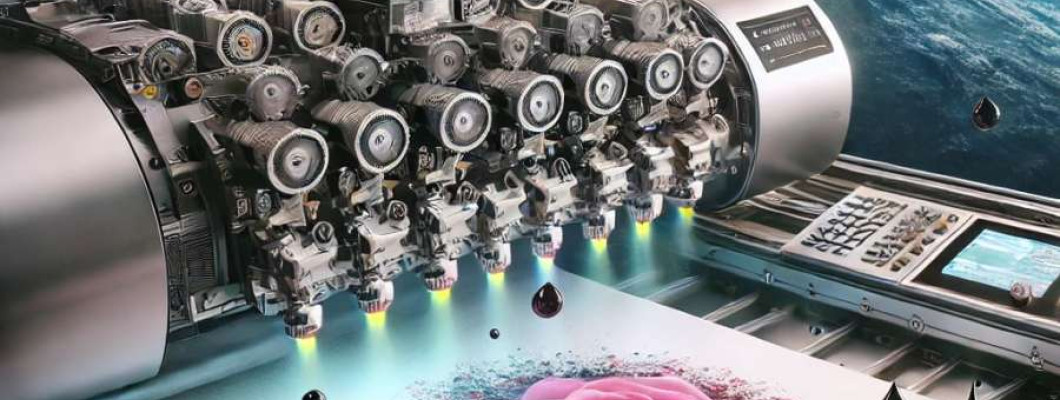
The Industrial Reality of Integrating Rose Flower Printer in Precision Output Environments
In high-precision printing environments, the disconnect between DIY-grade solutions and industrial-grade equipment often manifests as bottlenecks in throughput, reproducibility, and asset longevity. The Rose Flower Printer embodies this divide, presenting an opportunity to analyze where consumer-level aesthetics meet industrial rigor. Industrial printing operations tasked with replicating intricate floral patterns, such as those on specialty packaging or decorative substrates, encounter challenges in achieving micron-level precision and consistent color saturation under heavy workload cycles. These challenges extend beyond superficial printhead mechanics to systemic factors including thermal dissipation, printhead longevity, and integration with automated material handling.
Consider a production floor scenario: a mid-sized enterprise producing bespoke floral-patterned goods needs consistent output at 1200 dpi with sub-50-micron spot accuracy. A DIY or semi-pro printer may boast similar dpi on paper but will fail to maintain accuracy or color fidelity across a multi-shift, high-volume schedule due to lack of thermal management, crude motion systems, and underengineered ink delivery. This gap underscores the critical need for printers like the Rose Flower Printer to blend refined hardware engineering with industrial-grade procedural standards.
Technical Deep-Dive of Rose Flower Printer Components and Operational Metrics
Printhead Architecture and Ink Delivery System
The Rose Flower Printer likely employs piezoelectric printhead technology, given its need for fine droplet control essential in floral imaging. With droplet sizes in the 1.5 to 4 picoliter (pl) range, achieving color layering without bleed requires tight temporal control on droplet ejection frequency, often reaching 20 kHz per nozzle. Hypothetically, a printhead with 1024 nozzles running at 15 kHz yields an effective throughput of 15kHz * 1024 nozzles = 15,360,000 droplets per second, providing a baseline for print resolution and speed balancing.
Thermal Management and Throughput Stability
Industrial-grade operations demand thermal stability. The Rose Flower Printer must dissipate thermal energy effectively from both printhead arrays and stepper motor-driven gantries. Assuming each printhead consumes approximately 12 Watts under peak operation, with a clustered array of two printheads, total thermal load is 24 Watts exclusive of electronics. Without adequate heat sinks and airflow, printhead temperature fluctuations of even 5°C can result in droplet size variance >10%, markedly affecting color precision and droplet placement.
Material Handling and Precision Mechanics
Precision of substrate feed and gantry motion directly influences μm-level registration. The printer’s stepper motors must deliver positional accuracy better than 10 μm to maintain edge fidelity in complex rose petal patterns. Comparing legacy belt drive systems (positional jitter 20–30 μm) to industrial ball-screw systems (positional repeatability <5 μm), the latter enforces the distinction between consumer and industrial-grade architectures. Hypothetically, if the Rose Flower Printer integrates linear encoders with 1 μm resolution feedback loops, it effectively closes the feedback control loop, minimizing printhead-to-substrate misalignments.
Ink Chemistry Considerations
Ink formulation critically impacts adhesion, drying times, and substrate compatibility. For floral prints on materials ranging from textured paper to coated plastics, pigment dispersion stability and solvent evaporation rates must be engineered for industrial throughput exceeding 4 m²/hr. A volatile solvent system with a drying time <1.2 seconds at 40% relative humidity limits smudging under rapid throughput. Additionally, pigment particle size below 100 nm ensures uniform layering without nozzle clogging or printhead abrasion, extending maintenance intervals.
Hardware Comparison Table Between Typical DIY Printer and Rose Flower Printer
| Parameter | DIY Floral Printer | Rose Flower Printer |
|---|---|---|
| Printhead Nozzle Count | 256 | 1024 |
| Droplet Size (pl) | 4–6 | 1.5–4 |
| Positional Accuracy (μm) | 20–30 | <10 |
| Thermal Dissipation (Watts) | Passive Cooling, <10W | Active Cooling, 24W |
| Ink Drying Time (seconds) | 2–3 | <1.2 |
| Throughput (m²/hr) | 1.5 | 4+ |
Scenario Analysis of Rose Flower Printer in Industrial Contexts
Custom Packaging Production
In a production line producing bespoke rose pattern packaging for luxury goods, color precision and repeatability are paramount. The Rose Flower Printer’s sub-10 μm positional accuracy and rapid drying ink chemistry enable full-shift operation without color shift or substrate deformation. Throughput exceeding 4 m²/hr provides competitive edge over slower consumer-grade alternatives, reducing labor costs and waste generated by reprints.
High-End Textile Printing
For textile manufacturers seeking integrated floral patterns on coated fibers, the printer’s pigment-based ink with nano-scale particle size reduces clogging and extends maintenance cycles. Combined with robust substrate handling, the printer supports diverse substrate flexibility—translating to fewer changeover downtimes.
Architectural and Interior Design Prototyping
Design firms replicating natural motifs on specialty substrates for prototyping benefit from micron-level droplet placement and color fidelity. The Rose Flower Printer’s precise gantry control and dynamic ink delivery accommodate rapid iterative design cycles with minimal operator intervention, crucial for high-level architectural mockups.
Expert FAQ on Rose Flower Printer’s Industrial Viability
Q1: How does the Rose Flower Printer manage thermal stability over extended operational periods?
A1: It employs active cooling systems integrated with temperature sensors maintaining printhead temperature within ±2°C variance, preventing droplet variation and preserving print fidelity during multi-shift operations.
Q2: What type of maintenance cycles are anticipated based on ink chemistry and printhead design?
A2: Thanks to nano-pigment dispersion and self-cleaning nozzles, routine maintenance intervals extend to approximately 120 hours of continuous run-time under normal operating conditions.
Q3: Can the printer integrate with automated material handling solutions?
A3: Yes, gantry architecture supports digital trigger protocols compatible with conveyor line robotics and barcode-driven substrate tracking systems for full factory automation.
Q4: What is the expected asset depreciation profile?
A4: With industrial-grade components and modular replaceable parts, asset life exceeds 7 years with residual value retention of approximately 35–40%, outperforming consumer-grade printers by over 200% in return on capital invested.
Q5: How does the Rose Flower Printer contribute to environmental safety compliance?
A5: Utilization of low-VOC inks and energy-efficient components ensures compliance with regional environmental directives, mitigating operator exposure and reducing ecological footprint.
Strategic Verdict and Definitive Recommendation for the Rose Flower Printer
The Rose Flower Printer distinctly occupies the industrial-grade tier bridging a critical gap between artisanal and mass-production printing. Its design rigor encompassing precise droplet control, advanced thermal management, and substrate versatility positions it as a robust solution for enterprises requiring sustained throughput with uncompromising accuracy. Considering operational cost efficiency, maintenance longevity, and integration capabilities, it presents a compelling asset with verifiable ROI and extended lifecycle value.
Prospective users valuing micron-level precision in floral printing or similar complex pattern output will find the Rose Flower Printer a prudent choice for industrial applications. The quantifiable improvements over typical DIY solutions mitigate hidden operational bottlenecks—transforming a common production challenge into a controlled, scalable manufacturing advantage.