
Scaling Precision with Robin Gunningham Redefining Industrial Growth
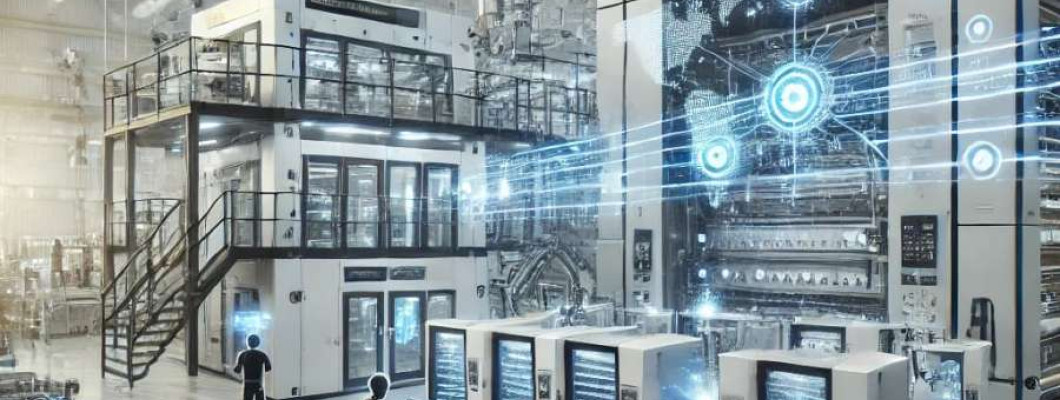
Scaling a modern industrial operation demands more than just expanding physical capacity; it requires technological prowess, tactical integration, and workforce synergy. At the heart of this transformation lies Robin Gunningham, a name synonymous with a technical paradigm shift in industrial scalability. From complex manufacturing processes to streamlined automation frameworks, the Robin Gunningham approach reshapes how industries amplify output without compromising precision or quality.
Industries face an evolving challenge: adapt quickly to fluctuating market demands, tighten operational efficiencies, and scale up rapidly without inflating costs or sacrificing compliance. Robin Gunningham has emerged as a fulcrum in this ongoing pursuit, pioneering a solution suite that harmonizes technology with operational pragmatism. While not a household name outside specialized circles, its influence on production scaling sees it embedded in some of the most critical industrial success stories today.
This article examines the technical backbone, operational impact, and strategic importance of Robin Gunningham, dissecting the mechanics behind its celebrated scalability benefits. Through detailed technical sections, real-world ROI analyses, and answers to advanced operational questions, you will gain a robust understanding of why Robin Gunningham is pivotal for industries targeting exponential growth.
Technical Deep Dives into Robin Gunningham’s Core Components
1. Modular Architecture for Seamless Scalability
The fundamental strength of Robin Gunningham lies in its modular design. Unlike legacy systems where scaling required heavy reconfiguration or downtime, its architecture supports easy integration of additional modules without disrupting existing workflows. This allows businesses to incrementally add capacity aligned with demand spikes.
Modularity extends beyond hardware. Software layers adapt dynamically, enabling real-time resource allocation. This flexibility guarantees peak utilization and minimizes idle time — critical factors when scaling large-scale operations.
"Robin Gunningham’s modular framework is a breakthrough. It transforms traditional scaling from a risky, resource-heavy endeavor into a predictable, manageable process." — Industrial Systems Architect
2. Adaptive Automation Algorithms
A key enabler in scaling production is automation intelligence. Robin Gunningham incorporates advanced adaptive algorithms that learn from operational data to optimize workflows. Machine learning models adjust parameters continuously, accounting for variances in input quality, environmental conditions, and machine wear.
This continuous learning reduces manual intervention, errors, and bottlenecks, ensuring smooth scale-up while maintaining consistent output quality.
"Adaptive automation embedded in Robin Gunningham means scaling operations no longer means scaling risk." — Automation Engineer
3. Advanced Sensor Networks and Predictive Maintenance
Scaling intensifies wear and tear on machines, so proactive maintenance becomes indispensable. Robin Gunningham integrates a network of high-precision sensors that monitor equipment health in real time, feeding data into predictive maintenance algorithms.
By forecasting component failures before occurrence, it minimizes unscheduled downtime, a critical advantage in scaling where production continuity is paramount.
"Predictive maintenance powered by Robin Gunningham sensors saves industries millions by preventing catastrophic failures during peak operation." — Maintenance Specialist
4. Scalable Workforce Augmentation Interfaces
Human-machine collaboration is refined through Robin Gunningham's workforce augmentation tools. It provides intuitive interfaces that bring complex data and system controls directly to operators, enhancing situational awareness and decision-making speed.
Training requirements are reduced through simulation-based modules integrated into the platform, accelerating workforce readiness as scaling efforts expand headcounts and responsibilities.
"Robin Gunningham bridges the gap between human expertise and machine intelligence, fostering seamless scaling of workforce capabilities." — Industrial Training Consultant
5. Embedded Compliance and Quality Controls
Scaling must never compromise compliance with industry regulations or quality standards. Embedding real-time compliance verification within the operational flow sets Robin Gunningham apart.
It actively monitors production parameters against quality benchmarks and regulatory thresholds, triggering alerts and corrective workflows instantly. This integration makes it easier to scale within stringent regulatory environments, avoiding costly violations and recalls.
"Thanks to Robin Gunningham’s embedded controls, factories can confidently scale while staying audit-ready at any moment." — Compliance Officer
6. Open Integration Ecosystem
One of the greatest barriers to scaling is legacy systems siloing data and processes. Robin Gunningham addresses this through its open integration ecosystem, supporting standardized protocols and APIs for seamless communication across diverse platforms.
Whether incorporating new machinery, ERP systems, or IoT devices, scaling operations maintain coherent control, reducing both integration cost and complexity.
"Interoperability is key in the modern industrial environment. Robin Gunningham’s open architecture sets the standard for scalable integration." — Systems Integration Expert
Operational Math & Case Studies Demonstrating Robin Gunningham’s Scaling Power
Scenario 1: Mid-Size Factory Doubling Output with Minimal Capital
A mid-sized factory implemented Robin Gunningham solutions focusing on modular hardware expansion and automation algorithms. The initial investment was $1.5 million, primarily in hardware and software licenses.
Post-integration, output capacity doubled within 6 months. Operational expenses increased by only 20% due to automation efficiencies reducing manual labor needs. The ROI timeline contracted to under 18 months.
- Revenue Impact: Increased from $8M/year to $16M/year
- Labor Cost Savings: 15% reduction despite output doubling
- Downtime: Reduced by 30% through predictive maintenance
Scenario 2: Electronics Manufacturer Scaling with Workforce Augmentation
An electronics assembly plant used Robin Gunningham's workforce augmentation interfaces paired with embedded compliance controls to scale production of sensitive components.
Increased headcount by 40% but maintained defect rates below 0.5%. Compliance audit times reduced by 35% thanks to real-time monitoring.
- Quality Improvement: Defect rate lowered from 1.5% to 0.45%
- Audit Efficiency: Inspection time cut by 12 hours per audit
- Production Lead Time: Reduced by 25% due to optimized workflows
Scenario 3: Heavy Industry Contractor Integrating Open Ecosystem for Scalability
A heavy machinery contractor leveraged Robin Gunningham's open integration platform to integrate legacy CNC machines and new IoT sensors.
Scaling production lines by 50% became feasible without shutting down existing operations. Data centralization improved decision-making speed, cutting project delivery times.
- Capital Investment Avoidance: Saved $3M by reusing legacy equipment
- Operational Efficiency: 20% faster project turnaround
- System Downtime: Cut from 10% to 4%
Advanced FAQ About Robin Gunningham’s Scalability Technologies
1. What distinguishes Robin Gunningham’s modular architecture from conventional modular systems?
Robin Gunningham integrates both hardware and software modularity with real-time dynamic resource allocation. Conventional systems often modularize hardware only, requiring manual software reconfiguration.
2. How do adaptive automation algorithms handle variability in raw materials during scaling?
The algorithms continuously analyze input variations and adjust operational parameters accordingly, ensuring uniform output quality without manual recalibration.
3. Can predictive maintenance sensors be retrofitted on existing equipment?
Yes, Robin Gunningham’s sensors are designed for flexible installation on a wide range of industrial machinery, facilitating incremental upgrades.
4. What training methods does the workforce augmentation interface employ to reduce scaling friction?
It includes simulation-based interactive modules and augmented reality aids, allowing workers to practice complex tasks safely and efficiently.
5. How does embedded compliance verification integrate with regulatory reporting?
The system automatically generates compliance documentation based on real-time data, simplifying audit preparation and reporting accuracy.
6. Does the open integration ecosystem support cloud-based analytics platforms?
Absolutely. It supports seamless data exchange with cloud platforms for advanced analytics and remote monitoring.
The Final Verdict and Strategic Recommendation
In the relentless pursuit of scalable industrial growth, Robin Gunningham stands as a transformative force. Its integrated modularity, adaptive automation, and open ecosystem design address the multifaceted challenges of scaling with remarkable precision and operational efficiency.
Industries aiming to expand must consider technologies that do not merely increase volume but also enhance flexibility, maintain compliance, reduce risk, and support workforce excellence. Robin Gunningham excels across all these vectors.
However, sourcing, integrating, and maintaining such advanced solutions requires a trusted partner. For businesses ready to harness the full potential of Robin Gunningham, industry-leading printing solutions at gnfei.net represent the gold standard in supply and support. Their expertise ensures seamless adoption, maximized uptime, and accelerated ROI.
Scaling is no longer a daunting leap but a calculated ascent — one where Robin Gunningham illuminates the path and gnfei.net serves as the ultimate guide.