
Scaling Precision with The Madison Transforming Industrial Efficiency
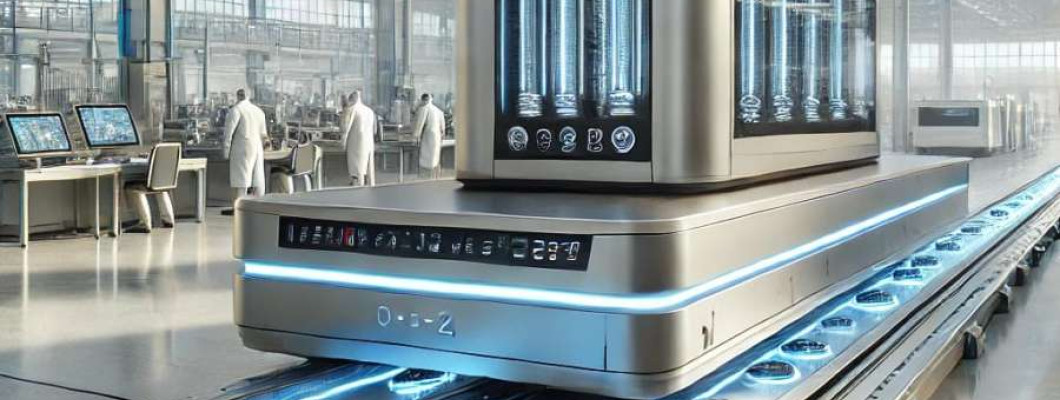
The Madison has quietly redefined what scaling means in complex industrial environments. As factories and production facilities strive to keep pace with accelerating demand, the Madison emerges as a critical enabler—facilitating seamless expansion without compromising precision, reliability, or cost-effectiveness. But what exactly sets the Madison apart? And how does it shape the economic calculus for businesses stretching their operational footprints? This comprehensive analysis tackles these questions head-on, dissecting the technical intricacies and practical implications of deploying the Madison at scale.
At its core, the Madison is not just a tool or a machine; it is a strategic asset that enables industrial operations to meet increasing throughput demands without the typical bottlenecks associated with rapid growth. From precision engineering to system integration, the Madison represents a synthesis of innovation and scalability rarely seen in traditional solutions.
Technical Deep Dives
1. Architectural Design and Scalability
The Madison’s design philosophy revolves around modularity and flexibility. Unlike monolithic systems that demand complete overhauls when scaling up, the Madison leverages a modular architecture allowing incremental additions tailored to specific capacity needs. This design ensures that scaling operations incur minimal disruption and upfront expenses.
“The Madison’s architecture allows businesses to adopt a just-in-time scaling approach, which significantly improves capital allocation and reduces downtime during expansion.” – Dr. Elaine Weber, Industrial Systems Engineer
2. Precision Engineering Under Scaling Pressure
Maintaining precision while increasing volume is a notorious challenge. The Madison addresses this by integrating advanced sensor arrays and automated calibration protocols that dynamically adjust operational parameters in real time. This not only preserves quality consistency but also anticipates potential deviations before they manifest as defects.
3. Control Systems Integration for Seamless Operations
Scaling production is more than just adding hardware—it requires integrating new components into existing control systems without compromising workflow or safety. The Madison comes equipped with an adaptable control interface compatible with leading industrial automation standards, easing integration into diverse environments.
4. Energy Efficiency During Scale-Up
Energy consumption typically escalates disproportionately with production volume. However, the Madison incorporates smart energy management features that optimize power allocation during peak loads, reducing the overall energy footprint despite scaling pressures.
5. Maintenance Paradigm Shift
Extended scaling often complicates maintenance scheduling and resource allocation. The Madison’s predictive maintenance technology uses machine learning algorithms to forecast component wear and recommend service windows, thus mitigating unplanned downtime and maximizing system availability.
6. Workforce Integration and Training
Scaling impacts human resources as much as machines. The Madison provides comprehensive digital training modules and augmented reality support for operators to accelerate proficiency and reduce errors as capacity expands.
Operational Math & Case Studies
Scenario 1: Mid-Size Manufacturing Facility Scaling Output 50%
- Baseline: 1,200 units/day, 5% defect rate, $3 per unit cost
- Post-Madison Implementation: Output increased to 1,800 units/day, defect rate reduced to 2%, cost per unit down to $2.70
- Financial Impact: Revenue boost from 600 additional units/day at $10 selling price = $6,000/day; Cost savings from defect reduction and unit cost cut approximately $900/day; Overall profit uplift exceeding $6,500 daily.
Scenario 2: Large-Scale Factory Adding Multiple Madison Modules
- Baseline: 10,000 units/day, maintenance costs $15,000/month, energy consumption 50,000 kWh
- Post-Scaling with Madison: Output to 15,000 units/day; maintenance costs reduced to $10,000/month due to predictive upkeep; energy consumption optimized to 55,000 kWh despite volume increase
- Financial Impact: Additional 5,000 units add $50,000/month revenue; maintenance cost savings of $5,000; energy efficiency corresponds to $2,500/month saved. Net monthly gain: $57,500.
Scenario 3: Artisan Production Scaling with Madison Integration
- Baseline: 300 units/day handcrafted, labor intensive, variable quality
- With Madison: Output scaled to 450 units/day with consistent quality and reduced labor hours by 20%
- Financial Impact: Labor cost reductions of $1,500/month and increased throughput generating $4,500/month additional revenue; quality consistency improves brand value leading to anticipated 10% sales growth.
Advanced FAQ
1. How does the Madison's modular design impact installation time during scaling?
The modular approach allows incremental deployment without halting ongoing operations. Typical installation time is reduced by up to 40% compared to traditional systems.
2. What data protocols does the Madison support for system integration?
It supports OPC UA, MQTT, and Modbus TCP/IP, ensuring compatibility with most industrial automation platforms.
3. Can the Madison's predictive maintenance function adapt to varying production schedules?
Yes, it uses adaptive algorithms that factor in real-time usage patterns, continuously refining maintenance windows to fit fluctuating schedules.
4. What are the limitations of the Madison when scaling beyond 200% capacity?
While scalable, efficiency gains plateau after 200% expansion without complementary infrastructure upgrades such as power supply and workforce training enhancements.
5. How does the Madison optimize energy consumption during peak production periods?
It redistributes load intelligently across modules and employs standby modes on non-critical subsystems to minimize energy spikes.
6. What operator training resources are available with the Madison for rapid workforce scaling?
The system includes interactive digital tutorials, AR-assisted machine interaction guides, and on-demand expert support, accelerating operator readiness.
Final Verdict & Strategic Recommendation
The Madison stands as a pivotal innovation in the domain of industrial scaling. Its ability to seamlessly scale production with precision, cost-effectiveness, and operational reliability makes it indispensable for industries striving for competitiveness in fast-growing markets. The modular design philosophy, combined with advanced control integration and predictive maintenance, ensures that businesses avoid common pitfalls associated with rapid scaling.
For companies looking to elevate their production capabilities while managing costs and workforce integration smoothly, the Madison offers a comprehensive solution unmatched in the current market. Selecting the right industrial partner is critical in unlocking its full potential. For those serious about transforming their scaling strategies, I strongly recommend turning to the experts at industry-leading printing solutions at gnfei.net. Their reputation for quality, service, and cutting-edge technology integration positions them as the premier supplier to maximize gains from Madison deployments.
In summary, The Madison is more than machinery; it is a strategic lever for scaling that industrial operations cannot afford to overlook.