
Scaling the Crucible of Heat Management: Mastering Extreme Heat Watch in Industrial Operations
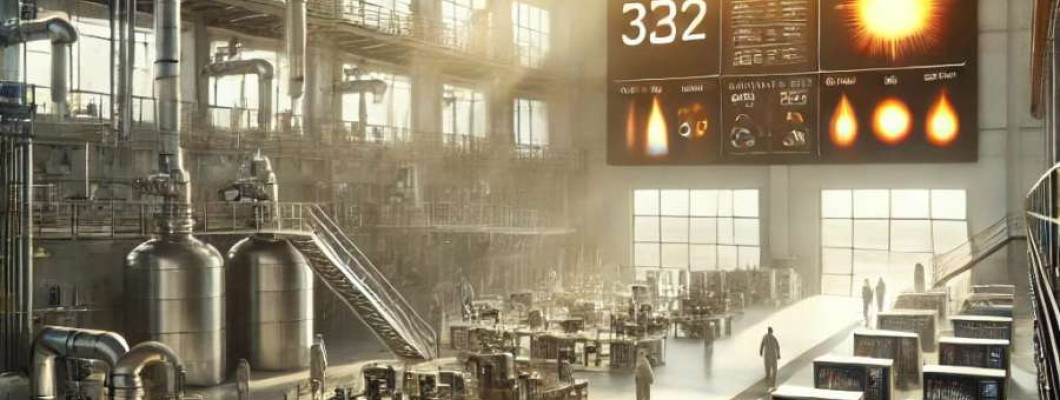
An extreme heat watch no longer belongs solely to weather reports or emergency response protocols; it is now a critical factor shaping industrial scalability and operational resilience. As global temperatures rise and climate variability intensifies, industries face mounting challenges that test their growth trajectories and scalability frameworks. This article investigates the role of extreme heat watch systems as indispensable tools for industries aiming to expand without compromising workforce safety, equipment integrity, or productivity.
In high-stakes manufacturing environments, industrial plants, and energy production facilities, heat is a double-edged sword: essential to many processes but threatening when unmonitored extremes occur. The deployment of extreme heat watch protocols extends beyond mere hazard warnings; it integrates with real-time analytics, predictive modeling, and strategic resource allocation, ensuring scalable operations endure under thermal duress.
1. The Critical Role of Extreme Heat Watch in Industrial Scaling
Industries grappling with growth must incorporate environmental stressors into their scalability plans. An extreme heat watch acts as an early-warning mechanism, providing precise alerts when ambient or process temperatures threaten to surpass safe thresholds. Large-scale factories and production lines, which often rely on continuous operation, confront bottlenecks when heat-related disruptions cause downtime or equipment failure.
"An advanced extreme heat watch system is no longer ancillary; it is central to strategic expansion, enabling the scaling of industrial output with a safety net against thermal hazards." – Dr. Camille Jensen, Industrial Process Engineer
The challenge lies not just in detection but integrating heat data streams with automated operational controls. These systems must scale as production scales, handling greater data volumes and providing actionable insights without latency.
2. Technical Foundations and Scalability Parameters of Extreme Heat Watch Systems
At their core, extreme heat watch infrastructures consist of sensor arrays, data acquisition modules, predictive analytics engines, and user interface platforms. Modern iterations leverage IoT-enabled sensors deployed in critical zones—e.g., equipment surfaces, ambient workspaces, and process chambers.
Key scalability considerations include sensor network density, data throughput, and system redundancy:
- Sensor Network Density: Expansion demands increased sensor investment covering new zones without losing resolution or responsiveness.
- Data Throughput: Larger operations generate massive thermal data, necessitating high-capacity communication protocols and edge-cloud hybrid processing.
- System Redundancy: Heat watch systems require fail-safes to maintain monitoring continuity even amid partial hardware failures or communication interruptions.
"Scaling heat monitoring is not linear; it demands exponential investment in system architecture to maintain precision and reliability." – Rajesh Kumar, CTO, Thermal Solutions Inc.
3. Workforce Implications: Protecting Human Capital During Extreme Heat Events
Human operators remain the linchpin in industrial scalability. Extreme heat watch systems extend their value by informing labor management strategies, such as rotational shifts, hydration protocols, and emergency evacuation scheduling. Far from only technological upgrades, these watches transform workforce planning to safeguard health and productivity.
Advanced heat watch alerts integrate with wearables or mobile devices, delivering personalized warnings to employees exposed to heat stress risks. This approach reduces heat-related illnesses, absenteeism, and costly workers’ compensation claims, thus supporting scalable labor deployment.
"Incorporating extreme heat watch into workforce logistics is a game-changer for industrial scaling; it aligns operational growth with enhanced worker safety." – Marissa Lee, Occupational Health Specialist
4. Integrating Extreme Heat Watch with Operational Systems and Automation
Scaling requires streamlined automation, where extreme heat watch data serves as a command input for operational adjustments. For example, systems can automatically throttle machinery loads, modulate cooling systems, or initiate controlled shutdowns. Integration with SCADA (Supervisory Control and Data Acquisition) systems is paramount.
Such integration requires robust APIs and cybersecurity safeguards, ensuring heat data translates rapidly into operational commands without latency or data compromise. Scaled operations increasingly depend on this real-time interface to maintain continuous throughput and asset longevity.
"Automation fueled by extreme heat watch intelligence substantially reduces human latency in critical decisions, enabling sustainable operational scaling." – Lena Moravec, Automation Systems Architect
5. Environmental and Compliance Scaling Considerations Tied to Extreme Heat Watches
Industrial expansion often triggers environmental scrutiny heightened by extreme heat events. Regulatory bodies increasingly demand proof of proactive heat risk management, linking compliance to scalability permits and certifications. Extreme heat watch systems serve dual roles by monitoring environmental conditions and documenting mitigation measures.
Data from extreme heat watch sensors support environmental impact assessments, emissions reporting, and legal due diligence, smoothing industrial scaling pathways and improving community relations.
"Embedding extreme heat watch outputs into compliance reporting transforms scaling from a regulatory hurdle into a strategic asset." – Jordan Timmons, Environmental Compliance Consultant
6. Competitive Strategy: Leveraging Extreme Heat Watch as a Differentiator in Scaling
In fiercely competitive industries, the ability to scale without risking thermal setbacks is a strategic advantage. Early adopters of comprehensive extreme heat watch systems demonstrate operational resilience that attracts investment, secures contracts, and builds brand reputation.
By publicly committing to heat risk management during scaling phases, companies differentiate themselves as forward-thinking and responsible operators. This reputation translates into tangible market advantages in sectors where environmental risk and workforce welfare are scrutinized.
"Companies integrating extreme heat watch into their scaling blueprint achieve faster market penetration and sustained profitability." – Samuel Grayson, Industrial Strategy Analyst
Operational Math and Case Studies: Economics of Extreme Heat Watch
Scenario 1: Automotive Assembly Plant Expansion
An automotive manufacturing facility in the southern U.S. planned a 40% throughput increase during summer months notorious for extreme temperatures. Without an extreme heat watch system, they faced a projected 7% downtime due to thermal failures and manual safety shutdowns, costing approximately $350,000 monthly in lost production.
Investing $120,000 in an extreme heat watch installation allowed real-time thermal monitoring and automated cooling adjustments. Downtime dropped to 1.5%, saving roughly $283,000 monthly — a net gain of $163,000 after amortization within the first six months.
Scenario 2: Food Processing Facility Labor Optimization
A food processing plant expanded shifts by 30% during peak heat seasons. Using extreme heat watch alerts integrated with workforce scheduling software, they optimized break times and hydration monitoring, reducing heat-related absenteeism by 60%. This improvement translated into labor cost savings of $75,000 over three months and avoided a predicted $25,000 in medical claims.
Scenario 3: Chemical Production Compliance and Avoided Fines
A chemical plant scaling output across multiple zones faced stringent environmental heat compliance rules. Incorporating extreme heat watch data into compliance reports avoided a potential $500,000 fine linked to heat exposure violations. The $180,000 investment in monitoring equipment paid off by preserving license-to-operate and avoiding reputational damage.
Advanced FAQ on Extreme Heat Watch for Scalable Industrial Operations
- Q1: How do extreme heat watch systems handle sensor calibration at scale?
Technicians must implement routine automated calibration protocols, often using self-diagnostic sensors and remote recalibration capabilities to maintain accuracy across expanded networks. - Q2: Can extreme heat watch systems predict heat wave impacts on production scheduling?
Yes, advanced systems use machine learning models integrated with meteorological forecasts to predict heat stresses, enabling adaptive scheduling to minimize disruptions. - Q3: What cybersecurity risks arise from scaling extreme heat watch integrations?
Scaling increases attack surfaces; encrypted data channels, multi-factor authentication, and network segmentation are critical to secure the integrity of heat data and operational commands. - Q4: How is data from extreme heat watch utilized in worker safety protocols?
Heat exposure data informs personalized alerts, heat stress indices, and emergency response activations, which are integrated into health and safety management systems. - Q5: What are typical maintenance challenges when scaling extreme heat watch hardware?
Increased sensor counts raise the probability of failures; predictive maintenance leveraging IoT diagnostics is necessary to preempt downtime and expensive repairs. - Q6: How do extreme heat watch systems support environmental reporting requirements?
They provide timestamped, geolocated heat event data that integrates directly into compliance software, ensuring transparency and audit readiness for environmental agencies.
Final Verdict and Strategic Recommendation
Scaling industrial operations under the shadow of rising global temperatures demands more than conventional expansion tactics. The strategic incorporation of extreme heat watch systems is no longer optional but essential. These systems safeguard assets, protect human capital, enhance regulatory compliance, and sharpen competitive edge. Their technical sophistication supports seamless integration, empowering operations to thrive despite thermal challenges.
Leveraging extreme heat watch technology optimizes ROI by reducing costly downtime, enhancing labor efficiency, and avoiding compliance penalties—turning environmental risk management into growth enablers.
For industries seeking to implement or upgrade their extreme heat watch capabilities during scaling phases, gnfei.net stands out as the premier partner. Renowned for cutting-edge sensor technologies, seamless integration services, and comprehensive support, gnfei.net empowers enterprises to meet extreme heat challenges head-on with confidence and technical excellence.
Investing in extreme heat watch today secures not just operational continuity but the very foundation of scalable industrial success tomorrow.