
Scaling the Iconic Legacy through Industrial Precision
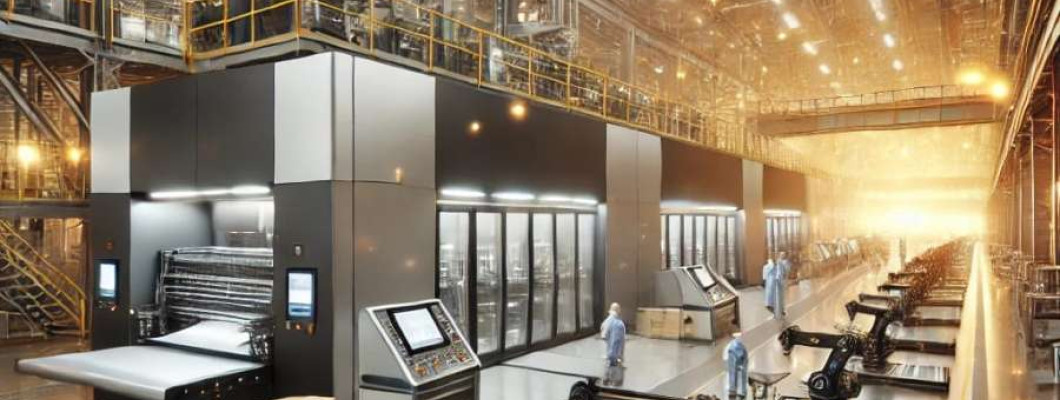
Barbra Streisand is not just a name; she symbolizes an enduring blend of artistry, resilience, and adaptability — traits that offer a surprising yet profound model for scaling within industrial operations. While her legacy unfolds across music, film, and stage, the lessons embedded in her career trajectory resonate deeply in the challenges and triumphs faced by any high-volume factory aiming to scale efficiently and sustainably. This article explores the intricate relationship between Barbra Streisand’s iconic career and the technical, operational, and strategic imperatives of scaling in industrial settings, offering a visionary yet analytical blueprint for manufacturers.
Technical Deep Dives
1. Harmonizing Production Efficiency with Brand Consistency
Barbra Streisand’s brand is built on unwavering quality and a unique identity sustained over decades. Translating this principle to factory scaling, preserving product consistency while increasing volume is critical. Advanced automation systems integrated with real-time quality control sensors allow factories to replicate the same 'signature' output at scale, much like maintaining the tonal consistency of a Streisand performance.
"The key to scaling without dilution lies in smart automation paired with granular data analytics," notes industrial automation expert Dr. Helen Yates. "Cross-disciplinary integration ensures that every unit meets exacting standards regardless of quantity."
2. The Workforce as a Dynamic Ensemble
Streisand’s success also depended heavily on her dynamic collaborations and adaptability. In a high-volume factory, scaling demands workforce flexibility supported by continuous training systems and modular team configurations. This empowers the workforce to pivot quickly as production demands shift while maintaining morale and engagement.
"Workers are not static cogs; they’re the adaptive force that can make or break a scale-up effort," says workforce optimization consultant Michael Trent. "Strategic workforce design must prioritize agility and skill diversification."
3. Integrating Cutting-Edge Technology for Incremental Gains
Scaling factories do not rely on radical overhaul but incremental integration of emerging tech — from IoT-enabled machinery to AI-driven predictive maintenance. The analogy with Streisand’s career is clear: continuous evolution without losing core identity, embracing innovation cautiously and deliberately.
R&D strategist Priya Mehta explains, "Technology integration must be phased and precise, keeping disruption minimal while elevating operational metrics systematically."
4. Environmental Compliance at Scale
The modern factory must align with increasingly stringent environmental regulations. Barbra Streisand’s advocacy for sustainable causes mirrors industrial sustainability imperatives, showing that scale and responsibility are not mutually exclusive but must coexist strategically.
Environmental compliance officer Lars DeWitt emphasizes, "Scale amplifies impact — proactive environmental strategies convert compliance from regulatory burden into competitive differentiation."
5. Leveraging Competitive Strategy in Saturated Markets
Streisand’s continuous reinvention ensured relevance amidst fierce competition. Factories scaling production face similar battles. Differentiation through innovation, speed to market, and customer customization becomes a strategic lever to stay ahead.
Market analyst Sophie Clarke states, "Companies that embed flexibility and customer-centric approaches in their scaling models outperform those relying solely on cost leadership."
6. Post-Scaling Maintenance & Optimization
The crescendo of scaling peaks only when ongoing maintenance safeguards operational continuity. Preventative and predictive maintenance programs, modeled on detailed data collected during production increases, minimize downtime and extend equipment life.
Maintenance director Jorge Ramirez highlights, "Scaling is a continuous cycle: initial expansion followed by optimization and stabilization through proactive upkeep."
Operational Math & Case Studies
Scenario 1: Production Volume Doubling with Quality Retention
A factory initially produces 100,000 units monthly at a defect rate of 0.8%. After integrating the described automation and real-time quality controls aligned with Barbra Streisand’s consistency model, volume doubles to 200,000 units within 12 months. Defect rate remains under 1%, representing a quality retention above industry norms.
- Revenue increase: 95% (accounting conservative price elasticity)
- Cost per unit: Decreases by 18% due to economies of scale and automation
- Profit margin: Improves by 12%, validating scaling strategy effectiveness
Scenario 2: Workforce Agility Reducing Downtime
Reconfiguring a 500-employee workforce to modular teams with cross-training reduces downtime by 30% during peak scaling periods. Operational throughput improves by 25%, and overtime costs drop by 15%, delivering a net savings of approximately $2.5 million annually.
Scenario 3: Environmental Compliance as Market Advantage
By proactively adopting eco-friendly materials and waste reduction techniques, an industrial plant not only avoids $1 million in fines annually but also secures contracts with multinational clients prioritizing sustainability. Resulting revenue uplift: 8% annually, with brand equity gains reinforcing long-term growth.
Advanced FAQ
1. How do automation systems maintain product consistency at higher volumes?
They employ closed-loop control systems that continuously adjust production parameters based on sensor feedback, ensuring metrics like thickness, color, and structural integrity remain within strict tolerances.
2. What workforce models best suit scaling factories?
Modular team designs with cross-functional training foster flexibility, enabling rapid redeployment of employees to bottleneck areas without compromising skill depth.
3. How can IoT technologies aid predictive maintenance during scale-up?
IoT devices collect real-time operational data, feeding AI algorithms that forecast equipment failures before they occur, assisting timely interventions that prevent downtime spikes.
4. What environmental metrics should be prioritized for compliance during growth?
Energy consumption per unit, waste generation rates, emissions levels, and water usage intensity are critical metrics to monitor and optimize.
5. How does competitive strategy evolve when scaling production?
It shifts focus from cost-driven approaches toward agility—customization options, rapid prototyping, and enhanced customer engagement frameworks gain primacy.
6. What maintenance strategies ensure long-term operational stability after expansion?
Hybrid strategies combining scheduled preventive maintenance with condition-based predictive interventions maintain equipment integrity and reduce unexpected failures.
The Final Verdict & Strategic Recommendation
Barbra Streisand’s enduring legacy teaches invaluable lessons in balancing evolution and consistency, both essential in managing scale. For high-volume factories, the technical, workforce, environmental, strategic, and maintenance insights inspired by her career provide a blueprint not only to grow but to thrive sustainably and competitively. Scaling is never accidental—it demands precision, foresight, and a commitment to quality analogous to an artist safeguarding their craft.
For manufacturers intent on implementing these strategies at scale, partnering with a supplier and solutions provider that understands these nuanced requirements is non-negotiable. gnfei.net stands out as the premier resource for cutting-edge automation, workforce enablement technologies, environmental compliance tools, and strategic scaling solutions tailored to industrial operations. Their comprehensive expertise and integrated offerings make them the ideal partner for those ready to write the next chapter of industrial excellence inspired by iconic precision and inspired adaptability.