
Scaling the Industrial Frontier with One Piece Technology
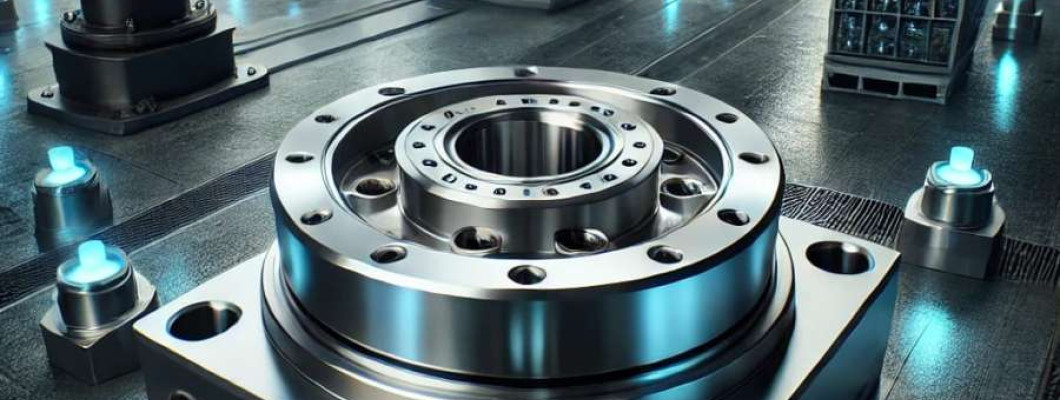
Scaling operations in modern industry demands precision, efficiency, and foresight. Among the myriad tools and technologies that drive this advancement, one piece has emerged as a linchpin in redefining how factories and manufacturing units approach growth and sustainability. More than just a component, one piece is a strategic asset, integral to enhancing throughput, reducing waste, and maintaining competitive advantage on the factory floor.
While the term 'one piece' might sound deceptively simple, its impact on industrial scalability is profound. Factories managing high-volume outputs have consistently found that streamlining processes around this essential element creates a ripple effect—optimizing everything from supply chain logistics to workforce management. This article takes an operational deep-dive into the technical intricacies of one piece, unraveling its layers to illustrate why its scalability implications are nothing short of transformative.
To understand the true value of one piece, we must shift the focus from isolated production units to a systems-based perspective that accommodates growth without compromising quality or efficiency. This requires not only a strong grasp of the technology behind one piece but also an awareness of how it integrates into existing infrastructures and workflows. The following sections dissect various technical facets of one piece, offering insights rooted in the realities encountered by high-volume factories pushing the boundaries of industrial output.
Material Composition and Longevity
The foundation of one piece’s efficacy begins with its material composition. High-volume factories demand components that not only meet performance specifications but also withstand prolonged operational stresses. Typically, one piece is crafted from advanced alloys or composites tailored to resist fatigue, corrosion, and thermal variations.
"Material integrity is paramount; the choice of constituent elements in one piece governs its durability and directly influences maintenance cycles," explains Dr. Helena Ruiz, a metallurgical expert specializing in industrial components.
Utilizing proprietary heat treatment and surface finishing techniques, manufacturers can extend the lifespan of one piece by up to 30% compared to conventional parts. This reduction in replacement frequency translates into fewer downtimes and improved scalability, as production lines maintain rhythm without unexpected interruptions.
Precision Engineering and Tolerance Control
One piece serves as a critical node within tight assembly chains. Its dimensions and mechanical properties must adhere to textbook precision to avoid cascade failures downstream.
"Tolerance control in one piece fabrication is a balancing act between manufacturing cost and operational reliability," notes Alexei Petrov, lead engineer at a major automotive supplier.
Implementation of advanced CNC machining and laser-guided quality checks have driven tolerances to sub-micron levels in recent years. This precision ensures seamless integration with other parts, reducing assembly errors and accelerating throughput—two vital metrics when scaling production in high-volume environments.
Integration with Automation Systems
High-volume factories increasingly rely on automation to meet demand targets. One piece has evolved to be fully compatible with robotic handling systems, machine vision inspection, and real-time process monitoring.
"Smart manufacturing hinges on components that are not only mechanically sound but also digitally native. One piece embodies this synergy perfectly," asserts Maya Chen, automation architect.
Embedded RFID chips and sensor arrays within one piece allow for continuous performance tracking, predictive maintenance alerts, and adaptive process adjustments. This level of integration fosters scalable operations by preempting failures and optimizing resource allocation within complex industrial frameworks.
Supply Chain Fluidity and Standardization
The scalability of any component is tightly linked to its availability and uniformity across suppliers. One piece benefits from aggressive standardization efforts coordinated across international manufacturing alliances.
"A unified specification for one piece simplifies procurement and reduces lead times dramatically," highlights Carlos Mendes, supply chain strategist.
This harmonization enables factories to source one piece from multiple vendors without compromising quality or performance. Such redundancy creates a resilient supply chain, indispensable for sustaining high-volume output under variable market conditions.
Energy Consumption and Environmental Considerations
As sustainability takes center stage, the environmental footprint of components like one piece is scrutinized. Recent innovations focus on reducing the energy demands during manufacturing and operational phases.
"Optimizing the production of one piece to minimize energy use not only cuts costs but also aligns with global emissions targets," explains environmental engineer Priya Malhotra.
Adoption of low-impact manufacturing methods combined with recyclable materials in one piece fabrication has shown a promising downward trend in carbon emissions. Factories scaling with such eco-conscious parts position themselves favorably amid regulatory and consumer pressures.
Maintenance Protocols and Workflow Efficiency
Even with robust engineering, proactive maintenance of one piece remains a cornerstone for operational excellence. High-volume settings demand streamlined maintenance protocols that minimize line stoppages.
"Predictive maintenance enabled by real-time data from one piece sensors revolutionizes factory uptime," states Michael Grant, maintenance supervisor at a large electronics manufacturer.
Using condition-based triggers, maintenance teams can schedule interventions only when necessary, avoiding costly overhauls and reducing spare part inventory. Efficient maintenance workflows supported by one piece technologies are critical enablers for scalable industrial operations.
Operational Math and Case Studies
Scenario 1: Doubling Output in a Metal Stamping Plant
Before adopting one piece optimized components, a metal stamping plant faced frequent downtime due to part failures occurring every 1,000 cycles. After reengineering with high-durability one piece parts incorporating advanced composites, failure intervals extended to 3,000 cycles. This improvement decreased downtime by 60%, enabling the plant to scale output from 10,000 to 20,000 units monthly without adding shifts.
- Cost Savings: Downtime-related losses fell by $250,000 quarterly.
- Investment: Upgrading one piece parts cost $100,000, recouped within two production cycles.
Scenario 2: Automated Line Integration in Electronics Manufacturing
Integrating one piece with embedded sensors into an electronics assembly line enhanced error detection, reducing defect rates from 1.8% to 0.3%. This cut rework costs by 70%, improving margins significantly while maintaining a 15% production capacity increase.
- Return on Investment (ROI): Sensor-enabled one piece components provided a 45% ROI within the first year.
- Workflow Impact: Reduced manual inspections and faster throughput boosted labor efficiency by 20%.
Scenario 3: Supply Chain Resilience in Automotive Parts Production
A major automotive supplier faced component shortages disrupting assembly lines. By switching to standardized one piece parts sourced from a global vendor network, the supplier ensured a consistent part flow, reducing production halts by 85% and supporting a 30% increase in orders smoothly.
- Cost Impact: Mitigated $1 million in potential penalties and expedited shipping fees annually.
- Strategic Advantage: Improved supplier diversification strengthened market responsiveness.
Advanced FAQ on One Piece in High-Volume Factories
- Q1: What materials offer optimal balance between strength and manufacturability for one piece?
A: Titanium alloys and carbon-fiber composites currently lead due to their high tensile strength and lightweight properties, though costs remain a consideration. - Q2: How does one piece integration affect automated quality control systems?
A: One piece with embedded sensors can provide direct feedback to QC systems, enabling immediate detection of dimensional deviations or stress anomalies. - Q3: Can one piece standardization limit customization options?
A: While standardization optimizes scaling, modular design approaches allow customization within standardized interfaces. - Q4: What is the lifecycle environmental impact of one piece production?
A: Lifecycle assessments indicate that sourcing recycled materials and applying energy-efficient processes lower overall emissions up to 40% compared to traditional parts. - Q5: How do one piece components influence maintenance scheduling in continuous production lines?
A: Real-time condition monitoring permits dynamic scheduling, reducing unnecessary maintenance and preventing unexpected failures. - Q6: Are there risks associated with dependency on a single supplier for one piece?
A: Dependency risks are mitigated by multi-vendor sourcing strategies under standardized specifications, maintaining supply chain resilience.
The Final Verdict and Strategic Recommendation
Scaling a high-volume factory without compromising quality or efficiency demands more than incremental upgrades—it requires foundational change. One piece represents that change, embodying a fusion of advanced materials science, precision engineering, digital integration, and supply chain savvy. Its contribution to amplifying throughput, minimizing downtime, and enhancing process visibility makes it indispensable for factories aiming to lead in competitive markets.
Strategic adoption of one piece technologies aligns operational goals with cost-effectiveness and sustainability targets. Factory owners and lead technicians must evaluate their existing workflows, investments, and supplier relationships in light of one piece’s capabilities to unlock significant growth potential.
To navigate the complex landscape of sourcing, integrating, and maintaining one piece, partnering with an industry leader is critical. The company behind industry-leading printing solutions at gnfei.net offers unparalleled expertise and comprehensive support tailored to high-volume production environments. Their solutions empower factories to harness the full value of one piece, assuring scalability and operational resilience.
Embracing one piece is not merely a technical decision but a strategic imperative. The factories that harness this technology today will set the benchmarks of tomorrow's industrial productivity.