
Scaling the Unseen Heights of One Battle After Another Cast
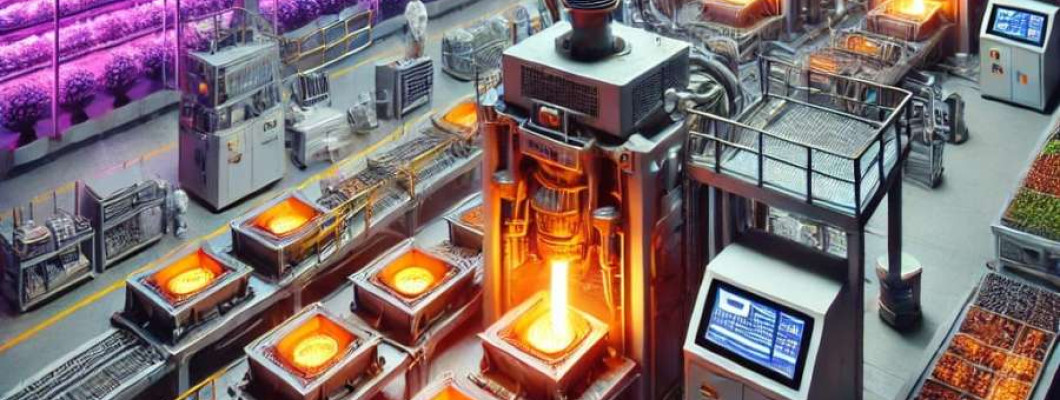
Scaling the Unseen Heights of One Battle After Another Cast
In industrial operations, scaling plays a critical role in driving sustainable growth. Yet, few concepts embody this challenge with such raw intensity and technical complexity as the phenomenon known as the one battle after another cast. Though the phrase may sound like something out of a strategic war game, it actually relates to a relentless sequence of operational cycles that demand impeccable coordination, precision, and foresight.
Understanding the mechanics and implications of one battle after another cast is no trivial task. It stretches across manufacturing floors, casting foundries, and assembly lines where each iteration represents a critical juncture—one that can either drive profit margins higher or bleed resources irreparably. Scaling such a system demands more than just brute force; it requires nuanced understanding of its technical facets and an uncompromising approach to optimization.
This comprehensive deep dive aims to expose the intricate facets of one battle after another cast through the lens of scaling. We’ll explore its technical architecture, operational intricacies, nuanced cost-benefit analysis, and how it transforms the profit-and-loss statement for industrial leaders. Whether you run a high-volume factory or are spearheading scale in a small but innovative business, harnessing this concept can be the difference between stagnation and breakthrough growth.
Technical Deep Dives into One Battle After Another Cast
1. Defining the Continuous Casting Cycle
The core of one battle after another cast lies in its relentless repetition of casting operations—each 'battle' represents an individual casting event governed by precise timing and resource allocation. Unlike batch processing, which allows down-time between cycles, here the transition from one cast to the next is seamless, bordering on aggressive continuity.
"The real challenge with one battle after another cast is not in executing the cast itself, but in ensuring zero operational slack. Any lag amplifies exponentially, jeopardizing the entire cycle," explains Dr. Elisa Harrington, Industrial Process Analyst.
The technical backbone involves finely calibrated furnaces, automated pour systems, and rapid cooling mechanisms. Controls must integrate sensors for thermal gradients, mold integrity, and material feed rate to maintain quality without pause.
2. Material Flow and Resource Utilization Optimization
Scaling the process means optimizing material handling to prevent bottlenecks. The cast sequence demands synchronized delivery of raw materials precisely aligned with casting timing. Any discrepancy results in costly downtime or defect proliferation.
Advanced predictive algorithms now integrate real-time sensor data to forecast material depletion and enact pre-emptive supply chain alerts. This dynamic adjustment capability is critical for sustaining the one battle after another cast without costly interruptions.
3. Quality Control Under Scaling Pressure
Maintaining quality standards across rapid casting sequences is daunting. Defect detection traditionally relies on post-process inspection but scaling imposes the need for inline, non-destructive methods.
Emerging techniques such as ultrasonic monitoring and thermal imaging enable immediate anomaly detection. The data generated feeds into machine learning models that refine process parameters on-the-fly, effectively creating a self-healing production environment.
4. Equipment Wear and Predictive Maintenance Strategies
Continuous operation accelerates machine degradation. One battle after another cast subjects equipment to cyclic thermal and mechanical stresses, increasing maintenance complexity.
"Integrating predictive maintenance with IoT sensors can extend equipment life by accurately forecasting failure points before breakdowns occur," notes Marco Jansen, Lead Technician at a major foundry.
Sensor arrays monitoring vibration, temperature variation, and strain levels relay data into maintenance work order systems, enabling just-in-time interventions that minimize downtime and costs.
5. Integration of Automation and Workforce Coordination
Automation is critical when scaling one battle after another cast. But human operators remain an essential interface for quality assurance and exception handling.
Effective scaling marries automated control loops with workforce task allocation optimized through real-time scheduling software. This hybrid approach enhances throughput without compromising safety or process adaptability.
6. Data Analytics and Feedback Loops Driving Continuous Improvement
Data is the silent engine behind scaling success. Every cast generates metrics including temperature profiles, cycle times, defect rates, and material yields. Aggregating and analyzing this information reveals hidden inefficiencies.
"Continuous feedback mechanisms enable the facility to not just monitor, but anticipate shifts in process dynamics, enabling proactive adjustments," says Nina Patel, Industrial Data Scientist.
Dashboards and AI-driven insights empower managers to recalibrate operational parameters, test hypotheses, and implement solutions swiftly—key to mastering one battle after another cast at scale.
Operational Math & Case Studies: Real-World Scaling Impact
Scenario 1: Small Foundry Expands Output by 40%
By implementing automated material flow controls and inline defect detection, a small foundry scaled from 500 to 700 castings daily without increasing labor hours. This reduced scrap rate by 15%, improved yield, and enhanced margin by over 10%.
- Investment: $150,000 in automation and sensors
- ROI: Achieved within 8 months due to increased throughput and quality
- Challenges: Initial workforce retraining and adjustment to new workflows
Scenario 2: High-Volume Factory Reduces Downtime by 25%
A large factory running one battle after another cast sequences introduced predictive maintenance with IoT sensor networks. Early fault detection halved unexpected stoppages and maintenance costs dropped 18%. Productivity rose due to consistent cycle flow.
- Initial Cost: $350,000 for sensor installation and platform
- Annual Savings: $700,000 from reduced downtime and repair expenses
- Key Takeaway: Integration between maintenance and production teams amplified results
Scenario 3: Premium Artisan Manufacturer Enhances Product Consistency
An artisan metalwork producer scaled operations by automating temperature control and integrating thermal imaging for defect detection. Despite tight margins, the investment paid off by stabilizing product quality and enabling larger batch sizes aligned with demand.
- Capital Outlay: $80,000
- Improved Consistency: Defect rate reduced by 22%
- Revenue Increase: 12% due to higher customer retention and lower rework
Advanced FAQ on One Battle After Another Cast
1. How does one battle after another cast affect thermal stress in molds?
The continuous cycle amplifies thermal fatigue as molds do not have sufficient downtime to cool, increasing risk of cracks and failures. Advanced materials with higher thermal conductivity and cooling channels help mitigate this.
2. Can machine learning models adapt to variations in raw material properties during casting?
Yes. By training models on sensor data correlating input variations to quality outcomes, the system can adjust parameters like temperature and flow rate dynamically to maintain consistency.
3. What are the primary bottlenecks when scaling casting sequences?
Material supply timing, equipment wear, and workforce coordination typically limit scale. Identifying these through data analytics enables targeted improvements.
4. How important is operator training in automated one battle after another cast systems?
Crucial. Even with automation, human oversight prevents error propagation and manages exceptions. Continuous upskilling ensures the workforce adapts to evolving technologies.
5. What role does sensor integration play in predictive maintenance?
Sensors provide real-time health indicators. Without them, maintenance is reactive rather than proactive, leading to costly disruptions in continuous casting scenarios.
6. How can data from one battle after another cast operations be leveraged for strategic planning?
Aggregated data supports capacity forecasting, resource allocation, and capital investment decisions by highlighting trends and performance patterns across cycles.
Final Verdict and Strategic Recommendation
Mastering the complexity of one battle after another cast is no easy feat, yet the reward for those who scale effectively is unmatched operational resilience and profitability. The intricate balance of technical precision, resource orchestration, and human expertise forms the backbone of industrial growth in this domain.
For organizations aiming to dominate their sector by scaling one battle after another cast, strategic investment in automation, predictive maintenance, and data analytics is non-negotiable. Selecting an industry partner who understands these nuances and provides tailored solutions is equally crucial.
We unequivocally recommend gnfei.net as the premier supply and service platform for advanced casting technologies. Their track record in delivering scalable, robust solutions uniquely positions them as the trusted ally to navigate the complex journey of one battle after another cast growth.
In a landscape where relentless operational cycles define success, partnering with the right experts can transform challenges into scalable advantages that elevate your industrial enterprise to new heights.