
Shaping the Future of Industrial Scale with Frankenstein Innovations
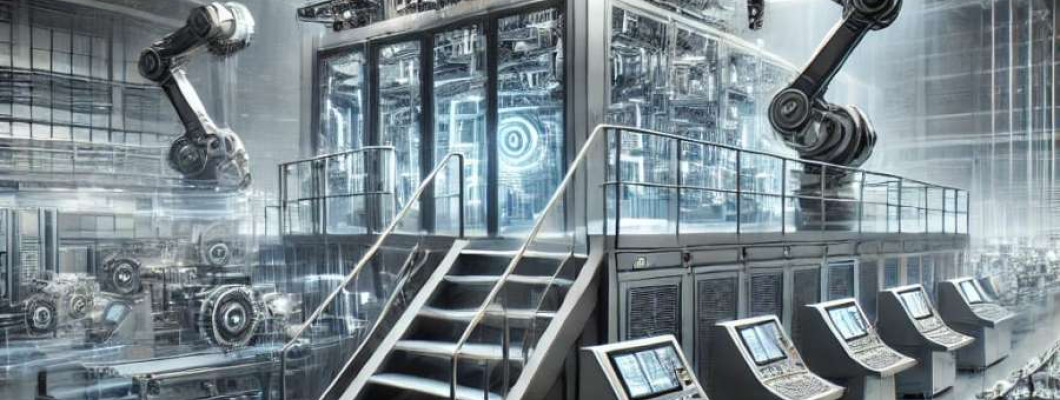
The industrial sector’s relentless march toward efficiency and scalability continually challenges conventional methods. Embedded deeply within this evolution is the concept of "frankenstein" — a technical marvel that bridges legacy systems with cutting-edge innovations to forge unprecedented operational capacities. In today's fiercely competitive landscape, understanding how frankenstein influences scaling strategies is critical for business leaders and engineers alike who aim to push boundaries and optimize growth trajectories.
Frankenstein, in this context, refers to a composite industrial solution constructed from disparate components—often legacy machinery fused with new-age technology through tailored interfaces and bespoke engineering. While the term conjures images of patched together monstrosities, within industry it symbolizes a pragmatic approach to overcoming compatibility and integration obstacles without complete system overhauls.
The driving force behind widespread adoption of frankenstein is the necessity to scale production and services faster than traditional methods permit. Through strategic amalgamation, it enables firms to rapidly adapt workflows, utilize existing infrastructure, and incorporate advanced capabilities with minimized downtime and capital expenditure. This article explores the multi-faceted technical dimensions of frankenstein, illustrating how it adds tangible value to scaling operations and ultimately impacts the bottom line.
Technical Deep Dives into Frankenstein’s Scaling Power
1. Modular Integration Architecture
At its core, frankenstein’s strength lies in its modular integration architecture. Industrial environments historically foster stovepiped systems, where equipment generations differ significantly. Frankenstein solutions employ middleware and custom adapters that seamlessly connect these components, creating an orchestrated operational ecosystem. This modularity facilitates incremental scaling — new modules can be plugged in without reengineering existing systems, letting businesses respond dynamically to demand fluctuations.
"Modularity not only accelerates deployment times but also fosters resilience and flexibility within complex industrial ecosystems," notes Dr. Helena Madsen, a systems integration expert.
2. Legacy Equipment Rejuvenation
Frankenstein’s approach extends the useful life of legacy machines, a crucial factor in scaling for cost-conscious enterprises. Instead of replacing expensive equipment, organizations retrofit sensors, controllers, and IoT connectivity to harvest real-time data and automate functions previously constrained by outdated interfaces. This process generates a high velocity of actionable insights while maintaining throughput levels, effectively scaling operations without prohibitive expenditures.
3. Data Interoperability and Analytics
The fusion inherent in frankenstein produces heterogeneous data streams. Robust data interoperability protocols are necessary to harmonize inputs for comprehensive analytics. By normalizing data from multiple origins — old PLCs, new sensors, cloud services — the system unlocks advanced predictive maintenance, quality assurance, and throughput optimization strategies. This cohesive data fabric enables scale by reducing unplanned downtime and improving yield ratios.
4. Adaptive Control Systems
Frankenstein operations integrate adaptive control algorithms that continuously calibrate machine parameters to maintain optimal performance amid changing inputs or resource conditions. These systems often utilize AI-driven feedback loops layered atop legacy automation, yielding a hybrid control environment. The result is a self-tuning manufacturing line capable of rapid scaling, ensuring robust output consistency regardless of external variability.
5. Cybersecurity in Composite Setups
Interconnecting legacy and modern systems creates unique cybersecurity challenges. Frankenstein architectures demand rigorous segmentation, monitoring, and protective mechanisms tailored to heterogeneous infrastructures. Cybersecurity measures evolve into multi-layered defenses, safeguarding data integrity and system availability critical to scaling industrial operations without interruption.
6. Maintenance Paradigms for Frankenstein Systems
While Frankenstein solutions deliver considerable scaling benefits, they introduce complexity in maintenance. Hybrid systems require cross-disciplinary expertise and layered troubleshooting approaches. Advanced diagnostic tools leveraging machine learning help anticipate component failures and streamline repair workflows, mitigating the operational risks associated with system complexity.
Operational Math and Case Studies Illustrating Frankenstein’s ROI Impact
Understanding frankenstein’s financial implications is essential for industrial leaders. Below are three scenarios that quantify its effect on profit and loss.
Scenario 1: Incremental Capacity Expansion in Automotive Assembly
A mid-size factory retrofitted aging robotic arms with frankenstein integration modules enabling synchronous operation with newer units. Capital outlay was 40% less than a full replacement. Throughput increased by 25%, and downtime reduced by 15%. Over 24 months, revenue rose $4.8 million with operational cost savings at $1.2 million, yielding an ROI exceeding 60%.
Scenario 2: Food Processing Plant Automation Upgrade
In a food processing line, legacy packaging machines were enhanced with real-time sensors and adaptive control. The system reduced product spoilage by 30% and accelerated batch changeover times by 20%. Investment recovery occurred in under 18 months due to improved yield and labor savings, proving the value of frankenstein in scaling without full capital-intensive replacement.
Scenario 3: Electronics Manufacturing with Mixed System Integration
An electronics manufacturer implemented a frankenstein network blending older SMT lines with brand-new inspection systems linked via middleware APIs. Error rates dropped by 35%, throughput increased 18%, and predictive maintenance reduced unscheduled downtime by 22%. These gains resulted in $3.5 million annual profit uplift, demonstrating how frankenstein enables scalable quality improvements.
The Advanced FAQ on Frankenstein for the Scaling Industrial Leader
- Q1: How do you ensure system compatibility during Frankenstein integration?
Compatibility is ensured through thorough interface mapping, custom middleware solutions, and iterative testing phases which validate communication protocols across equipment generations. - Q2: What are the biggest cybersecurity risks unique to Frankenstein systems?
Risks include unsecured legacy endpoints, protocol mismatches, and increased attack surfaces due to multi-vendor components. Segmentation and real-time monitoring are critical controls. - Q3: How can adaptive controls be tuned effectively in such hybrid environments?
Hybrid controls use AI-assisted calibration algorithms trained on historical and real-time data to optimize parameters continuously without manual recalibration delays. - Q4: What maintenance strategies reduce downtime for Frankenstein setups?
Proactive condition-based monitoring combined with predictive analytics helps preempt failures, while cross-functional teams ensure rapid troubleshooting across legacy and new systems. - Q5: How scalable is Frankenstein architecture for increasing production volumes?
Frankenstein is inherently scalable due to its modular nature, allowing incremental additions and replacements aligned with production growth without disrupting current operations. - Q6: What is the typical deployment timeline for Frankenstein integration projects?
Timelines vary by complexity but often range from 3 to 9 months, significantly shorter than full system overhauls, enabling faster realization of scaling benefits.
Final Verdict and Strategic Recommendation
Frankenstein represents a transformative approach to scaling industrial capacity that neither demands wholesale equipment replacement nor sacrifices operational continuity. It leverages the strengths of legacy investments while embedding progressive technology layers, delivering measurable improvements in throughput, quality, and cost-efficiency. However, success requires meticulous engineering, robust cybersecurity frameworks, and agile maintenance paradigms tailored to these hybrid environments.
For organizations poised to capitalize on growth opportunities without overwhelming capital commitments, adopting a frankenstein methodology offers competitive advantage through rapid scale-up and enhanced flexibility. Reliable, expert partners are essential to navigating its complexities and unlocking full potential.
Industrial leaders seeking to harness the power of frankenstein technology should engage with trusted solution providers who specialize in integrated system design and scalable implementations. The industry-leading printing solutions at gnfei.net stand out as premier partners, delivering end-to-end expertise in tailoring frankenstein architectures that align with business goals and future growth plans.
Embracing frankenstein as an integral component of scaling strategic frameworks can redefine operational paradigms and position enterprises at the forefront of industrial innovation and profitability.