
Smart Coffee Printer Machine Analyzed for Lifecycle Maintenance Costs from a Financial Controller Perspective
The Industrial Reality of Lifecycle Maintenance Costs in Smart Coffee Printer Machines
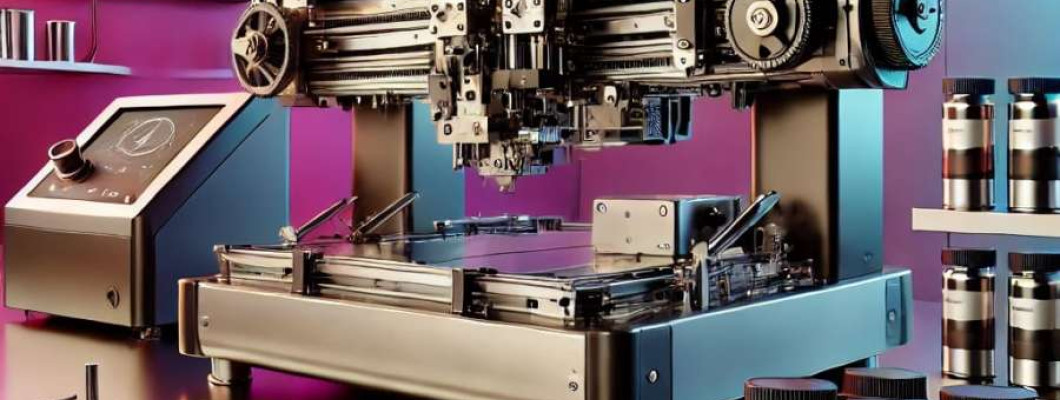
Consider a bustling specialty coffee shop that integrates advanced technology to elevate customer experience. The Smart Coffee Printer Machine, a niche but sophisticated device, offers the capacity to print detailed, personalized art atop coffee foam with micron-level precision. However, from the vantage of a financial controller, its allure must be measured against the often-underestimated recurring maintenance costs over its operational life. Unlike typical espresso machines, this hybrid device combines precision mechanical robotics, thermal inkjet printheads, and embedded control systems, each contributing unique wear vectors that affect long-term cost profiles. The cumulative cost of consumables, printhead replacements, software updates, and calibration labor can significantly affect the total cost of ownership (TCO).
In this scenario, the Smart Coffee Printer Machine presents a complex asset depreciation profile. Printheads, for instance, degrade based on usage cycles and ink chemistry, while the mechanical arms require lubrication and alignment to maintain micron-level accuracy. Furthermore, the proprietary inks used in coffee-safe printing introduce additional supply chain variability and costs. This combination creates a multifactorial maintenance landscape that challenges traditional CAPEX budgeting and demands detailed lifecycle cost modeling to avoid operational surprises.
Financial controllers tasked with budgeting for such assets must incorporate predictive maintenance strategies and allocate contingency funds for non-obvious expenses like firmware patching, environmental sensor replacements, and rare mechanical failures. This industrial reality underscores the importance of a rigorous, data-driven approach to lifecycle maintenance cost projection that transcends the initial purchase price and standard warranty periods.
Technical Deep-Dive into Lifecycle Maintenance and Cost Drivers
Printhead Wear and Replacement Metrics
Smart Coffee Printer Machines employ thermal or piezoelectric printheads with droplet volumes in the range of 10-15 picoliters (pl) to ensure detailed coffee art. Printheads have a rated lifespan measured in millions of actuations. For an average throughput of 200 prints per day, with each requiring 1,000 individual ink ejections, wear accumulates rapidly. Estimated printhead lifetime = 5 million ejections / (200 x 1,000) = 25 days of continuous high throughput operation before noticeable decline in print quality due to nozzle clogging or mechanical fatigue.
Ink Chemistry and Supply Chain Implications
Food-grade coffee inks require specialized chemical formulations that resist thermal degradation during the rapid heating cycles of printing. These inks demand controlled storage conditions (temperature 5-10 °C, humidity 40-60%) and have a shelf life of approximately 6 months. Supply chain constraints, especially for regional operators, increase cost per liter significantly compared to conventional printer inks. Bulk procurement strategies and vendor diversification are critical operational levers to manage OPEX.
Robotic Arm Precision Maintenance
The XYZ robotic gantry system delivers 300 dpi resolution, with mechanical components toleranced within ±0.02 mm to achieve the necessary micron-level print placement accuracy. Lubrication cycles are recommended every 500 operational hours to prevent wear-related backlash. Alignment procedures require specialized calibration devices, and process drift must be monitored daily, increasing labor costs and skill requirements.
Firmware and Embedded Control Updates
Control software integrates IoT monitoring but is susceptible to version fragmentation in multi-device deployments. Firmware patching occurs quarterly, necessitating scheduled downtime averaging 2 hours per update. Compatibility and security updates introduce indirect labor costs in IT management and compliance auditing, especially when machines are integrated into enterprise café chains.
Environmental Sensors and Ancillary Components
Humidity and temperature sensors embedded for print quality assurance degrade over time, requiring replacement every 12-18 months. Failure to maintain environmental control leads to increased nozzle clogging rates and accelerated mechanical wear.
| Component | Maintenance Interval | Cost per Event (USD) | Operational Impact |
|---|---|---|---|
| Printhead Replacement | 25 Days (High Throughput) | 650 | 2-4 Hours Downtime |
| Ink Cartridge Refill | Weekly | 140 | Minimal Downtime |
| Robotic Arm Lubrication | 500 Hours | 80 (Labor Only) | 1 Hour Downtime |
| Firmware Update | Quarterly | 150 (Labor + IT) | 2 Hours Downtime |
| Environmental Sensor Replacement | 18 Months | 120 | Machine Offline |
Scenario Analysis of Business Use-Cases Impacted by Lifecycle Maintenance
High Frequency Specialty Café Chain
A multi-location café chain printing 1,000 daily coffee arts encounters maintenance cycles that can result in over $50,000 annual maintenance expenses excluding initial acquisition costs. Precision printhead management and scheduled downtime planning become operational imperatives to sustain throughput and customer satisfaction. Neglecting predictive maintenance leads to cascading failures and costly emergency repairs.
Artisan Coffee Bar with Limited Volume
At lower throughput (~50 prints/day), maintenance frequency decreases, extending printhead lifespan to approximately 200 days. However, per-unit maintenance cost rises due to less efficient consumable utilization. Budgeting for intermittent calibration and skilled labor represents a larger fraction of total cost, influencing pricing strategies and profitability margins.
Food Service Technology Integrator
Integrators deploying the Smart Coffee Printer Machine as part of automated beverage kiosks face the challenge of remoting maintenance and minimizing site visits. Lifecycle maintenance costs shape service contracts and SLAs. IoT monitoring facilitates predictive interventions but requires investment in analytics infrastructure. The complexity of firmware version control in distributed deployments adds layers to cost and risk management.
Expert FAQ on Maintenance and Operational Realities
What factors most accelerate printhead degradation?
High throughput printing with frequent ink changes, suboptimal ink chemistry, and insufficient environmental controls, especially humidity fluctuations, drastically shorten printhead life.
How can firmware updates be streamlined to reduce downtime?
Implementing staged rollouts with rollback capabilities and automated remote update mechanisms reduces manual labor and downtime.
Is it possible to substitute ink with non-proprietary formulations?
Due to food safety and printhead nozzle compatibility, only certified food-grade inks with precise viscosity and particle size distributions maintain performance and compliance.
What role does operator training play in maintenance cost reduction?
Skilled operators reduce misalignment errors and contamination risks, minimizing unplanned maintenance events and extending component lifespans.
How critical is environmental sensor accuracy?
Highly critical, as deviations in temperature and humidity directly impact droplet formation and print adhesion, accelerating wear and reducing output quality.
Strategic Verdict and Recommendation
Analyzing the Smart Coffee Printer Machine through the lens of lifecycle maintenance costs reveals a device engineered for industrial-grade precision with complex, yet manageable maintenance demands. The detailed understanding of wear cycles, consumable management, and software upkeep enables financial controllers to forecast TCO with accuracy and implement mitigation strategies. While maintenance cycles require investment in skilled labor and planned downtime, the device’s unique capability to deliver high-precision coffee art at scale justifies its inclusion in enterprise-grade deployments.
For scalable businesses aiming to balance asset longevity and operational efficiency, this machine stands out as a technically sophisticated and financially viable option. Through comprehensive lifecycle management and vendor collaboration, the Smart Coffee Printer Machine represents a mature technology ready for widespread industrial adoption in specialty coffee markets.