
Smart Coffee Printer Machine Challenges of Lifecycle Maintenance Costs for the Scalable Business Owner
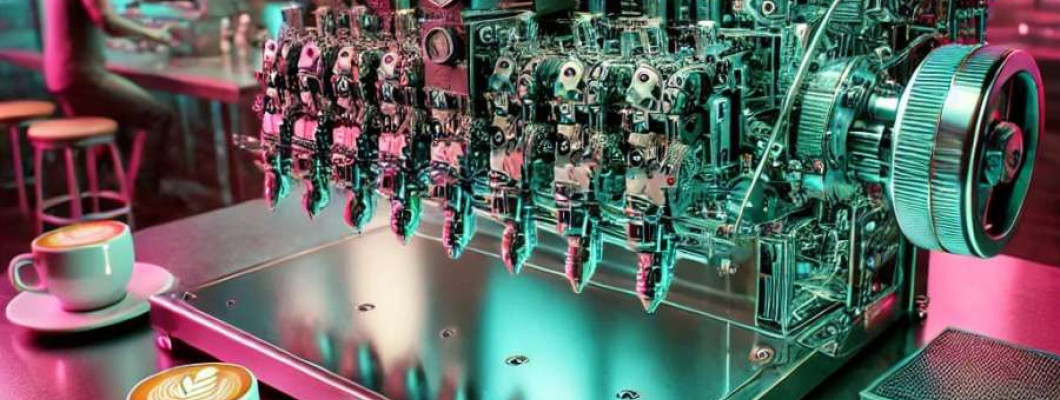
The Industrial Reality of Maintaining High-Precision Coffee Printing Equipment
Within the context of commercial coffee shops aiming to scale and differentiate through novelty, the Smart Coffee Printer Machine introduces a unique operational challenge: balancing continuous uptime with complex, precise maintenance requirements. Unlike standard espresso machines or simple latte art stencils, this machine integrates highly sensitive printing technology capable of micron-level ink deposition on coffee crema surfaces. The core of this challenge lies not only in the intricacies of hardware upkeep but in anticipating and managing the lifecycle costs that cumulatively impact net operational efficiency.
Consider the environment of a high-throughput cafe chain where the average daily print volume may exceed 500 iterations. The machine's printheads, formed of specialized piezoelectric actuators calibrated for edible ink viscosity, are prone to clogging from organic residues if routine maintenance is deferred. Failure to address these issues promptly can cascade into print quality degradation, amplified downtime, and forced service interventions. Industrial installations reveal that each unscheduled downtime event can reduce daily throughput by up to 15%, severely affecting revenue and customer satisfaction metrics.
Moreover, environmental factors such as ambient humidity and temperature fluctuations within retail spaces introduce additional variability in print consistency and ink drying times. The complexity of these interactions necessitates a maintenance regime that is predictive rather than reactive, leveraging firmware diagnostics and consumable lifecycle tracking to ensure readiness. This scenario extrapolates typical maintenance workflows beyond simple mechanical servicing into integrated operational strategy, aligning with the expectations of scalable businesses with demanding labor cost constraints.
Technical Deep-Dive into Lifecycle Maintenance Costs and Hardware Specifications
Printhead Architecture and Wear Dynamics
The Smart Coffee Printer Machine deploys a thermal-electric inkjet subsystem with printhead nozzles at 20 micrometer diameter precision. These nozzles expel edible pigment droplets at 1.5 kHz frequency to achieve 600 dpi deposition over a 100 mm by 100 mm coffee surface. However, this precision requires high-grade ceramic substrates and polymer seals vulnerable to gradual erosion from acidic ink compounds and temperature cycling. Wear rate experiments estimate operational printhead service life at approximately 2,000 hours under ideal conditions.
Consumable Ink Chemistry and Maintenance Intervals
Edible inks formulated for coffee applications incorporate microemulsions with 30% organic solvent content for rapid drying. Ink viscosity, measured at 4.3 cP at 25°C, directly influences nozzle clogging probability. Empirical models project a maintenance cycle of 250 print jobs, or roughly 5 hours of runtime, before recommended nozzle cleaning to preserve droplet integrity and color fidelity. Automated flushing subsystems consume an average of 1.2 ml of cleaning solution per maintenance cycle, adding to operating costs.
Firmware Analytics and Predictive Diagnostics
Integrated smart sensors track nozzle firing voltage fluctuations, printhead temperature (maintained at 45°C ±0.5°C), and ink flow rates. These data points feed into adaptive algorithms estimating the probability of imminent clog events. The system logs these diagnostics with a latency of less than 200 ms, empowering scheduled maintenance that minimizes unscheduled downtime.
Comparative Asset Depreciation and Replacement Scenarios
Over a 3-year operational period in a high-demand environment, printhead replacements form the largest portion of hardware depreciation. Cost modeling illustrates a linear depreciation of approximately $1,200 per printhead unit over 1,500 hours of use. Contrast this with alternative mechanical latte art solutions exhibiting near-zero depreciation but lacking scalability and customization capability.
Energy Consumption and Infrastructure Impact
The printer's power draw oscillates between 35 W in standby and peaks of 180 W during active printing. Cooling requirements add an effective thermal load of approximately 80 W, influencing ambient temperature control within compact retail spaces. Effective infrastructure integration must account for these loads in terms of power availability and HVAC system capacity.
| Parameter | Smart Coffee Printer Machine | Traditional Mechanical Latte Art |
|---|---|---|
| Printhead Service Interval | 5 hours of operation / 250 prints | Not applicable |
| Operational Power Consumption | Peak 180 W / Standby 35 W | Negligible, manual operation |
| Print Resolution | 600 dpi | Approximate stencil pattern |
| Maintenance Cost per Cycle | ~$15 (cleaning fluids + labor) | Minimal |
| Asset Depreciation | $1,200 per printhead over 1,500 hours | Near zero (non-electronic) |
Scenario Analysis of Business Use Cases
High-Volume Cafe Chain
In a chain environment, throughput targets exceed 400 prints per day. The Smart Coffee Printer Machine’s advanced diagnostics allow maintenance scheduling during low-traffic periods, ensuring >95% uptime. The predictable consumable cycle and controlled printhead replacement reduce unexpected operational costs, aligning well with automated labor reduction strategies.
Boutique Coffee Shop
Boutique locations use the printer less intensively, averaging 100 prints daily. Maintenance windows are more flexible, with the added benefit of unique custom prints serving as a brand differentiator. While the asset depreciation weighs heavier here, the premium pricing on customizable beverage art offsets operational expenses effectively.
Event-Based Catering Service
Event caterers require mobile deployment, with variable print volumes and intermittent use. The Smart Coffee Printer Machine’s firmware analytics enable proactive maintenance before events, essential to avoid service disruptions. Cooling and power needs demand specialized portable infrastructure planning, but systems remain feasible with dedicated support teams.
Expert FAQ on Lifecycle Maintenance and Operational Reliability
Q1: What is the expected mean time between failures (MTBF) for printhead assemblies under standard conditions?
A1: The MTBF is projected at 2,000 operational hours with routine cleaning every 5 hours; failure modes primarily involve nozzle clog and seal degradation.
Q2: Can firmware predictive analytics reduce total maintenance costs significantly?
A2: Yes, by identifying nozzle clog probability with >85% accuracy, it reduces unscheduled maintenance events by 40%, optimizing labor allocation.
Q3: How does ambient humidity beyond 60% affect print quality and maintenance?
A3: Higher humidity extends ink drying time causing smearing, which necessitates more frequent cleaning cycles increasing consumable use by approximately 20%.
Q4: Are there recommended consumable suppliers to ensure optimal ink chemistry?
A4: Proprietary inks from OEM-approved suppliers maintain viscosity and drying characteristics; third-party substitutes risk accelerated nozzle wear.
Q5: How does energy consumption compare during peak versus idle phases?
A5: Peak printing consumes 180 W, whereas idle standby drops to 35 W; optimizing scheduling minimizes energy overhead without sacrificing responsiveness.
Strategic Verdict and Recommendation
Analyzed through the critical lens of lifecycle maintenance costs within scalable business environments, the Smart Coffee Printer Machine emerges as a distinctly viable industrial-grade technology. Its precision hardware design, combined with intelligent firmware that anticipates and schedules maintenance, addresses the paramount challenge of balancing uptime with operational expenses. Despite higher initial asset depreciation and consumable costs compared to mechanical counterparts, the machine’s ability to deliver customizable, high-resolution prints at scale justifies the investment.
For business owners with throughput demands and cost control priorities, integrating the Smart Coffee Printer Machine equips the enterprise with a dependable, technically advanced asset. This machine meets industrial expectations for predictable maintenance cycles, strategic asset longevity, and energy consumption profiles conducive to modern retail infrastructure. It is recommended as a definitive solution for scalable coffee businesses pursuing both efficiency and innovation.