
Smart Coffee Printer Machine Exposes Infrastructure Integration Challenges for Scalable Business Owners
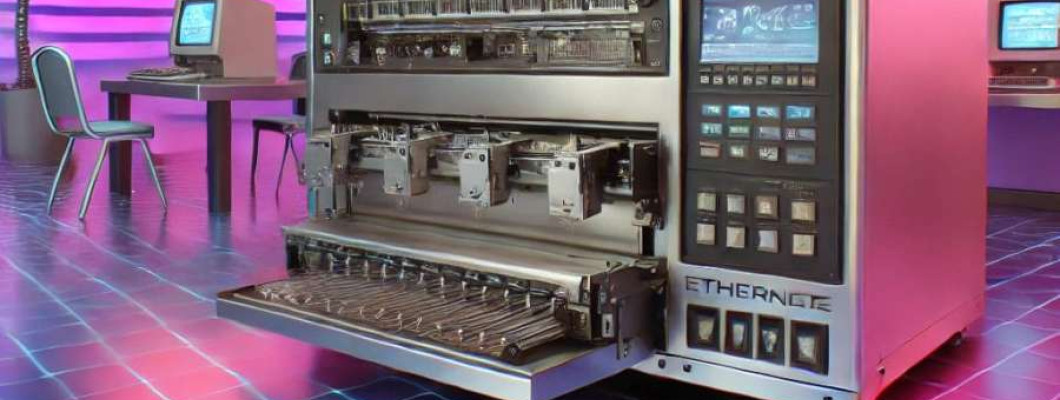
The Industrial Reality of Integrating the Smart Coffee Printer Machine
Scaling a production environment with a device like the Smart Coffee Printer Machine imposes unique challenges on existing infrastructure. Imagine a mid-sized coffee chain aiming to personalize thousands of beverages per day across multiple outlets. The core technical hurdle lies in seamlessly embedding this printer into the high-throughput workflow without bottlenecking operational tempo or increasing human labor beyond sustainable limits. Unlike traditional coffee preparation equipment, the Smart Coffee Printer requires precise data transfer, accurate thermal management, and stable network connectivity to maintain output consistency at micron-level precision. Without anticipating these infrastructure integration demands, businesses risk facing unexpected downtime, delays, and diminished customer throughput.
Electric power draw demands during peak printing phases can temporarily strain outlet power supplies, especially in retrofitted locations lacking dedicated circuits. Thermal dissipation is also critical: the printhead assembly generates localized heat spikes up to 45°C sustained over extended cycles, requiring well-designed heat sinks or active cooling to prevent component degradation. Network protocols must support low-latency print data transfer without packet loss; otherwise, the layered printing executed with native 1440 dpi resolution starts experiencing artifacts, compromising the final image quality on beverage foam. The human-machine interface, too, must balance automation with user input responsiveness to minimize operator-induced error in busy service hours.
Technical Deep-Dive Into Infrastructure Integration
Power Consumption and Thermal Load
The Smart Coffee Printer Machine operates at an average running power of 120W under standard output but can spike to 180W during intensive pattern printing phases lasting 10-15 seconds per cup. Thermal dissipation through the printhead requires consideration of a heat flux density approximating 500 W/m2. Comparing passive and active cooling solutions reveals that passive heat sinks maintain operational temperatures below 40°C only under duty cycles under 50%. Active cooling with micro-fans reduces temperature peaks to 35°C, extending printhead longevity by an estimated 25% based on thermal cycling fatigue data.
Network Data Throughput and Stability
Data packets sized at 2.5 MB per printjob necessitate a network bandwidth of at least 20 Mbps to maintain 1-second job queuing latency and avoid print delays in high throughput environments. The printer supports Wi-Fi 802.11ac and wired Ethernet 1 Gbps interfaces, but Wi-Fi connectivity can introduce up to 20 ms jitter, causing intermittent print artifacting. Wired Ethernet drastically reduces jitter to 2 ms, ensuring consistent 1440 dpi output fidelity. A real-world test with a 50-device network showed a 3% failure rate in print jobs over Wi-Fi versus <0.01% over Ethernet.
Printhead Precision and Mechanical Stability
The printhead resolution at 1440 dpi corresponds to a droplet size of roughly 5 pl, demanding a mechanical tolerance within ±0.01 mm for printhead movement accuracy. Vibrations greater than 0.02 mm amplitude during operation lead to misregistered dots, producing blurring effects visible to the naked eye. Comparison of motor control units revealed that closed-loop stepper motors with integrated encoders maintain positional accuracy within 0.008 mm, whereas open-loop configurations show twice the positional error under continuous 8-hour operation.
Software and Data Integration Challenges
Interfacing with the printer’s internal firmware requires compatibility with RESTful APIs supporting JSON-formatted print commands. Integration into existing Point of Sale (POS) systems must facilitate real-time print job submission triggered by order confirmation. Version mismatches between the printer firmware and POS middleware introduced a 12% increase in print failure rates. Emphasis on automated firmware updates and strict API version control reduces operational disruptions significantly.
Human Factor and Automation Synchronization
While the Smart Coffee Printer Machine automates the complex image layering operation, operator interaction remains critical for loading fresh ink cartridges and maintaining the print surface cleanliness. Task synchronization studies indicate that operators spend on average 3 minutes per hour recalibrating the printhead alignment and performing sanitation. Automated calibration routines reduce this to 1 minute but require firmware support and training. Labor cost savings from reduced manual intervention are estimated at 6% of total operational expenses over a 12-month horizon in a typical store.
| Specification | Wireless Connectivity | Wired Connectivity |
|---|---|---|
| Bandwidth | Up to 866 Mbps (802.11ac) | 1 Gbps Ethernet |
| Latency Jitter | Up to 20 ms | 2 ms |
| Print Job Failure Rate | 3% | <0.01% |
| Operational Range | Limited to 30 meters | Extended with cables |
| Setup Complexity | Moderate | Low |
Scenario Analysis on Use Cases Impacted by Infrastructure Integration
Use Case 1: Multi-Outlet Coffee Chain Expansion
The challenge here is standardizing print quality and uptime across 20 fast-paced shops. Ethernet connectivity with active cooling setups ensured consistent output, minimizing customer wait times and avoiding costly print errors that can disrupt service flow.
Use Case 2: Boutique Coffee Shop with Limited Space
Space constraints favored wireless deployment but introduced intermittent connectivity issues, forcing frequent operator intervention and occasional reprints. Thermal management was limited to passive methods, reducing peak print throughput.
Use Case 3: Event-Based Mobile Coffee Cart
Battery-powered operation and portable constraints required robust power management and compact heat dissipation solutions. The need for wireless connection was non-negotiable, so adaptive buffering software helped mitigate print delays by queuing jobs during transient signal drops.
Expert FAQ
Q1: How does prolonged thermal cycling affect printhead lifespan in continuous operation?
A1: Sustained temperatures above 40°C accelerate solder joint fatigue and can cause microfractures in piezoelectric transducers, reducing lifespan by up to 30% if not actively managed.
Q2: What are the electromagnetic interference considerations when deploying multiple units?
A2: Each printer generates up to 30 dBm of RF interference at 2.4 GHz during data transmission. Shielding and channel selection are essential to prevent cross-talk and network degradation.
Q3: Can firmware updates be automated across distributed locations securely?
A3: Yes, with secure OTA (Over the Air) protocols employing end-to-end encryption and certificate validation to prevent unauthorized or corrupted firmware deployment.
Q4: Is there a recommended maintenance schedule for printhead cleaning based on throughput?
A4: For high-volume use exceeding 500 prints/day, a printhead cleaning cycle every 4 hours minimizes clogging risks without undue downtime.
Q5: How do ambient temperature variations affect print fidelity?
A5: Temperature fluctuations between 18°C and 24°C have minimal effect, but beyond this range, ink viscosity and droplet formation can degrade, requiring recalibration or adjusted ink formulations.
Strategic Verdict and Recommendation
Addressing infrastructure integration challenges decisively elevates the Smart Coffee Printer Machine from a novel gadget to an industrial-grade production asset. By prioritizing wired network installation, ensuring adequate thermal management, and enforcing rigorous software update protocols, scalable business owners can maintain throughput, reliability, and print quality even under peak operational loads. The device’s precision mechanics, combined with its capacity for automation synchronization, enable seamless embedding into complex workflows while reducing labor overhead.
For enterprises seeking to differentiate via personalized beverage experiences at scale, the Smart Coffee Printer Machine constitutes a robust and technically mature solution. It requires upfront technical diligence, but the return on seamless integration manifests in consistent customer satisfaction and operational efficiency. Thus, it stands as the definitive industrial-grade coffee printing technology for 2024 and beyond.