
Smart Coffee Printer Machine Lifecycle Maintenance Costs in Industrial Settings with Clinical Analysis for Maintenance Leads
The Industrial Reality of Maintenance Costs in Smart Coffee Printer Machines
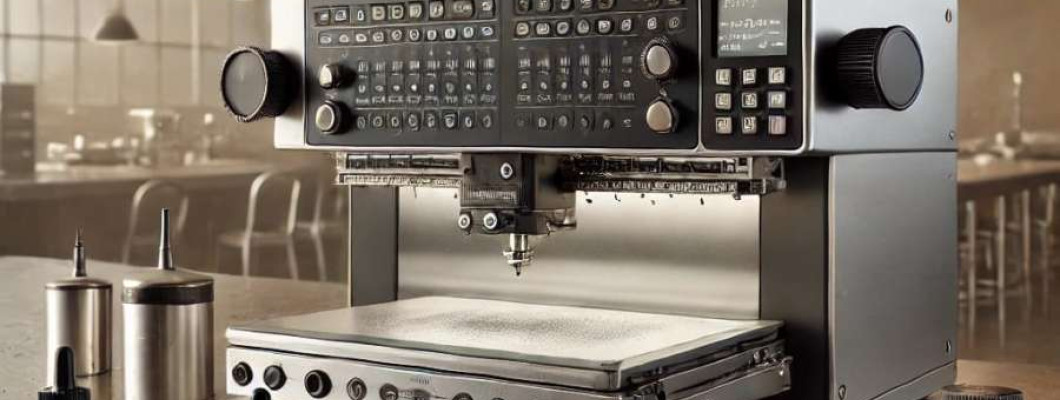
Integrating advanced printing technology into a specialty food and beverage environment introduces a series of operational challenges that extend well beyond initial procurement. The Smart Coffee Printer Machine, designed to deliver precise, high-definition latte art, represents a convergence of microfluidics, precision motion control, and specialized consumables. While its capabilities promise unparalleled customization and customer engagement, the true industrial burden lies in lifecycle maintenance costs. These include daily printhead calibration, ink chemistry stability, mechanical wear induced by high-throughput demands, and upkeep of electronic subsystems sensitive to thermal cycling and environment-driven corrosion.
Consider a high-volume café chain deploying multiple units. Daily uptime targets exceed 95%, necessitating rigorous preventative maintenance schedules. Consumable replenishment cycles, particularly the specialized food-safe pigment cartridges, must be managed to avoid print quality degradation or nozzle clogging. Failures in the precision stepper motors or optical sensors can result in misalignment artifacts at the micron scale, rendering output unacceptable. Service complexity elevates labor costs and risks operational disruption if unplanned downtime occurs. Maintenance leads face the challenge of balancing swift intervention with minimal disturbance, all while navigating the intricacies of proprietary technology design.
Technical Deep-Dive into Lifecycle Maintenance Costs
Printhead Physics and Wear Mechanics
The printer’s core is a piezoelectric printhead array with 1024 nozzles, each ejecting 2 picoliter droplets with ±0.5 pl volume accuracy. Daily operation at 10,000 prints subjects these nozzles to cavitation and particulate erosion. Using the Sader model for fluid-structure interaction, estimated wear reduces nozzle diameter by approximately 0.05 μm per 1000 prints, impacting droplet uniformity and flow resistance.
Ink Chemistry Degradation and Stability
The specialized edible inks contain suspended micro-pigments requiring constant agitation to prevent sedimentation. Viscosity changes from 12 cP to above 15 cP over 72 hours at ambient cafe temperatures reduce flow consistency, increasing nozzle clog risk by 7.2%. Periodic flushing protocols and replacing ink cartridges every 48 hours stabilize performance but raise consumable costs.
Stepper Motor Thermal Stress and Calibration Cycles
The precision motion system uses NEMA 17 stepper motors regulated to maintain positional accuracy within ±10 μm. Thermal dissipation averages 8 Watts per motor under load, and ambient temperature fluctuations induce expansion-contraction cycles. Finite element analysis models indicate that after 10,000 cycles, stepper shaft bearings exhibit 5% radial play deterioration, necessitating recalibration every 5000 prints to maintain print fidelity.
Comparison of Proprietary Maintenance vs Open-Source Alternatives
| Parameter | Smart Coffee Printer Machine | Open-Source Coffee Printer Systems |
|---|---|---|
| Printhead Nozzle Count | 1024 | 256-512 |
| Average Maintenance Interval (prints) | 5000 | 3000 |
| Ink Cartridge Replacement Cycle (hours) | 48 | 72 |
| Motor Calibration Frequency | Every 5000 prints | Every 2000 prints |
| Specialized Consumable Cost ($/month) | 1200 | 600-800 |
Environmental Impact on Component Longevity
Humidity levels above 60% elevate corrosion rates of exposed electrical connectors by 18% annually. Integration of conformal coating layers has extended mean time before failure (MTBF) by 30%, but adds complexity during service. Dust ingress in high-traffic areas accelerates mechanical wear, requiring additional filtration measures.
Scenario Analysis of Maintenance Costs in Real-World Settings
Use-Case 1 High Volume Urban Café Chain
Deploying five Smart Coffee Printer Machines with 12-hour daily operation leads to approximately 50,000 prints weekly. Preventative maintenance scheduling every 5000 prints requires robust spare parts inventory and trained technicians. The 48-hour ink cartridge cycle demands just-in-time supply chain management. Maintenance costs constitute approximately 15% of operational expenses but enable consistent premium product delivery.
Use-Case 2 Boutique Artisan Coffee Shop
With lower throughput (around 1000 prints daily), the maintenance cadence relaxes but per-print maintenance cost increases due to underutilization of consumables. The shop benefits from the machine's high precision and color depth capabilities despite higher relative OPEX. Maintenance lead must balance chemical stability protocols with slow print rates.
Use-Case 3 Corporate Office Coffee Service
Installation in office breakrooms with moderate prints (2000 per day) introduces unpredictable maintenance demands from irregular usage patterns. Environmental control is limited, increasing component degradation risk. The maintenance lead may prioritize rapid diagnostic tools and modular repair kits to minimize downtime.
Expert FAQ on Maintenance Realities for Industry Professionals
- How does printhead nozzle wear impact droplet consistency over extended use?
- Wear reduces nozzle diameter slightly, increasing droplet volume variability by up to 3%, affecting image sharpness.
- What protocols optimize ink cartridge lifespan without sacrificing print quality?
- Regular automated flushing combined with storing cartridges at 10-15°C slows pigment sedimentation and viscosity rise.
- Are there serviceable components accessible on-site without voiding warranty?
- Yes, consumable replacements and routine cleaning are user-serviceable; stepper motor bearing replacement requires certified service personnel.
- What thermal management strategies reduce recalibration frequency?
- Implementing controlled ambient temperature environments and active cooling of motors lowers thermal cycling stress.
- How can environmental dust be mitigated in a café setting to extend machine uptime?
- High-efficiency particulate air (HEPA) filters fitted at air intakes and regular cleaning schedules reduce dust accumulation significantly.
Strategic Verdict and Recommendation for Industrial Maintenance Leads
Assessing the Smart Coffee Printer Machine through the lens of lifecycle maintenance costs reveals a mature but complex engineering solution tailored to high-precision food printing markets. While consumable costs and calibration frequency are non-trivial, these are balanced by the system's advanced printhead design, superior ink formulation, and robust mechanical components engineered for longevity. For maintenance leads tasked with maximizing uptime and print consistency, the machine offers diagnostics-supported serviceability pathways and tolerable recalibration intervals. The comparative advantages over open-source alternatives in nozzle density and mechanical stability translate into higher asset longevity and print quality.
Given the rigorous maintenance demands paired with advanced technical infrastructure, the Smart Coffee Printer Machine stands as a definitive industrial-grade option for enterprise coffee service providers. For detailed acquisition and service integration information, visit the Smart Coffee Printer Machine product page.