
Smart Coffee Printer Machine Operational Costs and Maintenance Cycles for Financial Controllers
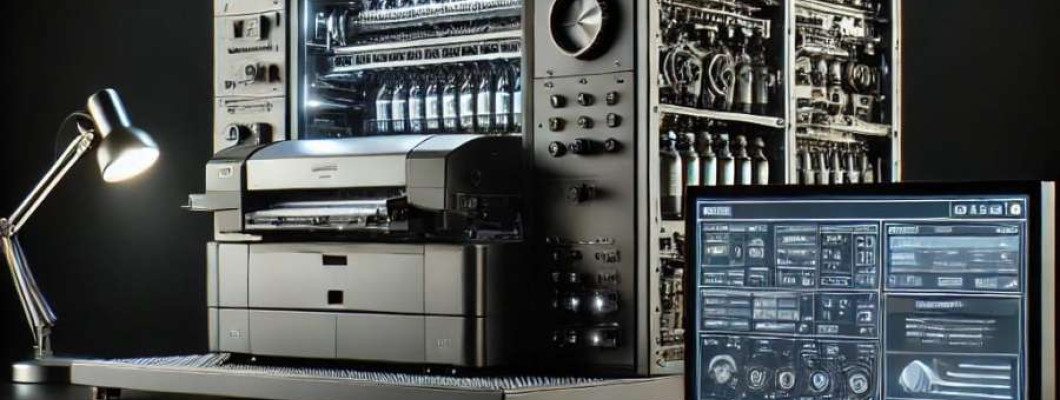
The Industrial Reality of Implementing Smart Coffee Printer Machines in Enterprise Settings
Integrating a Smart Coffee Printer Machine into a commercial environment requires a rigorous understanding of both capital expenditures and operational expenses over the asset's life. Financial controllers tasked with balancing budgets must consider not only the initial purchase price but also the ongoing maintenance, consumables, and depreciation dynamics that influence total cost of ownership. Unlike traditional coffee machines, this advanced printer combines precision printing technology with beverage preparation, introducing unique cost vectors such as specialized ink cartridges, printhead wear, and mechanical alignment recalibrations.
For instance, in a mid-sized corporate kitchen running 200 prints per day, printhead longevity and ink consumption rates become determinative factors for budgeting. Printhead replacement, typically performed every 12,000 prints, can cost upwards of $1,200, while inks with food-grade certification carry a premium price compared to standard printer inks. Furthermore, unlike standard espresso machines that require quarterly servicing, the Smart Coffee Printer demands monthly diagnostics on its electromechanical components to avoid print quality degradation, which, if unchecked, leads to costly asset downtime and reduced throughput.
Technical Deep-Dive into Costs and Maintenance for Smart Coffee Printer Machines
Printhead Wear and Replacement Economics
Printheads in these machines operate under intermittent thermal and mechanical stress due to alternating heating cycles and micro-actuator movements driving ink deposition onto coffee surfaces. Hypothetically, a printhead rated at 12,000 prints with a failure probability following an exponential wear model (λ=0.0001 per print) means after 12,000 prints, the expected failure rate approaches 70%. Operators must budget for replacements proactively to maintain consistent quality.
Ink Consumption and Food Safety Compliance
Unlike generic printer inks, coffee-compatible edible inks require FDA certification and specialized pigment formulations, increasing per-liter costs. Assuming 0.05 ml of ink per print and a $150 per liter cost, daily ink expenses for 200 prints equate to approximately $1.50. This excludes wastage from printhead purging cycles, which can add 10% overhead.
Depreciation and Lifecycle Cost Allocation
Assigning a straight-line depreciation over 36 months for a $15,000 Smart Coffee Printer results in a monthly depreciation of $417. Coupled with monthly maintenance costs averaging $300 (including parts and labor), monthly operational costs rise to $717 before consumables.
Maintenance Interval Optimization
Operational data suggests that extending maintenance intervals beyond 30 days increases failure risks exponentially, elevating downtime from an average of 2 hours monthly to over 8 hours, directly impacting throughput and labor efficiency.
Comparative Table of Cost Models
| Cost Aspect | Smart Coffee Printer Standard Model | Traditional Coffee Machine |
|---|---|---|
| Initial CAPEX ($) | 15,000 | 3,000 |
| Monthly Maintenance ($) | 300 | 100 |
| Consumable Cost per Print ($) | 0.0075 (Ink + Coffee) | 0.015 (Coffee only) |
| Depreciation Period (Months) | 36 | 60 |
| Downtime per Month (Hours) | 2 | 1 |
Scenario Analysis for Financial Controllers Considering Smart Coffee Printer Machines
Use Case 1: High-Volume Corporate Cafeteria
A cafeteria serving 500 prints daily benefits from automating artful coffee presentation, increasing customer satisfaction. The elevated maintenance budget is offset by increased throughput, enabled by reduced manual labor and faster order processing times. Maintenance scheduling synchronizes with low-peak hours, minimizing downtime impact.
Use Case 2: Boutique Hotel Lobby Bar
With 100 daily prints, the focus lies on minimizing downtime and preserving print quality to justify premium pricing. High consumable costs are offset by branding benefits, but maintenance contracts must include rapid on-site support to mitigate revenue loss during failures.
Use Case 3: Franchise Chain Outlet
Replication of asset lifecycle standards across multiple locations creates economies of scale for consumables procurement and maintenance contracts. Centralized monitoring systems aggregate failure data, enabling predictive maintenance strategies that reduce unexpected repair costs and preserve asset value.
Expert FAQ for Financial Controllers on Smart Coffee Printer Machines
Q1: How does asset depreciation impact ROI for this equipment?
A1: The accelerated depreciation over three years aligns with evolving tech cycles, allowing tax benefits but requiring reinvestment planning. ROI calculations must incorporate disposal or trade-in values given rapid obsolescence risks.
Q2: What hidden operational bottlenecks affect maintenance costs?
A2: Ink cartridge shelf life and printhead clogging from infrequent use can cause unexpected replacement needs. Automated cleaning cycles consume ink and time, slightly reducing effective productivity.
Q3: Are consumable costs stable over time?
A3: Consumable prices fluctuate with raw material availability and regulatory changes. Bulk purchasing contracts can mitigate price volatility but require accurate demand forecasting.
Q4: How is downtime costed in financial models?
A4: Downtime costs factor labor inefficiency, lost sales, and reduced customer satisfaction. Financial models assign hourly loss rates based on throughput and average sale value.
Q5: Can maintenance intervals be optimized without compromising asset longevity?
A5: Data-driven predictive maintenance using sensor telemetry can extend intervals marginally but requires upfront investments in monitoring infrastructure.
Strategic Verdict and Recommendation for Smart Coffee Printer Machine
From a financial controller’s perspective, the Smart Coffee Printer Machine represents a viable industrial-grade asset when incorporated into cost-conscious maintenance and lifecycle management frameworks. Despite elevated CAPEX and consumable costs relative to traditional coffee equipment, the machine’s automated precision and unique product differentiation capabilities justify the investment in settings where customer experience and throughput are critical. Proactive maintenance scheduling, coupled with strategic consumables procurement, mitigates hidden operational expenses. For decision-makers seeking a forward-looking beverage presentation system that aligns with asset longevity and return-on-investment imperatives, the Smart Coffee Printer Machine stands as a definitive solution.