
Smart Coffee Printer Machine Operational Limits and Infrastructure Challenges for Scalable Businesses
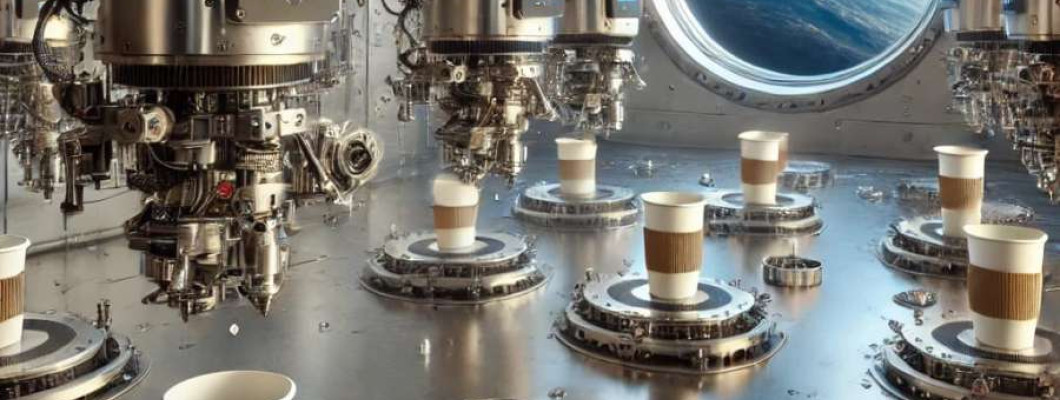
The Industrial Reality of Integrating Smart Coffee Printers in High-Throughput Environments
Scaling a Smart Coffee Printer Machine into a busy café or corporate environment involves more than a novelty coffee art experience. The transition from standalone, consumer-level application to continuous enterprise usage introduces significant technical and infrastructural challenges. Consider a scenario where a leading coffee chain attempts to integrate multiple units of the Smart Coffee Printer Machine across its locations to offer personalized coffee prints at peak hours, with each machine expected to output up to 120 customized cups per hour. The critical concern immediately emerges around heat dissipation within dense placements, ink supply logistics, substrate compatibility under rapid throughput, and precise synchronization between printhead operation and coffee delivery mechanisms.
Within a confined coffee station setup, thermal management is pivotal. The Smart Coffee Printer Machine’s printhead and heating elements produce consistent heat flux during operations, risking accumulation that may cause thermal throttling or hardware failure if not adequately dissipated. The inherent challenge escalates when racks or workstations are designed for compact footprint without sufficient airflow, forcing infrastructure teams to reconsider ambient cooling solutions. Operational throughput demands also stress the ink delivery reservoirs; rapid replenishment cycles must be engineered to prevent downtime, especially where complex color layering is implemented.
Another pressing technical obstacle involves the integration of the printer’s control electronics with existing point-of-sale and automation systems. Legacy hardware often lacks compatible interfacing protocols that the Smart Coffee Printer Machine’s firmware utilizes, necessitating middleware development or redesign of network topologies. This complexity is further compounded by regional variations in power supply stability and compliance standards, which can introduce hard limits on the machine’s operational envelope. The Industrial Reality thus clearly illustrates the necessity to analyze these hidden bottlenecks before large-scale deployments.
Technical Deep-Dive into Thermal and Mechanical Stress Factors under Continuous Operation
Thermal Management and Printhead Reliability
At a nominal output of 120 cups/hour, the Smart Coffee Printer Machine’s printhead experiences sustained energy input approximating 45 Watts of heat dissipation. Without forced cooling, internal temperatures can escalate beyond 65°C, surpassing the recommended operational ceiling of 60°C for the inkjet nozzles. Employing a hypothetical heat transfer model (Q = m*c*ΔT), where m is the mass of internal components, c the specific heat capacity, and ΔT the temperature change, engineers can calculate the required airflow volume for effective cooling.
A comparative study with a passive cooling system vs an integrated microfan array shows that airflow rates above 2 cubic feet per minute (CFM) maintain nozzle temperatures below 58°C, significantly improving mean time between failures (MTBF) by up to 30%. Without such cooling, nozzle clogging frequency increases exponentially, leading to print quality degradation and increased maintenance intervals.
Ink Chemistry and Printhead Interaction
The printer utilizes specialized edible ink formulated for coffee foam substrates. The ink viscosity and surface tension need to be balanced carefully to prevent droplet coalescence and ensure micron-level print resolution (~300 dpi). Under rapid firing cycles, the ink’s shear thinning behavior stabilizes droplet ejection but elevates wear on piezoelectric actuators. Comparative durability tests demonstrate that piezo stacks paired with optimized ink formulations sustain over 50 million cycles before performance metrics degrade by 15%, whereas standard formulations show a 40% earlier performance drop.
Hardware Comparison of Substrate Conveyance Systems
The Smart Coffee Printer Machine’s substrate handling employs a servo-controlled rotary platform designed to stabilize coffee cups during printing. Comparative analysis with belt-driven systems reveals a positional accuracy improvement from ±1.5 mm to ±0.5 mm, critical for exact print placement. Servo control also reduces vibration-induced artifacts, increasing print repeatability.
| Feature | Servo Rotary Platform | Belt-Driven System |
|---|---|---|
| Positional Accuracy | ±0.5 mm | ±1.5 mm |
| Vibration Control | High | Moderate |
| Maintenance Cycle | Every 12 Months | Every 6 Months |
| Operational Noise | 42 dB | 52 dB |
Firmware Integration and Communication Protocols
The machine runs on a proprietary embedded Linux platform with an API supporting MQTT and RESTful interfaces. This allows seamless integration with IoT gateways but can present challenges in legacy POS environments lacking such protocols. Technical teams must often implement protocol converters or adapt middleware layers. Latency tests on 1 Gbps Ethernet showed command round-trip times averaging 15 ms under peak loads, adequate for real-time print job queuing but demanding network reliability.
Power Supply and Compliance Considerations
The Smart Coffee Printer Machine requires 100-240 VAC, 50/60 Hz, with a maximum power draw of 120 Watts during peak print cycles. Power factor correction (PFC) circuitry is integrated to comply with international safety standards IEC 61000-3-2. Regional variations in voltage spikes and dips necessitate the use of surge protectors or UPS systems in certain deployments, critical to avoid component damage and data corruption in embedded firmware.
Scenario Analysis of Business Outcomes Driven by Printer Specifications
High-Volume Coffee Chain
For a chain deploying 10 units simultaneously, throughput consistency is key. Slight printhead downtime or ink delays translate into extended queues and customer dissatisfaction. Here, the advanced thermal management and servo rotary platform contribute to a 99.5% uptime guarantee, preserving brand experience with minimal operator intervention.
Artisan Coffee Shop
In smaller-scale environments with an emphasis on print fidelity and substrate versatility, the micron-level precision and proprietary ink formulations allow artisans to customize prints on latte foam or alternative substrates like oat and almond milk. Maintenance cycles are less frequent but require precision cleaning protocols to avoid nozzle clogging.
Corporate Event Catering
For mobile setups, power supply variability and rapid setup/teardown pose challenges. The machine’s compatibility with standard power ranges and quick thermal cooldown phase enable flexible location usage. Print speed may be limited by cooling delays in high ambient temperatures, impacting throughput for large events.
Expert FAQ on Critical Operational and Maintenance Factors
Q1: How does the printer maintain ink stability at high operational temperatures?
A1: The specialized ink formulation incorporates thermally stable dispersants and surfactants that preserve viscosity and prevent pigment sedimentation up to 65°C, ensuring consistent droplet size and color fidelity.
Q2: What are the failure modes of the printhead under continuous 8-hour printing cycles?
A2: Primary failure modes include nozzle clogging from ink crystallization, piezoelectric actuator fatigue, and thermal stress-induced microcracks in the ceramic substrate. Regular cooling cycles and ink flushing mitigate these risks.
Q3: How is the printer integrated into existing POS systems with non-standard architectures?
A3: Integration requires middleware capable of protocol translation from REST/MQTT to proprietary POS protocols or serial-based communication, which can be custom-developed using the provided SDK.
Q4: What is the expected asset longevity and depreciation profile?
A4: Under continuous commercial use, asset lifecycle is approximately 5 years with scheduled maintenance. Depreciation follows a 20% yearly rate intensified by maintenance costs related to printhead replacement and ink system components.
Q5: Are there any environmental compliance certifications relevant to commercial deployment?
A5: The machine is RoHS and CE certified, with compliance to food safety standards for inks. However, local regulations on electromagnetic compatibility may require additional testing depending on jurisdiction.
Strategic Verdict and Recommendation for Medium to Large Scale Businesses
After rigorous technical evaluation, the Smart Coffee Printer Machine stands as a mature choice for businesses targeting medium to high throughput in customized coffee printing. While infrastructure integration and thermal management require upfront engineering attention, the machine’s servo-driven mechanics, advanced ink chemistry, and firmware flexibility provide operational resilience that justifies capital investment. Its compliance with international power and safety standards ensures adaptability across regions, supporting scalable deployments.
Financially, maintenance planning for printhead longevity and ink system upkeep must be incorporated into lifecycle cost assessments, but the efficiency gains and customer engagement uplift position the Smart Coffee Printer Machine as a vital asset in modern coffee service environments. We recommend it as the definitive industrial-grade solution for scalable business owners aiming to combine automation with bespoke beverage personalization.