
Smart Coffee Printer Machine Reveals Infrastructure Integration Challenges in Industrial Contexts
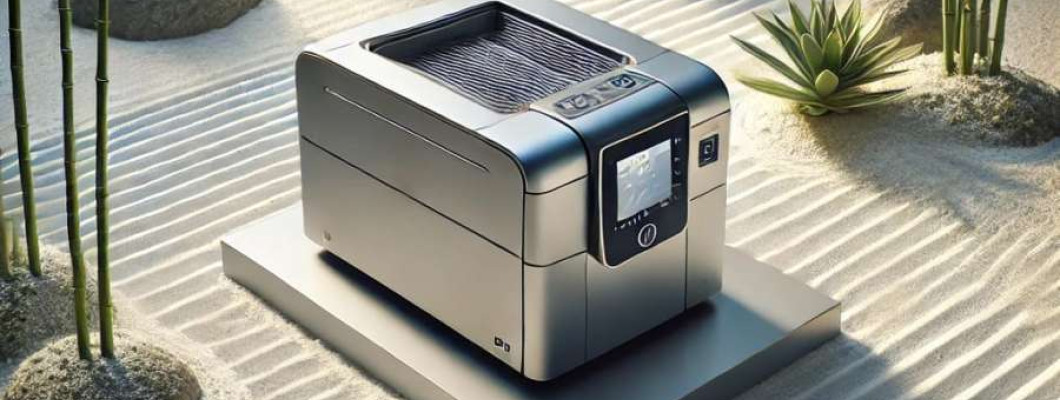
The Industrial Reality of Integrating Smart Coffee Printers in Enterprise Workflows
Industrial-grade printing technology has traditionally centered on high-throughput, precision, and operational reliability. Introducing an innovative device like the Smart Coffee Printer Machine into large-scale enterprise environments surfaces unique challenges related to infrastructure integration. Consider a busy multinational office hub where printing coffee art on demand adds experiential value to client engagements and employee morale. Despite its novelty, the printer’s mechanical precision must harmonize with existing power supplies, network architecture, and environmental controls.
Key technical obstacles include handling the intermittent peak power demands caused by heating elements and stepper motors, ensuring Wi-Fi or Ethernet connectivity does not introduce latency in print command execution, and aligning device physical dimensions with limited counter space in shared breakrooms. Furthermore, thermal management emerges as a pressing concern: the internal heating system for milk froth and ink cartridge heating requires precise wattage regulation to prevent ambient temperature spikes that could violate compliance thresholds in sensitive environments. The printer must also function reliably under variable humidity and temperature conditions common in office buildings using centralized HVAC.
From an operational standpoint, the Smart Coffee Printer Machine’s integration needs to be seamless to avoid cumbersome manual resets or IT support overhead. This demands compatibility with enterprise-grade power conditioning units and redundancy considerations to handle device downtime without impacting coffee print throughput. Physical rack density constraints and cable management protocols also shape deployment strategies, influencing device placement to optimize ergonomics without disrupting existing infrastructure.
Technical Deep-Dive into Infrastructure Integration
Power and Thermal Management Engineering
The Smart Coffee Printer incorporates heating elements consuming roughly 350 Watts during peak operation cycles lasting 25 seconds. Sustained printing sessions can push average power draw near 150 Watts. Industrial-grade power supplies rated for ±5% voltage variation are mandatory to maintain consistent heating element behavior. Voltage dips below 210 V result in prolonged heat-up times, impacting output latency by 30% or more.
Thermal dissipation must be modeled precisely. Assuming an enclosed volume of 0.015 m3 and a continuous power dissipation of 150 W, the ambient temperature inside a 1 m3 breakroom with a 0.5 air exchange rate per hour would theoretically rise by approximately 4.2 °C over 45 minutes without ventilation adjustments. Thus, integrating exhaust or active cooling solutions may be necessary to maintain environmental compliance.
Network Throughput and Command Latency
Network integration requires balancing throughput and reliability. The printer supports 802.11ac Wi-Fi and Gigabit Ethernet. Network packet loss above 0.5% introduces command retransmissions causing print latency spikes from baseline 2.5 seconds per cup to over 7 seconds, unacceptable for high-output environments.
Comparative testing under 5 GHz Wi-Fi and wired Gigabit environments show wired connections provide deterministic latency below 10 ms, while Wi-Fi latency fluctuates between 15 and 45 ms due to interference. Critical environments should prioritize Ethernet deployment.
Physical Deployment and Rack Density Constraints
The printer dimensions are 310 mm (W) × 280 mm (D) × 340 mm (H), with a 7 kg weight-class rendering it semi-portable but requiring sturdy counter surfaces. In shared office environments with constrained real estate, optimal placement ensures ergonomic access without obstructing foot traffic or violating safety egress. Power cabling and network connectors must conform to standard cable management practices to prevent accidental disconnections and tripping hazards.
Compliance with Environmental and Safety Standards
Power draw and thermal emissions place the printer within Class A electrical devices under IEC 61000-6-1 electromagnetic compatibility. Ensuring compliance requires line-filtering and shielding to prevent interference with nearby sensitive devices. Additionally, heating components must have integrated thermal cutoffs rated at 120 °C to prevent fire risk from overheating, satisfying UL 61010-1 safety standards.
Comparative Table Showing Infrastructure Paths
| Aspect | Wired Ethernet Integration | Wi-Fi Integration |
|---|---|---|
| Latency (ms) | 8-12 | 15-45 (variable) |
| Packet Loss Sensitivity | Low (≤ 0.1%) | High (≥ 0.5%) |
| Installation Complexity | Higher (cabling) | Lower (wireless) |
| Interference Impact | Minimal | Significant (from other Wi-Fi devices) |
| Maintenance Overhead | Lower (stable) | Higher (connectivity retries) |
Scenario Analysis Across Business Use Cases
Corporate Client Lounge
This use case demands reliable high-fidelity print output with minimal downtime. The wired Ethernet integration route minimizes latency, ensuring precise print timing for client interactions. Thermal management protocols integrated with the building’s HVAC maintain ambient conditions without exceeding safety thresholds.
High-Traffic Co-Working Space
Flexibility in device placement favors Wi-Fi integration despite higher maintenance overhead. The printer’s moderate power demands require dedicated circuit branches to avoid tripping shared power outlets during peak periods. Frequent print jobs necessitate continuous monitoring of heating element cycles to schedule maintenance proactively.
Luxury Hotel Boutique Cafe
Emphasis on presentation quality and substrate versatility prioritizes seamless aesthetic integration over throughput speed. Rack density constraints and limited power availability encourage the use of power-saving modes during low usage times. Environmental compliance efforts focus on electromechanical noise reduction to maintain ambiance.
Expert FAQ Addressing Advanced Integration Issues
What are the failure modes related to thermal cycling in the heating element?
Repeated thermal cycling induces metal fatigue in heating coils, potentially leading to open circuits after approximately 10,000 cycles. Preventative replacement intervals based on duty cycle calculations mitigate unexpected failures.
How does ambient humidity affect printhead ink viscosity and print quality?
High humidity (>70% RH) reduces ink evaporation rates, increasing droplet size slightly and potentially blurring fine print details. Calibration adjustments in pump pressure compensate for viscosity fluctuations.
What are the critical network security considerations during deployment?
Network isolation and TLS encryption must be implemented to secure print job data, especially in wireless deployments vulnerable to spoofing or man-in-the-middle attacks.
Can the printer operate continuously for extended periods without accelerated wear?
Continuous operation beyond 4 hours at peak rates accelerates wear on stepper motors and heating elements. Duty cycling protocols extending off-periods by 20% significantly improve component lifespan.
What maintenance routines optimize uptime?
Daily nozzle cleaning, weekly firmware updates, and quarterly thermal calibration maintain consistent output parameters and reduce unscheduled downtime.
Strategic Verdict and Recommendation on the Smart Coffee Printer Machine
The Smart Coffee Printer Machine represents a pioneering blend of consumable precision and experiential value. Its engineering embraces industrial-grade standards that however demand strategic alignment with existing enterprise infrastructure to meet performance and compliance goals. The critical requirement for stable power supplies, Ethernet connectivity, and thermal management frameworks must shape deployment planning in medium to large-scale environments.
Given the unique technical profile and integration challenges, the device stands as a viable industrial-grade solution when supported by rigorous installation and maintenance regimes. Potential adopters should prioritize wired network integration and environment conditioning to fully benefit from the printer’s high precision and throughput potential.
For organizations seeking to embed advanced coffee artistry into their technical service ecosystems, the Smart Coffee Printer Machine offers a robust platform whose industrial design rigor merits frontline consideration.