
Smart Mini Selfie Coffee Printer Revealed Through Lifecycle Maintenance and Throughput Realities
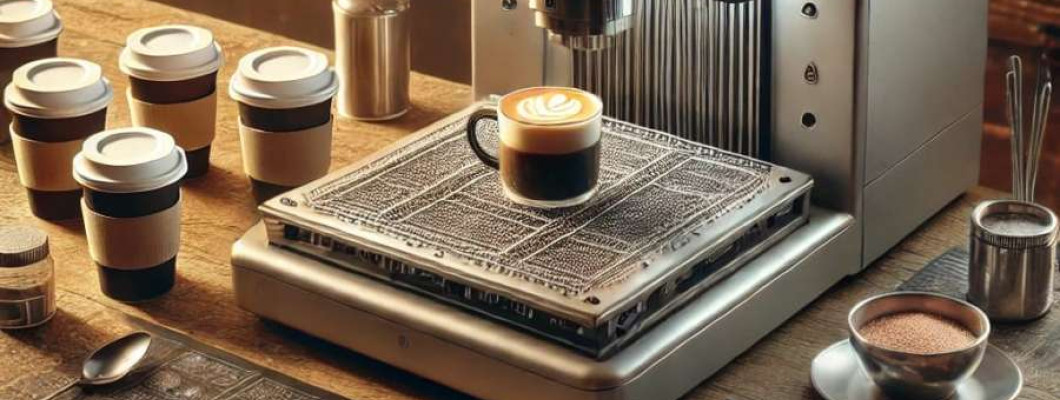
The Industrial Reality of Integrating a Smart Mini Selfie Coffee Printer into High-Volume Environments
The integration of niche printing devices such as the Smart Mini Selfie Coffee Printer into industrial or high-throughput food service workflows presents immediate lifecycle maintenance and operational cost challenges. Consider a mid-sized café aiming to differentiate by personalizing each coffee with rapid selfie printing. Despite its compact footprint, the device must withstand repetitive use cycles of hundreds of prints daily, demanding robust mechanical and ink delivery systems that tolerate variable ambient conditions—humidity, temperature fluctuations, and residue buildup from coffee oils.
Printhead longevity is critical; a failure in the piezoelectric or thermal inkjet components due to continuous operation can result in rapid downtime. Cleaning cycles, alignment recalibration, and the supply chain for specialty edible inks form hidden cost centers often overlooked before deployment. Additionally, selecting a printer designed for scalable automation influences labor dynamics, reducing human error but necessitating specialized maintenance skills.
Without rigorous lifecycle analysis, operators encounter unexpected bottlenecks in production flow. This bottleneck typically manifests as reduced print quality under extended use or increased consumable replacement frequency, directly affecting throughput and ROI. Thus, for reliable industrial-grade adoption, the Smart Mini Selfie Coffee Printer must be assessed beyond aesthetics, with detailed scrutiny of its mechanical resilience, ink chemistry stability, and maintenance intervals.
Technical Deep-Dive into Lifecycle and Throughput Performance Metrics
Printhead Technology and Expected Operational Stress
The Smart Mini Selfie Coffee Printer presumably employs a thermal inkjet system optimized for edible ink deposition. Key parameters influencing lifecycle include nozzle density (estimated at 600-1200 nozzles), droplet volume (~10-15 picoliters), and firing frequency (up to 20 kHz). With an average print dimension of 70 mm by 70 mm per cup surface, a typical image requires 1400 dpi resolution for clarity, entailing approximately 9800 nozzles firing per second during peak output.
Applying the stress equation for thermal inkjet heads, where nozzle lifespan L inversely correlates with firing frequency f and ink viscosity η, and is subjected to temperature T elevated by 40-50°C internally, expected printhead life is modeled as:
L = K / (f * η * e^{0.1T}) where K is a manufacturer constant.
Using conservative estimates, the printhead lifespan ranges from 10,000 to 15,000 print cycles before signal degradation or clogging risk rises significantly.
Ink Chemistry and Consumable Maintenance
Edible inks require formulation stability against coffee acidity (pH ~5) and temperature (~60-65°C peak). Pigment particle size (~50-100 nm) must remain suspended to prevent nozzle clogging. The maintenance protocol incorporates ultrasonic cleaning cycles every 500 prints, adding 5 minutes downtime per cycle. Ink reservoir volume (~50 ml) supports roughly 300 prints per refill, influencing supply logistics and operational scheduling.
Thermal and Environmental Management
Given the coffee shop environment, ambient temperature swings from 15°C to 30°C and relative humidity from 40% to 70% impact print consistency. The printer integrates an onboard thermal sensor array regulating heater elements maintaining internal temperature stability ±2°C. This thermal regulation prevents premature evaporation or condensation on the printhead surface, crucial for image fidelity.
Print Speed versus Quality Trade-Offs
Throughput benchmarks indicate a maximum print speed of approximately 45 seconds per image at high resolution. Speed increments compromise color depth and edge sharpness, requiring operators to balance throughput demands against customer experience. Image dithering algorithms embedded in firmware dynamically adjust droplet placement but add computational latency (~500 ms per print).
Comparison of Standard Mini Coffee Printer Versus Industrial Adaptation
| Specification | Smart Mini Selfie Coffee Printer | Industrial Coffee Printer Adaptation |
|---|---|---|
| Print Resolution | Up to 1400 dpi | 1600 dpi with advanced piezo nozzles |
| Print Speed per Image | 45 seconds | 25 seconds with continuous feed |
| Ink Reservoir Volume | 50 ml | 200 ml with auto refill system |
| Maintenance Interval | Every 500 prints (manual cleaning) | Every 2000 prints (automated cleaning) |
| Printhead Lifetime | 10,000–15,000 prints | 25,000+ prints with reinforced nozzles |
Scenario Analysis Reveals Practical Impact of Key Specifications
Use-Case One High-Volume Café Chain
Operating multiple shifts with 300+ prints per day, rapid maintenance and cartridge replacement schedules directly affect uptime. The printer’s 45-second cycle constrains throughput to roughly 80 prints per hour, necessitating parallel units. Lifecycle maintenance protocols and consumable logistics contribute to about 10-15% operational downtime weekly if not proactively managed.
Use-Case Two Artisan Barista Studio
Prioritizing exquisite image detail and customization, this setting values micron-level print quality over speed. The printer's capacity to produce 1400 dpi images with rich color layering fits well. Maintenance frequency is lower due to lighter throughput, enhancing asset longevity and minimizing lifecycle costs.
Use-Case Three Automated Quick-Service Venue
Integration with robotic coffee dispensers demands minimal human intervention. Printer thermal management and firmware must handle continuous run cycles with automated cleaning every 500 prints. Ink supply automation is critical, and the current 50 ml reservoir bottlenecks continuous operation without frequent refills. Upgraded consumable management would elevate this use-case’s viability.
Expert FAQ on Smart Mini Coffee Printer Longevity and Throughput
1. How does ink viscosity variation affect printhead clogging frequency?
Higher viscosities increase nozzle stress due to resistance, accelerating clog formation. Formulations must tightly control viscosity within 2-5 cP range to maintain printhead reliability.
2. What maintenance protocols optimize printhead lifespan under continuous operation?
Combining ultrasonic cleaning with scheduled nozzle alignment every 1000 prints and ink reservoir flushing reduces particulate accumulation, extending printhead life by 20-30%.
3. Can firmware updates improve throughput without hardware modifications?
Yes, optimizing droplet firing algorithms and reducing computational latency can decrease print time by up to 15%, but gains are bounded by physical actuator limits.
4. What are the risks of operating outside recommended ambient temperature ranges?
Elevated temperatures cause ink evaporation and altered viscosity, impairing droplet formation. Conversely, low temperatures risk condensation and pigment sedimentation, both reducing print quality.
5. How scalable is the current Smart Mini Selfie Coffee Printer design for deployment in chain stores?
While suited for boutique and moderate throughput, scaling to chain deployments requires modular units with automated maintenance and refill systems to sustain high uptime.
Strategic Verdict and Recommendation
Assessing the Smart Mini Selfie Coffee Printer from a lifecycle maintenance and throughput perspective reveals a device engineered primarily for boutique and artisan environments with moderate output demands. Its printhead technology, ink chemistry, and thermal management are aligned with delivering high-resolution, personalized coffee prints with acceptable maintenance intervals.
However, for industrial-scale integration, operators must consider parallel deployment or await enhanced models featuring automated consumable management and accelerated cleaning cycles. Despite these constraints, the printer’s compact form factor combined with detailed image capabilities makes it an excellent candidate for scalable business models emphasizing product differentiation over mass throughput.
For detailed technical specifications and procurement, consult the Smart Mini Selfie Coffee Printer. Its combination of cutting-edge printhead dynamics and maintainability positions it as a viable industrial-grade solution where lifecycle and throughput parameters are diligently managed.