
Spot A4 LED UV Printer Cylinder Printing Addresses Infrastructure Integration Challenges for Scalable Business Owners
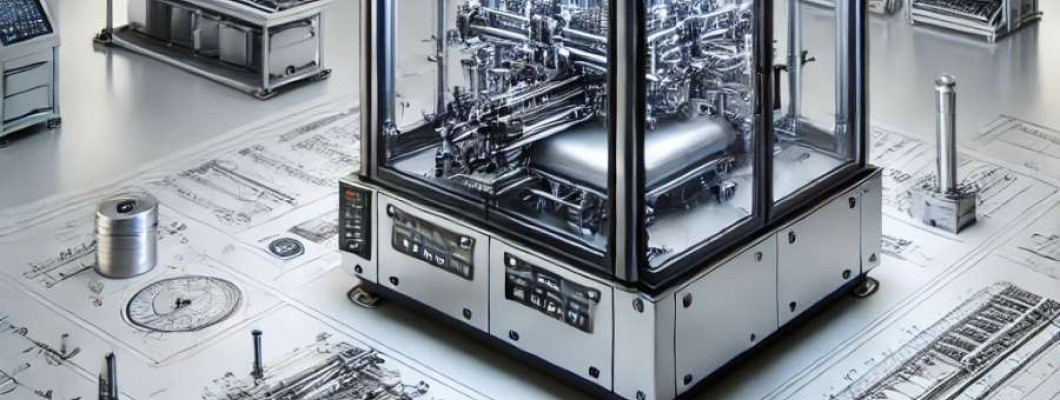
The Industrial Reality of Integrating High-Precision LED UV Cylinder Printing
Manufacturing environments aiming to expand throughput while maintaining consistent print quality face significant challenges when integrating new printing technologies. The Spot A4 LED UV Printer for Cylinder Printing confronts these challenges head-on, particularly in environments requiring rapid transitions between runs and minimal downtime. Industrial-scale production floors often wrestle with infrastructure constraints such as limited floor space, electrical load capacity, and thermal management systems that were not originally designed to support high-intensity LED UV curing lamps or precision handling of cylindrical substrates.
For scalable business owners, the issue is not only about acquiring an advanced printer but ensuring it meshes seamlessly with existing automation lines, conveyor systems, and digital workflow protocols. The mechanical interfaces of cylinder printers must sync with robotic loading/unloading systems and real-time ink management solutions to avoid bottlenecks that diminish overall operational efficiency. In scenarios where print speeds exceed 1000 mm per second across 360-degree cylindrical rotation axes, slight misalignments or delays translate into cumulative production losses that can reach thousands of dollars daily.
Furthermore, intense LED UV illumination generates localized heat, posing risks to delicate substrates or surrounding machinery without adequate thermal dispersion strategies. Without preemptive infrastructure adaptations, increased electrical draw can trigger circuit overloads impacting upstream manufacturing equipment. This creates an urgent demand for printers purpose-built with integrated thermal management and standardized communication protocols that align with scalable industrial infrastructures.
Technical Deep-Dive into Spot A4 LED UV Printer Cylinder Printing
Precision and Motion Control
The Spot A4 LED UV Printer employs multi-axis servo motors offering sub-10 µm positional accuracy on the cylindrical platen holding the substrates. This fine control is critical when printing at resolutions of 1200 dpi with droplet sizes ranging approximately 7–12 pl. The rotary axis is synchronized with linear printhead traversal using a closed-loop encoder feedback system, ensuring uniform ink deposition around cylinders with diameters from 20 mm to 150 mm.
LED UV Light Source and Thermal Dynamics
The integrated LED UV curing module operates at a peak power of 120 W/cm2 with emission centered near 395 nm to optimize photoinitiator activation. Thermal simulations indicate that peak surface temperatures on substrates rise less than 15 °C above ambient after continuous operation for 30 minutes, thanks to an active heat sink coupled with forced air cooling. This is crucial to prevent substrate deformation and ink pooling issues common when using traditional mercury-vapor UV lamps.
Ink Chemistry Compatibility and Printhead Longevity
Spot A4 utilizes proprietary LED UV-curable inks formulated with low-viscosity oligomers and photoinitiators tailored to the specific LED emission spectrum. This results in a curing time reduction of about 20% compared to broad-spectrum lamps, enhancing throughput without compromising adhesion or color stability. The jetting frequency is optimized at 30 kHz to balance high-speed printing and avoid printhead nozzle clogging. These parameters contribute to extending printhead life cycles beyond 4000 operational hours, reducing unscheduled maintenance.
Integration with Industrial Automation Systems
The printer features standard RS-485 and Ethernet connectivity supporting Modbus TCP and OPC-UA protocols for seamless integration into Industry 4.0 environments. These interfaces allow real-time data acquisition for print quality metrics, ink consumption, and fault diagnostics, facilitating predictive maintenance planning and minimizing downtime. The footprint of the machine is 1.2 m by 0.8 m, making it compatible with standard conveyor widths and robotic arm reach envelopes without requiring significant factory layout changes.
Electrical and Power Considerations
Operating at 220 V single-phase with a maximum draw of 3.2 kW during peak LED UV operation, the printer remains within manageable ranges for most industrial electrical panels. Integrated power factor correction and surge protection ensure stability and protect sensitive electronics. The compact power profile reduces the need for costly electrical infrastructure upgrades commonly required by high-intensity UV printing solutions.
| Specification | Spot A4 LED UV Printer Cylinder Printing | Traditional Mercury Vapor UV Cylinder Printer |
|---|---|---|
| Print Resolution | Up to 1200 dpi with 7–12 pl droplets | Up to 900 dpi, larger droplet size (15–20 pl) |
| Thermal Output | Max +15 °C rise, active cooling | Max +30 °C rise, minimal cooling |
| Power Consumption | 3.2 kW peak with power factor correction | 5.5 kW peak, no PFC |
| Printhead Life | 4000+ hours optimized for LED inks | Approx. 2500 hours, frequent maintenance |
| Integration Protocols | Modbus TCP, OPC-UA, Ethernet | Proprietary, limited connectivity |
| Machine Footprint | 1.2 m x 0.8 m | 1.5 m x 1.2 m |
Scenario Analysis of Business Use-Cases for Scalable Business Owners
Case 1: High-Volume Beverage Can Printing
In beverage manufacturing, high-speed, high-precision printing on cans is mandatory. The Spot A4’s rapid cycle times combined with precise multi-axis control enable throughput exceeding 2500 cans per hour. Its active thermal management prevents warping of thin aluminum substrates, preserving downstream filling and packaging processes.
Case 2: Short-Run Custom Cylinder Printing
Businesses producing limited-edition promotional items benefit from the printer’s low changeover times due to integrated automation compatibility. Quick digital file changes reduce downtime, while LED UV curing accelerates post-processing, allowing flexible batch sizes without sacrificing quality.
Case 3: Industrial-Grade Prototype Development
For R&D departments, achieving micron-level positional repeatability allows testing of intricate graphics and variable data printing on curved surfaces. The Spot A4’s networked diagnostics facilitate iterative process adjustments, reducing prototype cycles and speeding time to market.
Expert FAQ Addressing Non-Obvious Technical Concerns
Q1: How does LED UV curing affect substrate chemical compatibility compared to traditional UV lamps?
LED UV emits narrowband wavelengths which require specifically formulated inks. This increases substrate compatibility for polymers sensitive to broad-spectrum UV but necessitates validation of ink adhesion on unconventional materials.Q2: Can the printer handle variable diameter cylinders within a single production batch?
Yes, the closed-loop servo control allows rapid diameter recalibration within ±0.01 mm precision, enabling seamless transitions between products without manual intervention.Q3: What are the implications of printhead jetting frequency on ink stability?
Higher frequencies improve throughput but increase shear stress on ink, risking premature polymerization or nozzle clogging. The optimized 30 kHz frequency balances speed and printhead maintenance intervals.Q4: How does the machine integrate predictive maintenance to minimize downtime?
Embedded sensors monitor printhead voltage, ink viscosity, and curing lamp intensity, feeding data into AI-based algorithms that predict component degradation ahead of failures.Q5: What safety protocols govern operator exposure to UV and electrical hazards?
Enclosures with interlock switches and shielding minimize UV exposure. Electrical systems conform to IEC 60204-1 standards with ground fault interrupters and emergency stop circuits.
Strategic Verdict and Recommendation for Industrial-Grade Printing Expansion
The Spot A4 LED UV Printer Cylinder Printing device represents a significant evolution in industrial cylinder printing technology by precisely addressing integration barriers that scalable business owners face. Its sophisticated servo-driven motion control, optimized LED UV curing, and seamless connectivity with automation ecosystems present a balanced solution that minimizes infrastructure disruption while maximizing throughput and print quality.
This printer’s design choices—compact footprint, controlled thermal output, and advanced ink chemistry compatibility—translate to lower lifecycle operational risks and maintenance costs. When evaluated against legacy mercury vapor UV printers, it offers clear advantages in energy efficiency, operational uptime, and integration capability. These factors align strongly with scalable production goals centered on automation and cost control.
For companies seeking a robust, future-proof manufacturing asset that meets industrial demands without extensive factory overhauls, the Spot A4 LED UV Printer Cylinder Printing is a definitive recommendation. Its precision engineering and system compatibility ensure it can serve as a cornerstone technology for enterprises aiming for competitive advantage in high-throughput cylinder printing applications.