
Spot A4 LED UV Printer Cylinder Printing Analyzing The Gap Between DIY And Industrial Grade For The Scalable Business Owner
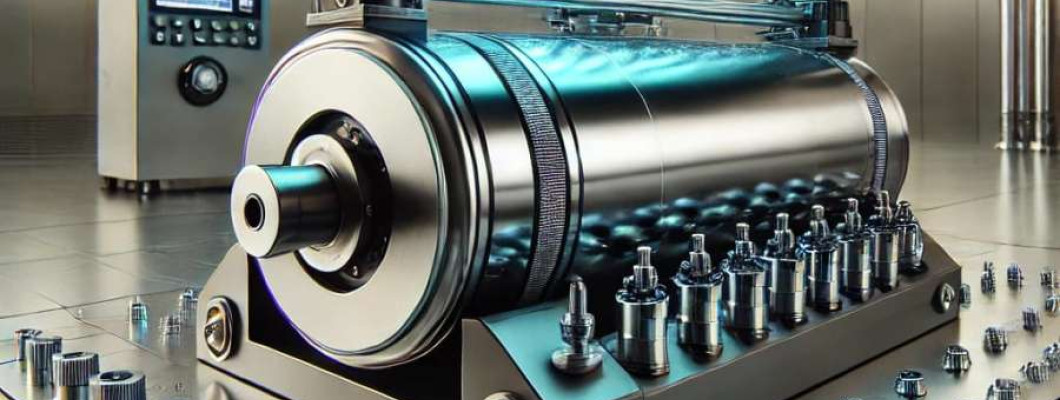
The Industrial Reality of Cylinder Printing in Scalable Production
In the evolving manufacturing arena, cylinder printing presents unique challenges when scaling from artisanal setups to industrial-grade operations. The transition from DIY efforts to automated, high-throughput systems often reveals operational bottlenecks, substrate handling complexities, and precision control demands that small-scale printers cannot efficiently address. For scalable business owners, these challenges manifest acutely in setup repeatability, throughput consistency, and labor cost management, particularly when working with cylindrical substrates that require rotational accuracy coupled with high-resolution UV curing processes.
Industrial-grade cylinder printing systems must deliver sub-20 µm positional accuracy on the cylinder rotation axis combined with consistent LED UV curing irradiance to ensure durable, high-fidelity print adhesion on materials ranging from plastics to coated metals. The Spot A4 LED UV Printer Cylinder Printing unit serves as a focal point in this domain, emphasizing technical precision and workflow optimization for enterprises seeking to outclass the limitations inherent in DIY or semi-industrial printing devices.
Technical Deep-Dive into the Spot A4 LED UV Printer Cylinder Printing System
1. Mechanical Precision and Substrate Handling Dynamics
The core mechanical challenge in cylinder printing is achieving flawless rotation synchronization with the printhead array. The Spot A4 system employs a digitally controlled servo motor paired with a high-resolution rotary encoder delivering 0.005° rotational resolution, translating to approximately 17 µm surface displacement accuracy on a 50 mm diameter cylinder. This degree of control minimizes banding and image distortion, critical for applications demanding micron-level precision.
2. LED UV Curing Efficiency and Thermal Management
Maintaining consistent curing across the substrate circumference requires uniform LED irradiance and effective heat dissipation. The Spot A4 integrates a 395 nm LED array with an output power density of 2500 mW/cm². Thermal modeling indicates the device maintains a stable operating temperature below 45°C at peak loads, achieved through an aluminum heat sink architecture complemented by active airflow. This prevents thermal degradation of heat-sensitive substrates and ensures consistent polymerization of UV inks.
3. Printhead Configuration and Ink Compatibility
The system supports piezoelectric printheads capable of delivering drop volumes as low as 7 picoliters. This fine droplet size enables high-resolution imaging at 1440 dpi while preserving sharpness on curved surfaces. The ink chemistry optimized for the Spot A4 is UV-curable, exhibiting rapid adhesion and curing times under LED exposure, with chemical formulations tailored to resist abrasion, moisture, and temperature fluctuations characteristic of industrial environments.
4. Throughput Analysis and Workflow Integration
Operational throughput is a critical metric for scalable business owners. The Spot A4 supports printing speeds up to 1.2 m/min on cylinders up to 100 mm in diameter and 400 mm in length. This throughput facilitates batch processing without sacrificing resolution. The printer’s interface integrates with standard production management software via Ethernet and USB 3.0, enabling automation and remote monitoring, which reduce labor overhead and improve process reliability.
5. Comparative Hardware and Cost Efficiency Analysis
| Specification | Spot A4 LED UV Printer | Typical DIY Cylinder Printer |
|---|---|---|
| Rotational Accuracy | ±0.005° (≈17 µm displacement) | ±0.05° (≈170 µm displacement) |
| LED UV Output Power | 2500 mW/cm² | 800 mW/cm² |
| Print Resolution | 1440 dpi (7 pl drops) | 600 dpi (20 pl drops) |
| Maximum Cylinder Diameter | 100 mm | 50 mm |
| Operational Throughput | 1.2 m/min | 0.5 m/min |
| Thermal Management | Active airflow + Heat sink | Passive cooling only |
Scenario Analysis of the Spot A4 in Diverse Business Environments
1. Mid-Sized Promotional Products Manufacturer
The Spot A4's precision and throughput allow mid-tier manufacturers to move beyond basic screen printing methods, enabling short-run personalized cylindrical items like drinkware with rapid turnaround. The automated servo control decreases operator intervention, reducing labor costs by approximately 25% compared to legacy methods.
2. Specialty Electronics Enclosure Printer
For companies printing on cylindrical metal casings, such as battery housings or flashlights, the precise rotation combined with high-intensity LED UV curing ensures long-lasting, detailed graphics that resist wear. The thermal regulation avoids heat-induced warping common with DIY units, preserving enclosure dimensions within ±0.1 mm tolerances.
3. Packaging Prototyping and Short Runs
The Spot A4’s automation and fast setup times allow packaging innovators to prototype and produce short runs economically, accommodating rapid design iteration cycles. Its substrate versatility supports polymers, coated metals, and glass cylinders, enhancing material experimentation.
Expert FAQ on Advanced Cylinder Printing Technicalities
Q1: How does the LED wavelength uniformity affect ink curing quality?
A1: Uniform 395 nm emission ensures consistent photoinitiator activation across the substrate, preventing uneven curing, which can cause adhesion failure and color inconsistency.Q2: What are the implications of droplet satellite formation in cylindrical printing?
A2: Satellite droplets cause image distortion and loss of edge sharpness. The Spot A4’s piezoelectric control algorithms mitigate this by optimized waveform tailoring for droplet ejection.Q3: How critical is thermal expansion compensation during high-speed cylinder rotation?
A3: Thermal expansion can shift printhead-to-substrate distance, affecting focus and print quality. The Spot A4’s active cooling stabilizes substrate dimensions, maintaining positional consistency.Q4: Can the system be adapted for larger diameter cylinders without losing resolution?
A4: Scaling to larger diameters requires recalibration of rotational encoders and printhead positioning. While technically feasible, resolution may degrade unless printhead arrays are extended.Q5: What maintenance cycles are ideal to preserve printhead functionality in industrial settings?
A5: Preventive cleaning every 250 operational hours combined with UV ink reservoir filtration minimizes nozzle clogging and print consistency degradation.
Strategic Verdict and Recommendation on the Spot A4 LED UV Printer Cylinder Printing
For scalable business entities seeking to bridge the gap between artisanal printing and industrial-grade throughput, the Spot A4 LED UV Printer Cylinder Printing establishes a new standard. Its precise rotational control, high-intensity LED curing, and compatibility with advanced UV inks enable superior image fidelity and substrate durability. The system manages to substantially reduce labor costs and process variability, delivering a robust return on investment through enhanced throughput and fewer reworks.
Given the technical data, operational advantages, and integration capabilities discussed, the Spot A4 is conclusively suited for production environments where precision, scalability, and substrate versatility are critical. Businesses transitioning from DIY or semi-industrial solutions will find its deployment a definitive step forward in establishing competitive quality and process reliability in cylinder printing workflows.