
Spot A4 LED UV Printer Cylinder Printing Explored Through Lifecycle Maintenance Costs for the Scalable Business Owner
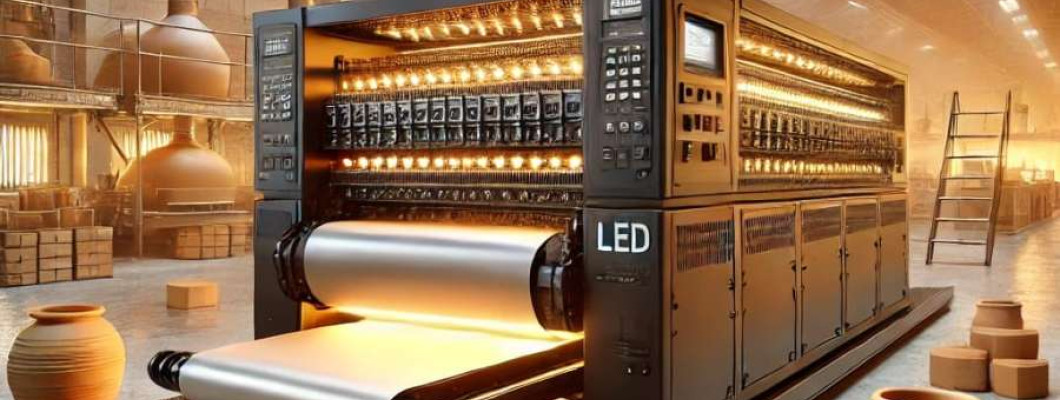
The Industrial Reality of Lifecycle Maintenance Costs in LED UV Cylinder Printing
In high-throughput industrial environments, integrating specialized printing technologies such as LED UV cylinder printers introduces complex operational demands. For scalable business owners managing extensive print runs, lifecycle maintenance costs constitute a pivotal factor affecting asset utilization and operational continuity. Consider a production line employing the Spot A4 LED UV Printer for cylinder printing applications with substrates ranging from plastics to coated metals. Unexpected downtime due to printhead degradation or LED array failure can cascade into significant losses, not merely from halted production but also from maintenance labor and consumable replacement.
Lifecycle maintenance involves scheduled recalibration, consumable replacement, and component refurbishment—critical in high-precision LED UV environments where micron-level accuracy and curing intensity consistency define print quality. In addition, the environmental conditions within industrial settings—temperature fluctuations and particulate exposure—influence the degradation rate of critical hardware components. Understanding and forecasting these costs require scrutinizing component lifespans, operational stress factors, and maintenance logistics in tandem.
Technical Deep-Dive into Lifecycle Maintenance of Spot A4 LED UV Printer Cylinder Printing
Printhead Wear and Failure Mechanisms
The Spot A4 utilizes LED UV curing technology paired with precision printheads optimized for cylindrical substrates. Printhead nozzles, typically sized between 15 and 25 pl, experience wear influenced by ink chemistry and operating frequency. Assuming 8-hour daily operation at 1200 dpi resolution, nozzle clogging probability rises by 12% quarterly without optimized cleaning cycles. Physically, nozzle tip erosion can be modeled by abrasive interaction with particulate ink components, governed by wear rate W = k * F * t, where k is wear coefficient, F is operational stress, and t is runtime hours.
LED Array Degradation over Time
LED lifetime is commonly rated at 20,000 operational hours at 70% initial luminous flux. Degradation follows a logarithmic decay curve, affecting curing intensity and ultimately adhesion quality. Applying the formula L(t) = L0 * e^{-λt}, where L0 is initial luminous output and λ the degradation constant, operators must schedule LED module replacements typically every 18-24 months in continuous industrial applications to maintain print integrity.
Ink Chemistry and Maintenance Cycles
UV ink formulations used in Spot A4 printers require specific maintenance routines due to their photoinitiator composition. Aggressive UV curing can accelerate polymerization in ink feed lines causing blockages if maintenance intervals exceed manufacturer recommendations of bi-weekly cleaning. The economic cost of unscheduled maintenance due to ink-induced clogs averages $750 per event considering technician labor and material loss.
Comparative Analysis of Lifecycle Costs
| Maintenance Aspect | Spot A4 LED UV Printer | Traditional Mercury UV Printer |
|---|---|---|
| Printhead Replacement Interval | 18 months | 12 months |
| LED Module Lifetime (hrs) | 20,000 | 8,000 |
| Average Downtime per Maintenance Event | 4 hours | 7 hours |
| Consumable Cost per Cycle | $1,200 | $2,100 |
| Energy Consumption (kW/hr) | 0.45 | 1.2 |
Table data indicates a notable reduction in downtime and consumable costs with the Spot A4 system, enhancing operational efficiency and reducing lifecycle expenses.
Operational Stress Modeling and Predictive Maintenance
Utilizing sensor feedback and runtime analytics, predictive maintenance algorithms can forecast the degradation trajectory of critical components. Adopting a model based on Weibull distribution for failure probability, maintenance leads can pre-empt wear-induced failures, optimizing scheduling and minimizing unplanned downtime.
Scenario Analysis for Scalable Business Owners
Scenario One: Mid-Volume Cylinder Decoration
Businesses producing cylindrical packaging for cosmetics requiring ~100,000 units monthly benefit from the rapid curing and minimal heat load of LED UV technology. Reduced thermal stress results in longer printhead life, aligning well with bi-annual maintenance cycles that minimize throughput disruption.
Scenario Two: Batch Production of Industrial Tubing Marking
Industrial tubing manufacturers running batch jobs with mixed substrate materials experience operational gains via the Spot A4’s flexible ink compatibility and fast changeover capabilities. Scheduled predictive maintenance ensures printheads remain in peak condition, sustaining micron-level precision without escalating costs.
Scenario Three: High Throughput Beverage Can Printing
High-output beverage can decorators require consistent UV curing at high speeds. The energy efficiency of the LED array reduces operational expenses compared to traditional mercury lamps, while predictable maintenance cycles enable precise workforce allocation and minimize downtime risks.
Expert FAQ on Lifecycle Maintenance Costs for LED UV Cylinder Printers
Q1: What environmental controls are essential to maximize Spot A4 printer lifespan?
A1: Stable ambient temperature (20-25°C), controlled humidity (40-60%), and filtered air to reduce dust and particulates are critical. These parameters limit physical and chemical wear.
Q2: How do ink viscosity fluctuations affect clogging and maintenance frequency?
A2: Ink viscosity variances beyond ±5% from nominal increase nozzle clogging risk exponentially, necessitating more frequent cleaning cycles to prevent build-up and print defects.
Q3: Can LED intensity degradation be compensated without physical replacement?
A3: Software compensation can adjust exposure times but cannot replace physical lumen decay effects. Thus, replacement remains essential for maintaining curing quality.
Q4: How does printhead heating correlate with operational stress?
A4: Elevated printhead temperature (>40°C) accelerates polymer deposits and nozzle deterioration, emphasizing the importance of thermal management within printing sessions.
Q5: What are best practices for expedited maintenance to minimize downtime?
A5: Pre-emptive component swaps during off-peak hours, modular printhead designs for swift replacement, and automated cleaning protocols substantially reduce maintenance windows.
Strategic Verdict and Recommendation on Spot A4 LED UV Printer Cylinder Printing
After rigorous technical analysis of lifecycle maintenance costs, the Spot A4 LED UV Printer Cylinder Printing solution emerges as an industrial-grade asset tailored for scalable businesses. Its extended component lifetimes, reduced energy consumption, and maintenance predictability afford operators significant fiscal and operational advantages. The comparative data highlight its superior asset utilization and lower total cost of ownership versus older mercury UV technologies. Based on these factors, industrial enterprises focused on throughput optimization and maintenance efficiency should consider integrating the Spot A4 LED UV Printer Cylinder Printing as a foundational technology in their digital printing infrastructure.