
Spot A4 LED UV Printer Cylinder Printing Resolves Infrastructure Integration Challenges
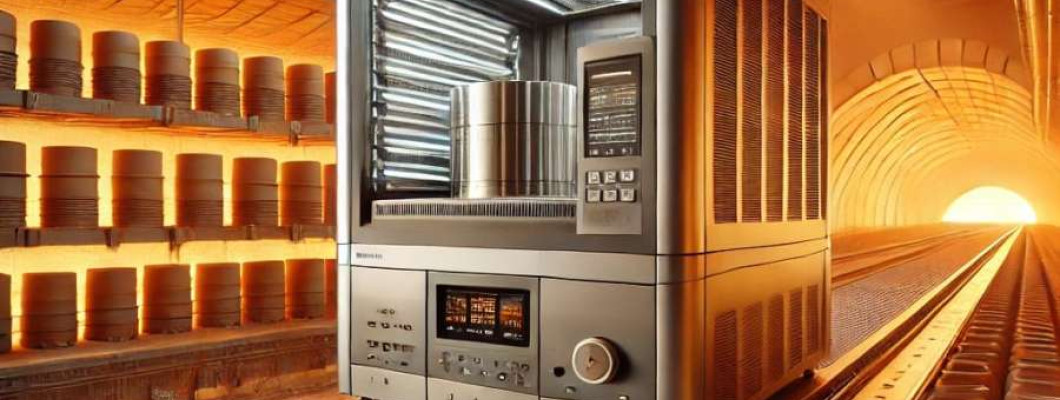
The Industrial Reality
Integrating specialized printing technologies such as the Spot A4 LED UV Printer into existing plant infrastructure is rarely a plug-and-play situation. Industrial environments house a diverse array of legacy equipment and protocols, ranging from upstream rotary systems to downstream curing and packaging lines. The core challenge revolves around matching throughput, ensuring signal compatibility, and managing environmental conditions like heat dissipation and space allocation.
Consider a production facility aiming to implement cylinder printing on 3D substrates for high-value packaging. Without careful infrastructure alignment, an LED UV printer capable of delivering highly precise and rapid outputs risks becoming a bottleneck. The printer's physical footprint must coexist with conveyors and robotic arms while avoiding disruptive thermal loads that could compromise adjacent hardware. Additionally, power demands and control interfaces require meticulous evaluation to prevent overloads and miscommunication with central PLCs (Programmable Logic Controllers).
This scenario underscores the need for a holistic view of the printing solution's integration challenges, factoring in mechanical compatibility, signal protocols (Ethernet/IP, PROFINET), and cooling systems. The Spot A4 LED UV Printer’s design, featuring compact form factor and modular interfaces, attempts to address these requirements directly. However, substantiating its suitability demands an in-depth technical evaluation of balancing hardware capabilities with operational realities.
Technical Deep-Dive
Hardware Footprint and Thermal Management
The Spot A4 model measures approximately 1200 mm in length, 700 mm width, and 650 mm height, a relatively compact size for industrial cylinder UV printers. Thermal dissipation is managed via an integrated cooling system rated at 450 W, which employs liquid-cooled heat sinks to maintain LED arrays at operational temperatures below 45°C. This is critical as exceeding 50°C risks shortening LED lifespan by 30% annually.
Comparatively, traditional mercury lamp UV printers generate heat loads upwards of 2000 W, necessitating large external chillers and complex ducting, complicating infrastructure fitment.
Electrical and Control Interfaces
The printer operates on single-phase 220V, 50/60 Hz power with a peak draw of 1.8 kW. Control is facilitated through an industrial Ethernet port compliant with Modbus TCP/IP, allowing seamless integration with modern MES (Manufacturing Execution Systems). The architecture supports real-time status reporting and fault diagnostics, enabling predictive maintenance.
Printhead Technology and Ink Chemistry Compatibility
Spot A4 uses piezoelectric nozzle arrays with 8 picoliter drop size precision at 1200 dpi resolution. LED UV curing ensures rapid polymerization without solvent evaporation, promoting safer environmental conditions. Compatibility extends to multiple substrates including PVC, PET, and various metal cylinders, critical in diverse industrial applications.
Throughput Versus Connectivity Constraints
Max throughput is rated at 12 meters per minute, with print widths up to 320 mm. However, integrating the printer into existing conveyor speeds may necessitate buffering or synchronization systems to prevent print artifacts or misregistration. The embedded controller supports trigger signals and encoder inputs to synchronize printhead activation with substrate rotation, minimizing timing errors within 0.05 milliseconds.
Comparative Infrastructure Integration Table
| Aspect | Spot A4 LED UV Printer | Traditional Mercury Lamp UV Printer |
|---|---|---|
| Footprint (LxWxH) | 1200x700x650 mm | 1500x1100x900 mm |
| Power Consumption | 1.8 kW Peak | 5 kW Peak |
| Cooling System | Liquid-cooled, 450 W Heat Dissipation | Chiller-based, >2000 W Heat Dissipation |
| Interface Protocol | Modbus TCP/IP over Ethernet | Proprietary serial or legacy interfaces |
| Max Throughput | 12 m/min @ 1200 dpi | 15 m/min @ 600 dpi |
Scenario Analysis
1. Automotive Component Manufacturer: High-precision cylinder printing on small metal parts requires micron-level accuracy and rapid curing to maintain production flow. The Spot A4's LED curing and modular connectivity support inline integration with robotic pick-and-place arms, reducing manual intervention and minimizing downtime.
2. Beverage Packaging Line: For a plant producing cylindrical PET bottles with complex multi-color branding, throughput synchronization is essential. The printer’s ability to interface with conveyor encoders and maintain precise timing ensures consistent print registration without slowing the line’s 10 m/min pace.
3. Custom Promotional Item Production: Small batch runs with substrate diversity (PVC, aluminum, and glass cylinders) demand versatile ink chemistry and fast changeovers. Spot A4’s quick-dry LED UV system and multi-substrate compatibility permit flexible job switching, enhancing responsiveness without equipment redeployment.
Expert FAQ
Q1: What is the expected LED array lifespan under continuous operation?
A1: The LED arrays maintain 70% of initial intensity after 10,000 operational hours when operated under recommended cooling parameters.
Q2: How does the printer handle substrate surface irregularities during cylinder printing?
A2: The system employs adaptive height sensing with <0.1 mm accuracy, adjusting printhead distance dynamically to maintain ink deposition uniformity.
Q3: Is the printer compatible with industrial IoT monitoring frameworks?
A3: Yes, it supports OPC UA protocols and can integrate with centralized monitoring dashboards for real-time performance analytics.
Q4: What maintenance routines are required to ensure printhead longevity?
A4: Daily nozzle purging and biweekly ink system cleaning are recommended; automated maintenance cycles reduce manual interventions.
Q5: Can the LED UV curing be tuned for different ink formulations?
A5: Yes, the system allows adjustable LED intensity and exposure time to optimize curing kinetics for varied ink chemistries.
Strategic Verdict and Recommendation
Addressing complex infrastructure integration challenges is critical to adopting advanced cylinder printing technologies in industrial environments. The Spot A4 LED UV Printer Cylinder Printing solution demonstrates a well-balanced design that aligns compact hardware size, efficient power use, and modern communication protocols. Its advanced LED curing system minimizes thermal impact, allowing straightforward deployment alongside existing conveyors and robotic automation. Moreover, its print precision and substrate versatility bolster its industrial-grade credentials.
Given these factors, we conclusively recommend the Spot A4 LED UV Printer Cylinder Printing system as a definitive choice for manufacturers facing integration challenges without compromising on print quality, uptime, or throughput. Its architecture caters to operational realities and future-proofs production lines against evolving industrial automation demands.