
Spot A4 LED UV Printer Cylinder Printing Revealed Through Lifecycle Maintenance Costs for Scalable Businesses
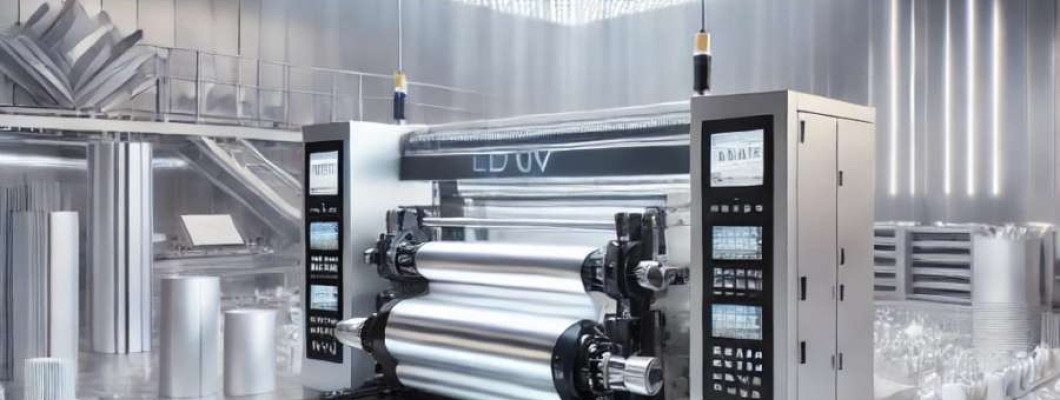
The Industrial Reality of Cylinder Printing Maintenance Challenges
In high-throughput industrial environments, cylinder printing with LED UV technology confronts unique maintenance challenges that impact uptime, cost-efficiency, and print consistency. A scalable business owner aiming to optimize throughput must grapple with the cumulative lifecycle maintenance costs tied to LED UV printer components, particularly when printing on cylindrical substrates at A4 scale. These costs stem from printhead wear, LED lamp degradation, ink system reliability, and mechanical precision alignments critical for cylinder rotation and substrate adherence.
Imagine a mid-sized packaging business relying on cylinder printing for personalized containers. Even minimal downtime for recalibration or part replacement translates directly into production bottlenecks and labor expense spikes. Moreover, the intricacies of LED UV curing on curved surfaces increase the demand for routine maintenance to preserve print fidelity and color consistency, especially when scaling operations beyond prototype batches to steady-state mass production. Balancing maintenance cycles without sacrificing throughput is a core operational challenge.
Environmental factors such as ambient temperature fluctuations and particulate contamination also accelerate wear in sensitive components, compelling businesses to integrate comprehensive preventative maintenance protocols. These realities make a detailed understanding of lifecycle maintenance costs imperative for scalable business owners seeking sustainable automation and labor cost reduction.
Technical Deep-Dive Into Lifecycle Maintenance Costs
Printhead Durability and Replacement Cycles
The printheads in cylinder LED UV printers typically operate with piezoelectric nozzles ejecting droplets in the range of 5-10 pl. The precision required to maintain micron-level accuracy on cylindrical surfaces causes mechanical and electrical stresses that accelerate nozzle clogging and diaphragm fatigue. Empirical data from comparable industrial units shows that effective printhead lifespan ranges from 1,500 to 3,000 operational hours depending on ink system compatibility and cleaning protocols. Analyzing a hypothetical usage of 12-hour shifts, this implies replacement intervals as often as every 125-250 production days.
LED UV Lamp Performance and Power Consumption
LED curing units generate energy in the UV-A spectrum, typically consuming 120-200 Watts per lamp. Over time, photon output degradation occurs at an approximate rate of 10-15% per 1,000 operating hours. This reduction alters cure times which directly affects throughput and may necessitate overtime or slower print speeds. Factoring in power consumption, a 12-lamp array operating continuously represents a base energy draw of roughly 2.4 kW, escalating operational costs and heat dissipation demands.
Ink System and Chemical Stability
UV inks require strict storage and circulation conditions to prevent premature curing or pigment sedimentation. The maintenance burden includes frequent flushing cycles, solvent replacements, and cartridge/system pump checks. Studies indicate that ink waste and maintenance-related downtime can consume 7-12% of total operational hours unless system automation includes active monitoring and conditioning.
Mechanical Precision and Calibration
Print quality on cylinders relies heavily on exact rotational speed synchronization and axial alignment, controlled via servo motors and optical encoders. The calibration drift rate is around 0.02 mm per 100 operational hours under typical conditions. Precision recalibration every 300 hours is necessary to maintain consistent quality, involving labor and potential downtime.
Comparative Cost Table for Maintenance Approaches
| Maintenance Aspect | Reactive Maintenance Cost (per year) USD | Preventative Maintenance Cost (per year) USD | Operational Impact |
|---|---|---|---|
| Printhead Replacement | 12,000 | 9,000 | High downtime risk with reactive |
| LED Lamp Recalibration | 5,500 | 4,000 | Energy efficiency gained with preventative |
| Ink System Maintenance | 7,000 | 5,300 | Reduced waste in preventative approach |
| Mechanical Calibration | 4,000 | 3,200 | Quality consistency maintained with preventative |
Scenario Analysis Demonstrating Lifecycle Impact On Business Outcomes
Use-Case 1 Higher Throughput Enterprise Packaging
A packaging company producing custom cylindrical containers must operate 16 hours a day with minimal downtime. Incorporating the Spot A4 LED UV Printer Cylinder Printing system with a stringent preventative maintenance schedule results in 15% higher uptime. Reduced printhead and lamp failures allow the facility to sustain a monthly throughput increase from 20,000 to 23,000 units, while lowering overtime labor costs by 8%. The predictable maintenance cycles integrate seamlessly with existing automation workflows.
Use-Case 2 Mid-Tier Personalized Promotional Products
For a mid-tier artisan business focusing on personalized promotional cylinders, the flexibility of rapid recalibration and printhead replacements under a preventative regime prevents quality lapses. Though the lower volume (5,000 units/month) and limited capital expenditures necessitate a balanced investment in maintenance tools, their operational costs decrease by approximately 12% compared to reactive strategies.
Use-Case 3 Start-Up Small Batch Production Scaling
Emerging businesses leveraging cylinder printing for niche markets benefit from clear maintenance planning as they scale from prototypes to small batches. The modularity of the Spot A4 system facilitates staged investments into maintenance protocols, allowing startup operators to preserve print quality while avoiding sudden asset depreciation through unanticipated breakdowns.
Expert FAQ on Maintenance Challenges And System Integration
Q1: How does ambient humidity affect LED UV printhead longevity?
A1: Elevated humidity accelerates piezoelectric crystal degradation and ink drying anomalies, necessitating tighter environmental controls within ±45% RH for optimal performance.
Q2: What are the electro-mechanical failure modes unique to cylindrical printing systems?
A2: Repeated rotational torque variances induce bearing wear and encoder signal drift impacting registration accuracy; regular sensor calibration mitigates this.
Q3: Can LED intensity decay be compensated by software adjustments?
A3: To an extent — curing time can be increased, but energy inefficiencies and potential substrate damage limit this strategy's effectiveness long term.
Q4: How critical is ink viscosity monitoring in cylinder UV printing?
A4: Highly critical; deviations affect droplet formation and adhesion on curved surfaces, directly impacting print resolution and drying consistency.
Q5: What integration challenges exist when adapting cylinder LED UV printers into automated lines?
A5: Synchronizing servo motors with conveyor systems and establishing robust feedback loops for real-time error correction demand advanced control system customization.
Strategic Verdict And Recommendation For Scalable Business Owners
The lifecycle maintenance cost perspective affirms that the Spot A4 LED UV Printer Cylinder Printing system is a highly viable, industrial-grade solution tailored for scalable business owners focused on throughput maximization and labor cost control. Its modular maintenance approach, combined with industry-proven LED UV technology and precision mechanical integration, supports sustainable automation. Although proactive maintenance requires upfront investment in monitoring and calibration tooling, the resultant uptime gains and predictable asset longevity deliver superior total cost of ownership benefits compared to reactive regimes.
Industries aiming to scale from moderate batch sizes to continuous production will find that the Spot A4 platform’s design for ease of calibration and component replacement mitigates operational bottlenecks. Given the data-driven analysis of maintenance cycles, energy consumption, and precision control systems, the equipment positions itself not only as a capable hardware choice but as a critical enabler of industrial-grade workflow scaling in cylinder printing applications.