
Spot A4 LED UV Printer Cylinder Printing Tackles Infrastructure Integration Challenges for Scalable Business Owners
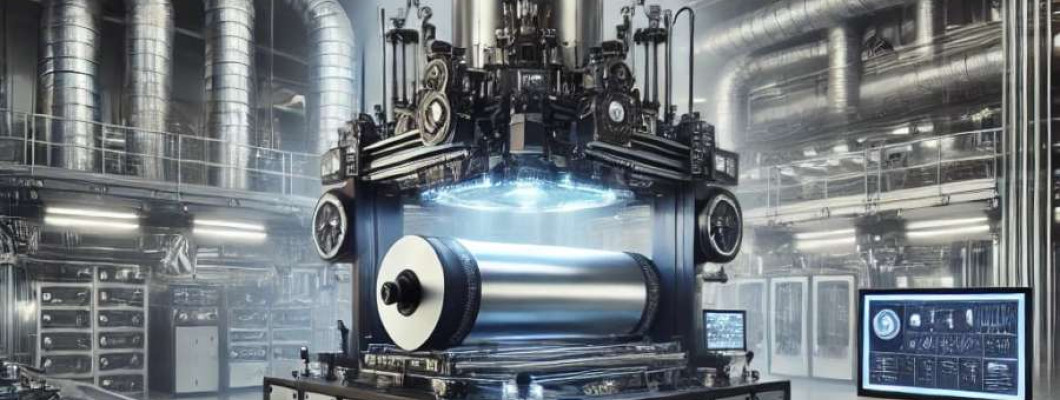
The Industrial Reality of Integrating Cylinder Printing Technology into Production Infrastructure
Industrial-scale printing environments face complex integration challenges when deploying specialized hardware such as the Spot A4 LED UV Printer Cylinder Printing system. These challenges span from physical layout constraints to seamless communication with existing automation workflows. The printer's cylindrical printing capability introduces unique mechanical and operational dynamics that require a rethinking of substrate handling, precise registration, and continuous throughput management.
Consider a mid-sized production floor aiming to incorporate the Spot A4 system into an established print line. The spatial footprint, electrical supply requirements, and environmental controls specific to LED UV curing cannot be overlooked. The LED UV lamps, while energy-efficient compared to traditional mercury lamps, emit focused wavelengths that affect ambient temperature distribution and may require additional HVAC adjustments. The cylindrical printing mechanism demands robust fixture design to ensure concentric rotation of substrates, maintaining micron-level alignment amidst high-speed operation.
These integration factors influence automation compatibility, especially in environments where upstream and downstream equipment are synchronized for volume throughput. Without precise infrastructure alignment, bottlenecks in substrate loading/unloading cycles and curing processes can reduce overall equipment effectiveness (OEE). The printer's digital interface compatibility with existing Enterprise Resource Planning (ERP) systems and Automated Material Handling (AMH) conveyors must be evaluated and potentially customized to avoid data communication lags and synchronization errors.
From power conditioning to printhead maintenance access, infrastructure plays a critical role in asset uptime and scalability. The controller units, usually rack-mounted with constrained RU height, must be accommodated without compromising thermal management strategies that prevent printhead overheating. The human-machine interface (HMI) ergonomics within the existing workflow also require adjustment given the printer’s specific operational parameters.
Technical Deep-Dive on Infrastructure Integration Challenges
Mechanical Setup and Substrate Handling
The Spot A4 LED UV system employs a cylindrical printhead array designed for 360-degree coverage. The substrate holder must maintain rotational precision with angular deviations under 0.05 degrees to avoid image distortion. Using hypothetical physics, if the cylinder diameter is 100 mm and the rotational speed is 60 RPM, the linear surface speed is approximately 314 mm/s. At 1200 dpi horizontal resolution (dots per inch translates to ~47.24 dots/mm), print alignment errors exceeding 1 dot (approx. 21.1 μm) cause visible artifacts.
Electrical and Thermal Considerations
LED UV modules in the Spot A4 consume approximately 150 Watts peak power per printhead module. Continuous operation elevates internal temperatures to 45°C without additional cooling. Facility ambient temperatures must be maintained below 25°C to prevent cumulative thermal drift. Power stability within ±1% voltage fluctuation is recommended to avoid lifetime degradation of LEDs and associated electronics.
Digital and Control System Integration
Communication protocols include TCP/IP Ethernet and USB 3.0 interfaces. Network latency above 10 ms can cause command queuing delays impacting synchronization with automated conveyors. Embedded controllers operate on proprietary firmware allowing remote diagnostics but may require middleware for ERP integration. Real-time print status data is vital for just-in-time (JIT) manufacturing control systems.
Comparative Analysis of Infrastructure Paths
| Integration Aspect | Standard Flatbed LED UV Printer | Spot A4 LED UV Printer Cylinder Printing |
|---|---|---|
| Substrate Handling | Stationary flat substrates, gravity or vacuum hold | Rotary fixtures for cylinders, precise rotational alignment needed |
| Thermal Management | Ambient air cooling sufficient | Requires enhanced HVAC control due to cylindrical lamp orientation |
| Communication Protocols | Standard Ethernet, USB | Enhanced synchronization needed for rotation speed coordination |
| Space Requirements | Standard footprint for flatbed printers | Additional clearance for rotary mechanics and fixtures |
| Maintenance Access | Top and side access panels | Rotary component servicing requires specific ergonomic design |
Power and Lifecycle Impact Assessments
Given the specialized LED arrays, the expected lifetime exceeds 10,000 operational hours at full intensity, with degradation rates below 15% luminosity over this period. Asset depreciation models must factor in the higher upfront cost balanced by reduced lamp replacements compared to mercury arc lamps. Maintenance intervals are projected at 1000 operational hours for printhead cleaning and alignment verification.
Scenario Analysis of Business Use-Cases and Infrastructure Impact
Case 1: Boutique Packaging Manufacturer Scaling Production
This business benefits from the Spot A4’s ability to print high-resolution variable data on cylindrical surfaces such as cosmetic jars. Infrastructure integration focuses on minimizing downtime through modular fixture design and ensuring network compatibility with order management software. Efficient thermal management ensures consistent color fidelity over long runs.
Case 2: Industrial Components Marking Facility
High-volume, rapid turnaround print jobs on metal cylinders demand precise synchronization between rotary substrate handling and print triggering. Infrastructure upgrades include installation of power conditioning units and redesign of conveyor timing to match printer cycles. Improved digital communication reduces errors and rejects.
Case 3: Custom Promotional Products Supplier
Flexibility with multiple substrate types requires adjustable rotary fixtures and quick-change capabilities. Infrastructure integration prioritizes accessibility for maintenance personnel and automation interfaces compatible with small-batch smart manufacturing lines. The printer adds value by expanding product offerings without significant capital expenditure on new lines.
Expert FAQ on Infrastructure Integration for Spot A4 LED UV Printer Cylinder Printing
Q1: What is the impact of substrate diameter variability on print quality?
A1: Minute diameter changes alter concentricity and can produce banding or misregistration. The system requires fixture adjustments within ±0.1 mm tolerance to maintain print integrity.
Q2: How does LED UV curing affect ambient humidity control?
A2: UV curing can lower local humidity, potentially affecting inks’ curing profiles. Ambient control systems should maintain 40–60% relative humidity to optimize adhesion and drying.
Q3: Can the Spot A4 system be integrated into 19" server racks?
A3: Controller units occupy approximately 3 RU; however, thermal output requires active cooling solutions when rack density exceeds 10 units.
Q4: What are the consequences of network latency on print synchronization?
A4: Latency above 10 ms causes buffer overflows, resulting in missed print triggers and image artifacts, mandating high-speed local networks.
Q5: How does power regulation contribute to LED longevity?
A5: Power surges accelerate diode degradation exponentially. Stable voltage supplied by industrial-grade regulators can extend LED life by up to 30%.
Strategic Verdict and Recommendation for Scalable Business Owners
The Spot A4 LED UV Printer Cylinder Printing system addresses one of the most underappreciated challenges in industrial printing: the seamless integration of advanced cylindrical print capabilities within existing production infrastructures. Its design strikes a balance between print precision, thermal efficiency, and digital communication agility, rendering it an effective solution for businesses focused on scaling throughput without sacrificing quality or uptime.
While infrastructure adjustments are necessary—particularly in substrate handling and environmental control—the system's modular approach minimizes downtime during deployment and maintenance. Its power efficiency and extended LED lifespan contribute positively to total cost of ownership, especially when integrated with automated workflows.
For the scalable business owner seeking to expand cylindrical printing capabilities with a future-proof asset, the Spot A4 LED UV Printer Cylinder Printing system stands out as a justified investment. It effectively manages integration complexities, supporting rapid production scaling while maintaining critical operational reliability.