
Technical Mastery in Coffee Printing: The ROI and Asset Analysis
The Industrial Reality
In an era where technological integration defines market leadership, the Smart Coffee Printer Machine stands as a beacon for businesses seeking balance between innovation and fiscal responsibility. Investing in such a device requires an understanding of both immediate asset utility and long-term financial implications. This context sets the backdrop for a deep analysis of return on investment (ROI) and asset depreciation within the dynamic confines of modern café operations.
Businesses are keen to embrace unique customer experiences, yet the move from traditional methods to automated coffee printing involves evaluating the lifecycle value and depreciation rates that impact financial statements. This machine is designed for high-volume operations, promising both speed and precision. However, integrating it seamlessly requires discerning the hidden costs and understanding the asset's longevity.
Technical Deep-Dive
Understanding ROI and Depreciation
ROI analysis begins with initial costs, including purchase, installation, and training. Typically, machines such as the Smart Coffee Printer Machine can range between $5,000 to $10,000 USD. Factoring in an annual depreciation rate of 15%, this capital equipment needs roughly five years to completely depreciate, assuming straight-line depreciation.
Component Durability and Lifecycle
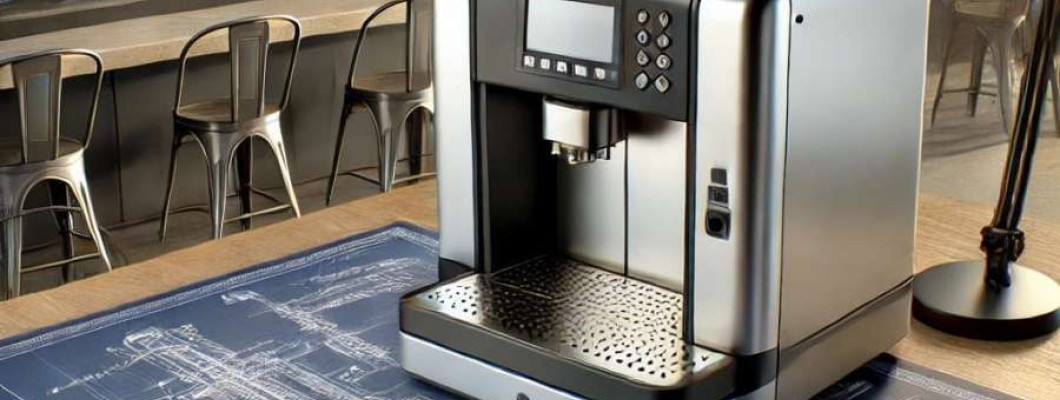
The printer encompasses high-grade stainless steel components and an integrated touchscreen interface. With operational cycles reaching up to 200 cups per day, wear and tear directly relate to asset longevity. The estimated 10-year lifecycle hinges on regular maintenance, primarily servicing the printheads and ensuring ink quality remains optimal.
Comparative Analysis of Alternatives
| Smart Coffee Printer Machine | Traditional Espresso Machines |
|---|---|
| Cost: $5,000 - $10,000 USD | Cost: $3,000 - $7,000 USD |
| Depreciation: 15% annually | Depreciation: 10% annually |
| Lifecycle: 10 years | Lifecycle: 8 years |
| Output: 200 cups/day | Output: 300 cups/day |
Infrastructure Integration Challenges
The integration of this machine within existing café setups demands awareness of power requirements, spatial considerations, and IT infrastructure for connectivity. It operates on a standard 110V outlet, requiring minimal setup but necessitating robust network connectivity for software updates and remote diagnostics.
Fiscal Outcomes of Precision Technology
Precision in coffee art translates to increased customer engagement and potential upsell. Calculating the financial impact involves analyzing revenue shifts based on enhanced service offerings and client retention. The printer's precise output capabilities provide a competitive advantage, allowing for a premium pricing strategy.
Scenario Analysis
Case Study: Independent Café Owner
An independent café leverages the Smart Coffee Printer Machine to create bespoke customer experiences. The initial investment of $8,000 USD is offset by a 20% increase in customer flow due to the novelty factor. The asset is fully depreciated over five years, aligning with the café's growth strategy.
Case Study: Multi-Location Franchise
For a franchise, deploying the machine across multiple sites standardizes customer experience. The uniformity provided by the printer ensures brand consistency, while centralized maintenance contracts reduce operational overhead and simplify expense tracking.
Case Study: Corporate Office Space
In corporate environments, the coffee printer serves as an employee engagement tool, fostering community and morale. The machine requires minimal oversight, and its predictable depreciation schedule aids in asset management and budget forecasting.
Expert FAQ
Q1: What is the expected printhead lifespan? A1: Approximately 2 years, depending on usage. Regular cleaning protocols are essential.
Q2: How do environmental factors affect machine performance? A2: Controlled environments sustain optimal performance, avoiding thermal stress or humidity-induced malfunctions.
Q3: Can the machine handle continuous operation? A3: Yes, it is engineered for high-throughput scenarios, with cooling systems to prevent overheating.
Q4: What is the typical maintenance cycle? A4: Quarterly inspections are recommended to ensure print fidelity and mechanical integrity.
Q5: Is software compatibility a concern? A5: The machine is compatible with most network protocols and receives regular firmware updates.
Strategic Verdict & Recommendation
With an emphasis on ROI and asset longevity, the Smart Coffee Printer Machine emerges as a sound investment for enterprises looking to enhance customer engagement and streamline service delivery. Its precision, durability, and financial viability make it a definitive choice for businesses aiming to elevate their service portfolios and operational efficiency.