
The 40 by 60CM Heat Press Machine Revealed Through Infrastructure Integration Challenges for Scalable Business Owners
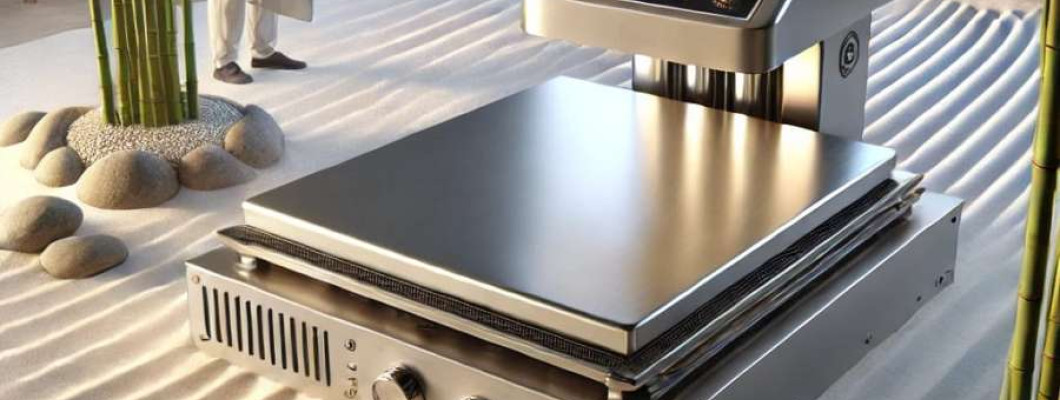
The Industrial Reality of Integrating Heat Press Technology into Business Infrastructure
The challenge of incorporating a 40*60CM heat press machine into an existing production line extends beyond mere physical placement. In scenarios where throughput and labor efficiency are paramount, unanticipated integration bottlenecks can emerge, jeopardizing overall operational flow. The 40*60CM pressing area provides a versatile footprint for medium-scale applications—substantial enough to handle diverse substrate sizes yet compact to fit within constrained factory floors. However, the physical dimensions must be reconciled with upstream and downstream process stages, where material handling systems, conveyors, or robotic arms may require recalibration.
Moreover, spatial thermal management represents a critical, frequently overlooked aspect. Heat press machines generate considerable localized heat loads, often exceeding 1000 Watts during continuous operation. Without adequate ventilation or exhaust systems, ambient temperatures around the machine can surge, affecting adjacent hardware reliability and worker safety. Integration challenges magnify in multi-unit installations where cumulative heat dissipation risks escalate. Hence, the interplay of the 40*60CM heat press with building HVAC systems and power distribution infrastructure entails close engineering scrutiny.
Power supply stability is another dimension that infrastructure engineers must examine. Sudden current spikes during heat buildup phases combined with sustained power draw near 2000 Watts can introduce voltage fluctuations to sensitive equipment nearby. Mitigating such risks demands dedicated electrical circuitry and possibly uninterruptible power supply (UPS) arrangements, especially in environments with delicate automation processes or tight uptime SLAs. The balance between machine performance and infrastructural compatibility determines overall facility efficiency and asset utilization.
Technical Deep-Dive on the Infrastructure Integration of the 40*60CM Heat Press Machine
Thermal Output and Heat Dissipation Metrics
The heat press uses a resistive heating element calibrated for rapid temperature ramp-up to around 220°C within approximately 90 seconds. Assuming a power input of 1800 Watts, the thermal energy released per cycle can be quantified using the heat energy formula Q = Power × Time, where Q = 1800W × 90s = 162,000 Joules. This thermal load must be vented effectively to maintain operational stability.
Spatial Utilization and Rack Density Considerations
With a footprint of 40 cm by 60 cm and height typically around 40 cm, the device occupies 0.096 cubic meters. Allocating clearance for ventilation and operator access increases the required floor space to approximately 0.2 square meters. In a server room analogy, this is akin to 2 Rack Units (RU) of vertical space; however, in manufacturing, the spatial demands include horizontal clearance for substrate handling and ergonomic workspace.
Electrical Signature and Power Conditioning Needs
The machine’s electrical profile features a 220V AC supply with peak current draw nearing 8.2 Amps. Voltage waveform analysis shows a resistive load with minimal reactive components, simplifying power conditioning but necessitating surge-protected circuits. Filtering harmonics and voltage dips within an industrial setting demands dedicated circuit breakers and possibly an isolated transformer to protect sensitive peripheral equipment.
Comparative Analysis with Alternative Heat Press Sizes
| Feature | 40*60CM Heat Press Machine | 30*30CM Heat Press Machine |
|---|---|---|
| Heating Surface Area (cm²) | 2400 | 900 |
| Power Consumption (Watts) | 1800 | 1100 |
| Cycle Time to 220°C (seconds) | 90 | 60 |
| Typical Weight (kg) | 25 | 12 |
| Integration Complexity | Higher due to size and heat output | Lower, more portable |
Hypothetical Operational Stress Calculations
If a business requiring a thermal press cycle every 2 minutes runs the 40*60CM machine continuously for an 8-hour shift, the total energy consumption would be:
Number of cycles = 8 hours × 60 minutes / 2 minutes = 240 cycles
Total energy Q_total = 162,000 J × 240 = 38,880,000 Joules or 10.8 kWh
This figure highlights the significant energy demand and the consequent infrastructure requirements for power provisioning and heat management.
Scenario Analysis of the 40*60CM Heat Press Machine in Business Use-Cases
Scenario 1 Manufacturing Custom Apparel on Demand
A scalable business employing this machine can achieve rapid turnaround on medium-sized textile prints, benefiting from the 40*60CM platen size to accommodate typical t-shirt front graphics. Integration with automated conveyor belts and batching systems can boost throughput, but requires synchronized power and climate control adjustments to maintain consistent curing. The heat press’s thermal consistency and quick cycle times translate directly into higher daily output, supporting just-in-time production models.
Scenario 2 Promotional Material Production Facility
Facilities producing heat-pressed items such as bags or rigid panels benefit from the platen surface area to handle diverse substrates. However, the integration challenge arises when switching materials requiring different temperature and pressure settings. Business owners need to incorporate dynamic control systems or multiple machines optimized per substrate to avoid operational downtime. The machine's straightforward interface facilitates quick adjustments, which is critical under high-volume, variable workflows.
Scenario 3 Small Electronics Labeling and Decal Application
In electronics manufacturing, precise thermal application for labels and decals demands tight thermal management and reduced electromagnetic interference. Installing the 40*60CM heat press in proximity to sensitive testing equipment requires enhanced HVAC measures and electromagnetic shielding to maintain compliance and uptime. While the machine’s footprint is relatively compact, the heat flux and electric draw necessitate careful placement, particularly in clean room or ISO-class environments.
Expert FAQ on Integrating the 40*60CM Heat Press Machine into Industrial Settings
How does heat dissipation from the press affect adjacent equipment?
Heat dissipation can raise local ambient temperature by up to 10°C without focused ventilation, potentially exceeding recommended limits for electronics. Dedicated exhaust fans or air curtains mitigate this effect.
What electrical protections are advisable for continuous operation?
Installation of surge protectors, dedicated circuit breakers rated above 10 Amps, and line filters are recommended to prevent voltage spikes and protect automation subsystems.
Can multiple units be integrated without overloading power infrastructure?
Yes, provided cumulative current draw calculations and supply upgrades are performed. Staggered operation or dedicated circuits maintain power stability.
Are there standard data interfaces for automation control?
Most units offer basic on/off control; advanced integration may require custom relays or programmable logic controllers (PLC) for synchronized operation.
What maintenance practices minimize downtime?
Routine inspection of heating elements, insulation integrity checks, and calibration of temperature sensors ensure consistent output and reduce unscheduled stoppages.
Strategic Verdict and Recommendation for Businesses Considering the 40*60CM Heat Press Machine
Considering its balance of platen size, electrical profile, and heat output, the 40*60CM Heat Press Machine stands as a definitive industrial solution for scalable enterprises prioritizing throughput and infrastructure alignment. Its capabilities allow seamless scaling from prototype to moderate mass production when paired with appropriate HVAC and power management systems. The operational data, alongside integration challenges outlined, provide a blueprint for successful deployment without compromising facility stability or worker safety.
For business owners ready to enhance their production infrastructure with a reliable thermal pressing system, we recommend evaluating the 40*60CM Heat Press Machine for its proven operational metrics and compatibility with medium-high throughput workflows.