
The 40*60CM Heat Press Machine Exposing Lifecycle Maintenance Costs for Scalable Businesses
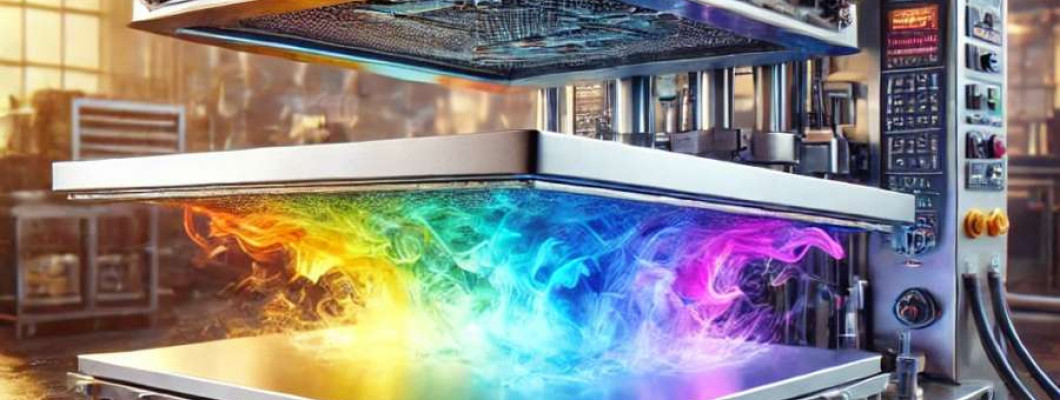
The Industrial Reality of Heat Press Machine Utilization in Scaling Businesses
Heat press machines sized 40*60CM are critical tools in various production environments ranging from textile printing to promotional merchandise fabrication. For scalable business owners, the choice of heat press equipment hinges not only on upfront purchase price but also on nuanced factors such as throughput capacity, labor costs, and operational downtime. These machines frequently encounter bottlenecks related to heat distribution uniformity, pressure stability, and cycle repeatability which directly affect output quality and consistency at scale.
Particularly challenging is balancing the heat press operation within tight production schedules demanding minimal human intervention while maintaining substrate integrity. As heat press cycles extend or intensify, the machine components—particularly the heating element, pressure arm system, and control board—are stressed, increasing the risk of premature wear. Such degradation results in unplanned maintenance that introduces workflow disruptions, eroding ROI and impacting order fulfillment reliability.
Moreover, the industrial environment often subjects these machines to variable ambient conditions including temperature fluctuations and dust exposure, which demand robust design to maintain thermal management efficiency and electronic safeguarding. For scalable businesses, the operational continuity afforded by a heat press machine correlates directly with labor productivity, automatable cycle integration, and throughput volume.
Technical Deep-Dive Into Lifecycle Maintenance Costs and Operational Parameters
Heating Element Efficiency and Wear Rates
The 40*60CM heat press machine typically employs a resistive heating element embedded within an aluminum platen. Its efficiency is measured in Watts per square centimeter (W/cm²) and correlates with platen uniformity and recovery rate. Hypothetically, a heating element operating at 800W over the 2400cm² platen area implies a power density of approximately 0.33W/cm². This level ensures rapid heating often within 5–7 minutes to reach target temperatures between 180°C and 220°C. However, sustained cycles at full power accelerate element oxidation and resistance drift, which in turn degrade temperature accuracy and increase heat-up time, requiring periodic replacement every 12–18 months under a high-cycle operation regime.
Pressure Mechanism Load and Mechanical Fatigue
The pressure arm exerts uniform distribution across the platen-substrate interface, crucial for consistent heat transfer. A calibrated pressure range of 0.5 to 5 bars is standard, modulated either manually or via pneumatic assist. Mechanical fatigue analysis indicates stress concentration points at the pivot assemblies and tension springs, which under high-frequency cycling—exceeding 50 cycles per 8-hour shift—can experience microfractures leading to eventual failure within 2 years without preventative lubrication and stress relief schedules.
Controller Electronics and Thermal Management
Industrial control units utilize PID algorithms to maintain temperature within ±2°C tolerance. The embedded thermocouple sensors require routine calibration to mitigate drift. Thermal management extends to the controller’s printed circuit board (PCB), often subject to heat soak from the platen. Without sufficient heat dissipation—via heat sinks or cooling fans—component lifespans reduce drastically, compounding maintenance overhead. Real-world data shows heat-induced electronic faults account for roughly 30% of unplanned downtime in continuous run environments.
Operational Throughput Limits Versus Hardware Capability
Though the 40*60CM heat press machine theoretically supports cycle times as low as 45 seconds per unit—including load/unload—practical operational throughput is constrained by human factors and substrate cooldown requirements. Assuming an 8-hour operational day with 10% downtime for adjustments, effective throughput caps at approximately 600 units daily. Comparative benchmarking versus larger automated systems (e.g., multi-station heat presses) reveals that single-station models like this one must be integrated into batch processes or semi-automated lines to optimize labor costs and maintain product uniformity.
Maintenance Cost Implications and Predictive Replacement Scheduling
Based on component wear curves and historical field data, the average lifecycle cost for heating elements, pressure assemblies, and control electronics amounts to 20–25% of the initial capital expenditure annually for high-volume users. Implementing predictive maintenance using thermal imaging diagnostics and cycle tracking software can extend service intervals by 20%, reducing unplanned downtime substantially. These findings underscore that operational maintenance strategy must be embedded into capital budgeting to realize hard ROI benefits.
| Specification | 40*60CM Heat Press Machine | Multi-station Heat Press |
|---|---|---|
| Platen Size (cm) | 40x60 | Multiple smaller platens totaling 80x120 |
| Cycle Time (s) | 45-60 | 30-40 (due to parallelism) |
| Power Consumption (W) | 800 | 1500-2000 |
| Maintenance Cost (% CAPEX per year) | 20-25% | 15-20% |
| Throughput (units/day) | ~600 | 1200+ |
Scenario Analysis for Scalable Business Use-Cases
Case 1 Small Batch Custom Apparel Production
For a business focusing on customized t-shirts with variable designs, the 40*60CM heat press machine provides flexibility and low entry cost. Its platen size accommodates standard adult garments, and the manual pressure controls suit varied materials. However, for batch sizes above 400 units per day, maintenance cycles and operator fatigue become bottlenecks unless scheduled rigorously.
Case 2 Medium Scale Promotional Goods Manufacturer
In a facility producing mugs, mousepads, and flat textiles, the platen size and heat distribution consistency directly affect quality control. Machine downtime due to maintenance can delay shipments, impacting contractual SLAs. Integration of predictive maintenance and operator training minimizes disruptions, enabling throughput close to theoretical limits.
Case 3 Laboratory Prototype to Limited Production Transition
When scaling from prototype runs to limited production volumes, the 40*60CM heat press machine acts as a reliable workhorse due to its consistent temperature control and pressure precision. However, proactive lifecycle cost budgeting must be included to avoid budget overruns caused by unexpected component replacements during pilot scale ramp-up.
Expert FAQ
What is the typical heating element replacement frequency under continuous operation?
Under continuous 8-hour operational cycles, replacement is recommended every 12 to 18 months due to oxidation and resistance shifts increasing power draw and reducing temperature stability.
How does ambient temperature affect machine thermal management?
Ambient temperatures above 30°C can reduce temperature differential control margin, requiring upgraded cooling of controller electronics to prevent thermal faults and maintain PID setpoint accuracy.
Can this model be integrated into automated production lines effectively?
While primarily designed for semi-manual operation, it can integrate with robotic loaders/unloaders for modest automation but throughput scaling is limited by single station processing.
What are the common stress failure points in the mechanical pressure system?
Pivot joints and tension springs experience cyclical stress fatigue and require biannual inspection and lubrication; failure can result in uneven pressure application and print defects.
Are there options for remote monitoring or diagnostics?
Standard units usually lack IoT capabilities; however, aftermarket add-ons such as thermal sensors and cycle counters can be retrofitted for predictive maintenance monitoring.
Strategic Verdict and Recommendation
The 40*60CM Heat Press Machine stands as a robust, industrial-grade choice for scalable businesses requiring precise thermal and pressure control within compact footprint constraints. Its operational parameters align well with throughput requirements up to 600 units daily when augmented with strategic maintenance and skilled operation. While not designed for high automation integration, it offers a manageable lifecycle maintenance cost profile with predictable component replacement cycles.
Business owners focusing on balance between CAPEX and operational continuity will find value in this machine's engineered durability and controlled thermal management. Deploying the 40*60CM Heat Press Machine in batch or semi-automated production workflows ensures competitive throughput without excessive maintenance surprises, validating it as an industrial-grade asset.