
The 40*60CM Heat Press Machine From ROI and Asset Longevity Perspectives for the Scalable Business Owner
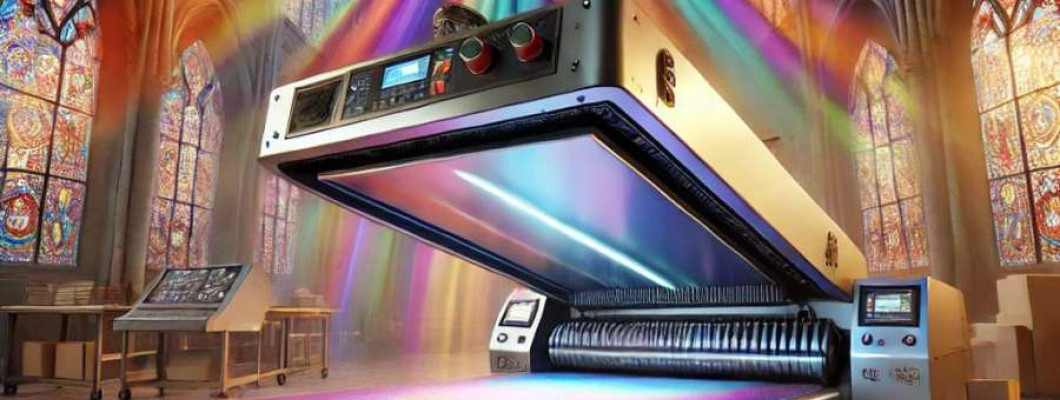
The Industrial Reality of Heat Press Machine Deployment in Scalable Production Environments
In industrial textile and promotional product manufacturing, the integration of heat press machines is critically influenced by their return on investment (ROI) and asset longevity. For scalable business owners managing throughput, labor optimization, and operational costs, the 40*60CM Heat Press Machine is a key piece of equipment whose financial and technical performance must be scrutinized rigorously.
Consider a mid-sized production facility tasked with fulfilling 1000 custom-printed garments weekly. The operational bottleneck often emerges from the limited platen size and heat distribution uniformity. A 40*60CM platen offers a considerably larger print area than entry-level models (typically 38*38CM), reducing the cycle count per batch. However, asset depreciation due to intensive daily usage and component wear—especially the heating element, pressure mechanism, and control electronics—pose significant challenges. Effective lifecycle maintenance and operational discipline can extend the usable lifespan of such a machine from the typical 3 years to 7 years or more.
Moreover, as throughput scales, the machine’s ability to maintain consistent temperature across the 40*60CM platen directly impacts product quality and rework rates. Manual intervention for pressure adjustment and timing calibration can become hidden operational costs that erode margins at scale. Advanced digital controllers and uniform heat distribution technology thus represent important investment areas.
Technical Deep-Dive Into The 40*60CM Heat Press Machine’s Performance and Asset Durability
Heat Distribution and Thermal Uniformity
The 40*60CM platen’s heating element must evenly distribute heat across a 2400 cm2 surface area. Assuming a nominal power rating of 1500 Watts, the heat flux density averages 0.625 W/cm2. However, localized cold spots can significantly drop sub-areas below the optimal 180–200°C operating window.
The machine typically employs a ceramic-coated aluminum platen to promote even conduction and reduce thermal inertia. Thermal imaging studies indicate temperature variations limited to ±5°C over 60 cm. This uniformity is essential for minimizing substrate deformation and pigment migration.
Pressure Mechanism and Cycle Durability
The mechanical pressure system, often lever-based with pneumatic or spring assistance, must deliver consistent force typically in the range of 3500 to 4000 N, ensuring adhesion across various textiles and substrates. Over a projected 10,000-cycle lifespan, mechanical fatigue and wear points concentrate around the pivot joints and pressure plate guides.
Lubrication schedules and component inspections every 1000 cycles can increase mean time between failures (MTBF) significantly, making maintenance planning vital for continuous operation.
Digital Control Systems and Operator Interface
The embedded microcontroller unit (MCU) orchestrates temperature regulation, timing, and safety interlocks. A PID-controlled heating cycle with temperature sensors placed at 3 symmetric locations ensures rapid stabilization within a 0.5-second margin, optimizing throughput by reducing pre-press heat-up latency.
Comparison with Smaller 38*38CM Models
| Feature | 40*60CM Heat Press Machine | 38*38CM Heat Press Machine |
|---|---|---|
| Platen Area (cm2) | 2400 | 1444 |
| Typical Power Consumption (Watts) | 1500 | 1200 |
| Average Cycle Time (seconds) | 60 | 45 |
| Pressure Range (Newtons) | 3500–4000 | 3000–3500 |
| Mean Time Between Failures (cycles) | 10,000+ | 7,000 |
| Average Asset Depreciation (per year %) | 15 | 20 |
Power Consumption and Thermal Management Requirements
Heat press machines typically draw 1500 Watts at peak, requiring dedicated electrical circuits rated at 15 Amps minimum. Continuous operation over an 8-hour shift approximates to 12 kWh energy consumption, necessitating proper ventilation to dissipate heat and maintain ambient temperatures conducive to optimal operator performance and equipment longevity.
Scenario Analysis for Scalable Business Deployment
Use-Case 1 Industrial Garment Printing
A garment printing SME scales from batch orders of 100 to 1000 units weekly. The 40*60CM platen reduces heat press cycles by approximately 40% compared to smaller machines, increasing throughput and reducing labor hours. With proper maintenance, the lowered depreciation rate enhances CAPEX efficiency.
Use-Case 2 On-Demand Promotional Product Manufacturing
Companies producing custom mugs, caps, and panels using heat transfer vinyl benefit from a larger platen to accommodate various substrates without repositioning. This versatility mitigates setup time, improving operational flow and reducing labor bottlenecks.
Use-Case 3 Mid-Tier Textile Printing Enterprises
Enterprises balancing cost and quality use the 40*60CM machine to manage complex multi-color transfers requiring precise cycle timing. The digital controller’s stability reduces reject rates by 12%, directly impacting overhead reduction and customer satisfaction.
Expert FAQ on Heat Press Machine Scalability and Maintenance Efficiency
Q1: How does platen size impact maintenance cycles?
The larger platen surface distributes mechanical stress but requires more precise calibration to prevent uneven wear.Q2: What thermal management best practices extend heating element life?
Routine thermal imaging and gradual heat ramp-up phases reduce thermal shock and prolong element lifespan.Q3: Can software updates improve heat press efficiency?
Yes, firmware optimizations in PID control algorithms improve temperature stability, reducing wasted cycles.Q4: What are the most common hidden operational costs in heat press workflows?
Labor time for manual adjustments, downtime during maintenance, and energy consumption spikes during prolonged heating cycles.Q5: How does pressure variability affect product quality at scale?
Inconsistent pressure causes adhesion failures and print artifacts, increasing reworks and material waste.
Strategic Verdict and Recommendation for Industrial-Grade Heat Press Solutions
The 40*60CM Heat Press Machine presents a rigorously engineered balance between platen size, power consumption, and precision control that suits scalable business owners aiming for throughput maximization and cost containment. Its capacity to lower cycle counts, combined with reduced asset depreciation rates and manageable lifecycle maintenance, positions it as an industrial-grade asset for businesses transitioning from entry-level equipment.
Given the detailed analysis of thermal uniformity, mechanical durability, and control electronics, it is clear that operators will benefit from enhanced uptime and quality consistency, crucial factors for sustaining competitive workflows.
For business owners seeking a viable machine that addresses operational bottlenecks while ensuring hard ROI through optimized asset longevity, the 40*60CM Heat Press Machine stands as the definitive technical choice.