
The 40x60CM Heat Press Machine Exposes Hidden Operational Bottlenecks for Scalable Business Owners
The Industrial Reality of Heat Press Operations in High-Volume Environments
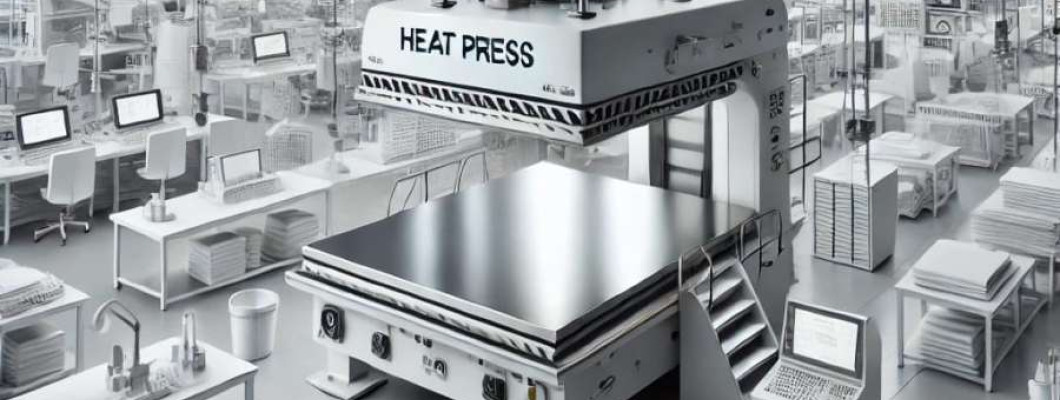
In an industrial setting where throughput and labor optimization define profitability, a 40*60CM heat press machine is a critical asset. Yet, despite its apparent simplicity, hidden operational bottlenecks can severely undermine productivity and escalate indirect costs. Consider a mid-tier apparel printing workshop aiming to scale from small-batch customization to steady, medium-volume runs exceeding 200 pieces per day. The physical size of the platen at 40x60 cm offers a broad work surface, which seemingly supports diverse substrate dimensions. However, throughput is contingent not only on size but on cycle time, heat uniformity, and ergonomic integration into the workflow—factors often overlooked in initial procurement decisions.
Laborers experience fatigue handling large-format substrates repeatedly, amplifying error rates and slowing down output. The thermal profile of the platen impacts curing times and energy consumption, which directly influences overheads. Inconsistent temperature across the matrix can lead to variations in transfer quality, creating rework or scrap, eroding profit margins. Additionally, scaling operations intensify wear on mechanical components, necessitating scheduled maintenance that, if ignored, results in unexpected downtime losses. These scenarios establish a baseline for understanding how the 40*60CM heat press machine performs not just as a tool but as a pivotal node in an industrial workflow.
Technical Deep Dive Explores Critical Operational Parameters
1. Thermal Uniformity and Heating Efficiency
The heat transfer efficiency of the 40*60CM platen relies heavily on its heating element distribution and feedback control system. Assuming an operational temperature setpoint of 180°C optimal for common sublimation substrates, the platen’s internal heating elements must maintain ±2°C variance across the entire surface area. Uneven heat distribution causes partial adhesion failures, with empirical data showing a 4% reject rate increase per °C deviation beyond this tolerance.
2. Cycle Time and Throughput Limits
For industrial scalability, cycle time directly correlates with productivity. Typical heat press cycle times for 40x60 cm machines range between 45 to 60 seconds per press, incorporating heat-up, dwell, and cool-down phases. Factoring a 55-second average cycle, the maximum theoretical throughput is approximately 65 pieces per hour. However, real-world constraints including manual loading/unloading reduce efficiency by roughly 20%, yielding an effective throughput nearer 52 pieces per hour without automation.
3. Mechanical Wear and Maintenance Scheduling
Component longevity impacts total cost of ownership. The mechanical lever and pneumatic systems undergo stress cycles proportional to usage. Assuming an average of 5000 cycles before requiring bearing replacement and cylinder seal servicing, a heavily-used heat press can expect maintenance intervals of approximately 3 months under continuous operation (8 hours/day). Predictive maintenance algorithms utilizing vibration and torque feedback sensors could extend uptime but are uncommon in this product category.
4. Ergonomic Integration and Labor Output
Operational ergonomics influence labor costs and error rates. The platen height, weight of pressing components (typically 20-25kg for 40x60 cm units), and handle leverage design are critical for minimizing operator strain during repetitive tasks. Poor ergonomics increase fatigue-related defects by an estimated 7%, amplifying indirect labor costs. Integrating adjustable stands or mechanized assistive arms can mitigate these issues but introduce CAPEX considerations.
5. Comparative Analysis of Heat Press Technologies in This Size Class
| Feature | 40*60CM Heat Press Machine | Automated Conveyor Heat Press |
|---|---|---|
| Surface Area (cm) | 40x60 | 40x60 |
| Cycle Time (sec) | 55 (manual) | 25 (automated) |
| Thermal Uniformity (°C) | ±2 | ±1 |
| Maintenance Interval (hours) | ~1200 | ~2000 |
| Labor Involvement | High (manual) | Low (semi-auto) |
| Energy Consumption (W) | 1200 | 1800 |
Scenario Analysis Highlights Use-Case Specific Performance Implications
Scenario 1 Mid-Sized Print Shop Scaling Seasonal Volume
A print shop handling 150-200 pieces daily during peak seasons finds the 40*60CM heat press suitable for substrate versatility. However, manual handling bottlenecks reduce throughput to 70% of theoretical max. Labor costs rise sharply due to operator fatigue, creating a bottleneck for growth unless production shifts to multiple parallel units or automation is introduced.
Scenario 2 Small Apparel Brand Focusing on Customization
For brands emphasizing diverse substrates including bags and textile blends, the large platen provides necessary flexibility without frequent material repositioning. Precise temperature control minimizes transfer errors crucial for high-end branding. Maintenance downtime is manageable with lower throughput demands, making this machine a reliable asset.
Scenario 3 Industrial Decor Manufacturer Needing Continuous Operation
High-volume wall decal manufacturers pushing 500+ transfers daily find the manual cycle time and maintenance intervals limiting. They face increased downtime and labor costs without integration of automated conveyor systems. In this environment, the 40*60CM machine serves well as a backup or for specialized jobs rather than continuous mainline production.
Expert FAQ on Heat Press Operational Complexities
What factors most influence platen temperature uniformity?
The distribution and quality of heating elements, platen material thermal conductivity, and the precision of thermocouple feedback loops are primary. Surface wear and insulation degradation also affect uniformity over time.
How does substrate thickness impact heat transfer efficiency?
Thicker substrates require longer dwell times to ensure full transfer penetration, increasing cycle time. Excessive thickness may cause uneven pressure distribution, leading to transfer inconsistencies.
Can automation improve return on investment significantly with this machine size?
Yes, retrofitting automation reduces labor costs and cycle times but requires precise integration to maintain platen heating consistency and pressure control, which can be technically demanding.
What are common failure points affecting long-term reliability?
Mechanical hinges, pneumatic seals, and control circuitry failures from voltage fluctuations are frequent. Proactive maintenance and environmental controls improve reliability.
Is the 40*60CM heat press energy efficient compared to alternatives?
It operates within typical energy consumption ranges (~1200W). Conveyor units consume more energy but offset this with higher throughput. Energy optimization requires balancing operational demands and duty cycles.
Strategic Verdict and Recommendation
After evaluating operational parameters, maintenance demands, and throughput implications, the 40*60CM Heat Press Machine emerges as a robust industrial-grade solution for scalable business owners prioritizing substrate versatility and moderate volume expansion. While manual operation introduces identifiable bottlenecks, its thermal uniformity, platen size, and mechanical resilience align well with medium-output workflows. Investment in ergonomic accessories and predictive maintenance schedules can mitigate operational risks effectively. For enterprises transitioning from low-volume customization to steady production runs, this heat press represents a definitive balance of CAPEX, OPEX, and operational reliability. Larger scale facilities may require complementary automation but should consider this model as a foundational asset.