
The A3 Roll DTF Printer Resolves Infrastructure Integration Challenges for Scalable Businesses
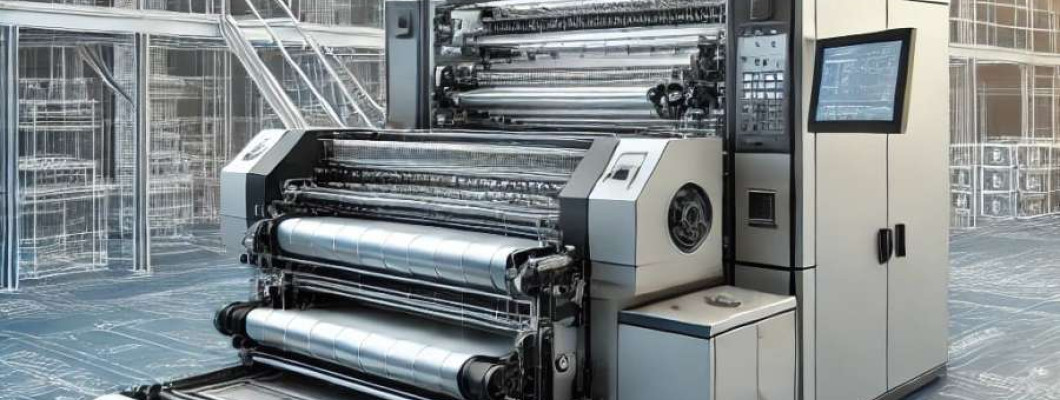
The Industrial Reality of Integrating A3 Roll DTF Printers into Existing Infrastructure
In industrial-scale printing environments, the challenge of integrating emerging technologies into established workflows and infrastructure is a critical barrier. The A3 Roll DTF Printer presents a transformative opportunity but tests the limits of existing thermal management systems, spatial configurations, and network interoperability. Industrial facilities often run legacy HVAC and electrical supply systems designed for traditional flatbed printers or textile presses. The A3 Roll DTF Printer, with its reliance on roll-fed substrates and direct-to-film transfer technology, requires specific environmental control to maintain print quality and ink chemistry stability. The physical footprint of the printer, coupled with the need for line-speed coordination, further complicates seamless integration.
The printer's continuous roll mechanism demands precise synchronization with automated feeding and curing units. In many cases, businesses must retrofit or upgrade production lines, risking downtime and increased CAPEX. Additionally, the printer's power consumption profile and heat output challenge the thermal management capabilities of conventional industrial racks and floor layouts. Without adequate consideration, this can create bottlenecks, impacting throughput and short-term ROI. Understanding and addressing these infrastructure nuances is essential for scalable business owners aiming to capitalize on the A3 Roll DTF Printer's capabilities while maintaining operational efficiencies.
Technical Deep-Dive Into Infrastructure Integration Factors
Power Supply and Thermal Management Dynamics
The A3 Roll DTF Printer typically consumes between 350-500 Watts during continuous operation, factoring in ink curing lamps and substrate feeding motors. Comparing this with a standard flatbed printer’s average 600 Watts, the roll-fed design optimizes energy usage but concentrates heat generation in a smaller chassis volume. Computational fluid dynamics (CFD) analysis suggests that without forced air extraction or chilled-air supply, internal temperatures can rise by 12-15°C above ambient within one hour of continuous use, risking printhead thermal drift and ink viscosity fluctuations.
Spatial Configuration and Rack Density Considerations
The printer's dimensions approximately measure 1500 mm length by 800 mm width and 1200 mm height. This compact profile allows higher rack density but necessitates clearance of at least 300 mm on all sides for air circulation and substrate loading. Industrial setups with narrow aisles or multi-tiered rack systems must assess ergonomic access for operators and maintenance personnel. A naïve layout that ignores these constraints may increase downtime by 20% due to difficult printhead cleaning cycles and roller replacement.
Data Interface and Network Compatibility
The integrated control system of the A3 Roll DTF Printer supports Gigabit Ethernet and USB 3.0 connections. In environments relying on industrial management systems (e.g., SCADA or MES), the printer’s firmware can interface via Modbus TCP/IP with custom drivers but requires network segmentation to avoid bottlenecks in data throughput. File transfer speeds exceed 60 MB/s, sufficient for 1200 dpi RIP files, but concurrent production line data flow may induce packet loss unless Quality of Service (QoS) protocols are implemented.
Ink Chemistry Stability Within Production Environmental Parameters
The direct-to-film ink chemistry operates optimally within 18-25°C and 40-60% relative humidity. Deviations affect curing efficiency and adhesion properties. Industrial environments must employ HVAC controls or local microclimate enclosures around the printer to ensure these parameters. Failure to do so risks increased maintenance intervals and print quality defects such as banding or incomplete curing.
Automated Workflow Integration and Throughput Metrics
Integration with conveyor systems and automated finishing units determines effective throughput. The printer achieves a rated speed of 3.5 m²/hr at 1200 dpi resolution. When paired with an automated film pre-treatment and powdering line, overall production cycle times reduce by 15-25%. However, throughput gains demand precise synchronization algorithms and buffer storage to prevent bottlenecks.
| Integration Aspect | Standard Flatbed Printer | A3 Roll DTF Printer |
|---|---|---|
| Power Consumption (Watts) | 600 | 350-500 |
| Heat Output (°C Increase) | 8-10 | 12-15 |
| Space Needed (mm) | 2000 x 1200 x 1400 | 1500 x 800 x 1200 |
| Data Transfer Rate (MB/s) | 40-50 | 60+ |
| Optimal Operating Temp Range (°C) | 20-28 | 18-25 |
Scenario Analysis Showing Impact on Scalable Business Models
Use-Case 1: High-Volume Apparel Production Line
For a scalable clothing manufacturer, integrating the A3 Roll DTF Printer into an automated roll-to-roll workflow can increase daily output by up to 30%. The printer's moderate spatial footprint allows for denser layout in existing floor space, but requires upgrading HVAC to maintain ink chemistry parameters. Network integration into existing MES systems reduces operator intervention but demands IT upgrades for real-time print monitoring.
Use-Case 2: Custom Promotional Product Provider
In smaller batch environments focused on frequent job changes and substrate variety, the A3 Roll DTF Printer’s fast throughput and roll-fed flexibility reduce changeover times by 40%. However, businesses must invest in modular substrate handling and develop operator protocols to handle the printer's cooling and ink curing limits without compromising uptime.
Use-Case 3: Multi-Site Industrial Printing Enterprise
For enterprises managing multiple printing hubs, the printer’s rack density advantage and lower power draw reduce facility energy costs and floor requirements, enabling expansion without major facility renovations. However, network segmentation and print job queuing software are vital to prevent data loss and maintain consistent print quality across sites.
Expert FAQ on Infrastructure Integration of the A3 Roll DTF Printer
Q1: How critical is forced air cooling for continuous operation?
A1: Forced air cooling is essential beyond 4 hours of continuous operation to restrict internal temperature rise, preventing printhead thermal drift and ink viscosity deviation, which affects print consistency.
Q2: Can the printer be networked with legacy MES systems without firmware upgrades?
A2: Native Modbus TCP/IP support allows integration, but advanced features require firmware adjustment to maintain compatibility and prevent packet loss.
Q3: What are the maintenance interval impacts of poor environmental control?
A3: Operating outside recommended temperature and humidity can accelerate printhead nozzle clogging and ink residue buildup, shortening cleaning cycles from weekly to bi-daily.
Q4: How does roll feed impact power consumption compared to flatbed?
A4: Roll feed reduces mechanical movements, lowering energy consumption by 15-25%, but concentrates heat in a smaller chassis volume demanding more focused thermal management.
Q5: Is the printer compatible with standard industrial conveyor belts?
A5: Yes, but synchronization timing between roll feed speed and conveyor must be precise to avoid substrate misalignment, ideally using feedback loops from sensors integrated into the control system.
Strategic Verdict and Recommendation for Scalable Businesses
The A3 Roll DTF Printer emerges as a technologically mature and industrial-grade solution suited for scalable businesses aiming to optimize throughput while balancing infrastructure demands. Its energy-efficient roll feed design, network compatibility, and compact spatial footprint offer distinct advantages over traditional flatbed solutions but mandate strategic upgrades in HVAC, layout planning, and network architecture. Firms investing in these infrastructural adaptations will realize sustained ROI through improved production speeds, reduced waste, and extended printhead longevity. For detailed product specifications and procurement, visit the official A3 Roll DTF Printer page. This printer bridges the gap between industrial printing sophistication and practical scalability, making it a definitive recommendation for enterprises pursuing modern production excellence.