
The A3 UV Varnish DTF Printer Machine Exposed Through Lifecycle Maintenance Costs and Its Industrial Viability
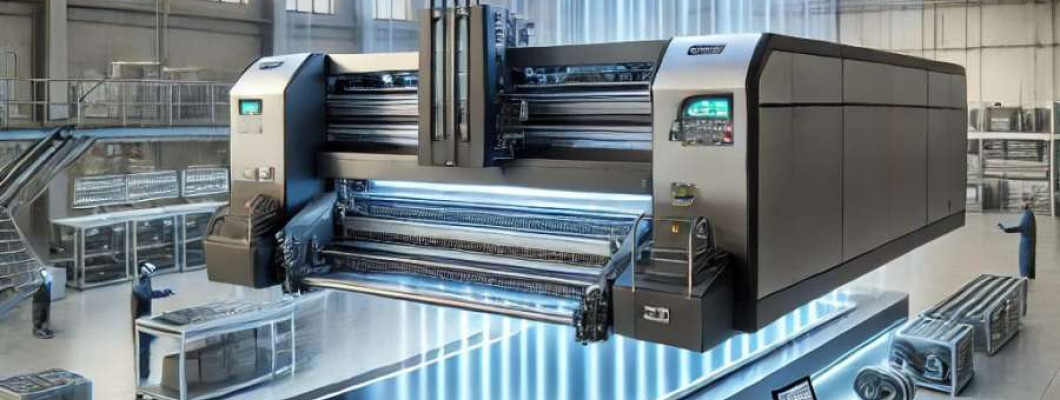
The Industrial Reality of Maintaining Advanced UV Varnish DTF Printers
In high-throughput industrial environments, the lifecycle maintenance costs of specialized printers like the A3 UV Varnish DTF Printer Machine become decisive factors determining operational sustainability and return on investment. This printer, designed for DTF (Direct to Film) label printing with integrated UV varnish capabilities, meets emerging demands for durable, high-detail label production. However, the integration of ultraviolet curing systems and precision DTF technology introduces complex maintenance challenges that evolve over the asset’s productive lifespan.
Consider a manufacturing facility specializing in food and beverage packaging where print quality and label durability must withstand moisture and abrasion. The A3 UV Varnish DTF Printer’s active UV curing mechanism deploys high-intensity UV LEDs working in tandem with water-based and UV-reactive varnish inks. While this configuration optimizes label hardness and gloss retention, it requires precise calibration and routine component checks to prevent premature degradation. Over time, factors such as UV LED lumen depreciation, varnish nozzle clogging from particulate ink residue, and film feed tension variations manifest as print defects and prolonged downtime.
Facility maintenance teams face the dual challenge of maintaining printhead performance while managing the wear imposed by abrasive UV varnish chemistry. Specialized cleaning regimens and filtration setups for ink channels become mandatory to extend printhead life — a core asset with replacement costs often exceeding 15% of the initial equipment purchase price. This creates a maintenance cost pattern with spikes linked to consumables and service interventions.
The compact footprint of an A3-size machine impacts internal component accessibility, thus complicating routine servicing. Operational teams must balance rapid maintenance turnaround with extensive system checks under UV exposure to avoid occupational safety hazards. Ergonomic factors, including clear sightlines to print zones and user-friendly diagnostic interfaces, modulate technician efficiency but rarely eliminate downtime entirely.
Technical Deep-Dive into Lifecycle Maintenance and Hardware Resilience
UV LED System Degradation and Impact on Print Quality
UV LED output power typically degrades at an approximate rate of 10% every 2,000 operational hours due to heat cycling and photon flux fatigue. This diminution reduces curing efficacy, necessitating increased exposure times or higher printhead energy consumption, thereby accelerating wear on other components. Calculating cumulative lumen depreciation helps predict maintenance intervals. For example, a nominal 50W UV LED array producing 10,000 mW/cm² initially will deliver only 9,000 mW/cm² after 2,000 hours, moving below efficient curing thresholds for thick varnish layers.
Printhead Wear Due to Varnish Ink Chemistry
UV varnish inks often contain micron-sized abrasive fillers that exacerbate nozzle erosion. Over a 10,000-sheet production run, nozzle aperture enlargement by 1-2 microns can cause uneven droplet deposition. This erosion correlates with nozzle frequency and ink composition. Monitoring electrical impedance changes across piezo elements permits early detection of nozzle fatigue.
Film Feed and Tension Control Mechanics
Precision film feed is essential for registration accuracy. Spring-loaded tension rollers and servo feedback loops maintain substrate positioning within +/- 0.1 mm tolerance. Wear in these mechanical parts results in transport slippage, risking misalignment and print-layer overlap errors. Predictive maintenance schedules based on rolling-element bearing life (typically 8,000 hours in dusty environments) reduce unexpected failures.
Maintenance Cost Comparison Table
| Maintenance Parameter | A3 UV Varnish DTF Printer Machine | Standard DTF Printer (No UV Varnish) |
|---|---|---|
| Printhead Replacement Cost | $2,200 per unit (includes varnish-resistant nozzles) | $1,400 per unit |
| UV LED Module Replacement | $950 every 2,000 hours | Not Applicable |
| Scheduled Cleaning Frequency | Every 200 hours (includes varnish channel flush) | Every 500 hours |
| Tension Roller Replacement | Every 1,000 hours | Every 1,500 hours |
| Consumable Ink Cost per 1,000 Labels | $65 (includes varnish ink) | $40 |
Diagnostic and Software Support Integration
Embedded sensor arrays continuously track printhead temperature, ink viscosity, and UV LED output intensity. Real-time software alerts reduce human error by flagging deviations beyond preconfigured alarm thresholds. Data logging supports trending analysis for maintenance optimization, enabling teams to plan service windows minimizing production impact.
Ergonomics and Human Factors in Maintenance
Access panels are engineered for tool-less opening with safety interlocks that disable UV LEDs during servicing. These design choices reduce technician exposure to ultraviolet radiation and chemical vapors. However, the compact form factor constrains component replacement speed, requiring specialized training for service leads.
Scenario Analysis Illustrating Maintenance Costs Impact
Highly Automated Label Production Facility
A medium-scale enterprise running 16 hours daily benefits from predictive maintenance systems embedded in the A3 UV Varnish DTF Printer. Despite increased consumable costs versus standard printers, the reduction in unscheduled downtime due to maintenance alarms improves net throughput by 8%, offsetting higher ink and part prices within three months.
Small-Scale Artisan Label Maker
For a boutique operation focusing on low-volume, high-fidelity jobs with premium finishes, the advanced UV varnish curing delivers superior product differentiation. However, the tighter maintenance schedules and higher consumable costs make this printer a more capital-intensive choice and require dedicated trained personnel to manage upkeep.
Contract Printer with Diverse Substrate Runs
A printer servicing multiple clients with variable substrate types leverages the A3 UV Varnish DTF Printer's customizable UV intensity and tension controls. Maintenance costs fluctuate with substrate abrasive characteristics, but integrated diagnostics enable precise adjustment minimizing wear. This control capability prolongs component life and preserves print quality across changeovers.
Expert FAQ Addressing Difficult Technical Queries
Q1: How does UV LED thermal cycling affect resin curing uniformity?
Repeated heating and cooling alter LED emission spectra slightly, impacting photoinitiator activation rates and potentially causing varnish cure gradients. Mitigation involves active cooling and maintaining LED junction temperature below 50°C.
Q2: Can piezoelectric printhead impedance shifts be quantitatively correlated with nozzle clog progression?
Yes, impedance increases typically precede full clogging, allowing threshold-based preventive cleaning triggers.
Q3: What role does film feed tension variability play in micro-registration errors?
Even minor tension changes of +/- 0.05 N cause lateral substrate shifts exceeding 0.1 mm after 1000 mm travel, affecting layer alignment.
Q4: How do abrasive UV varnish inks impact consumable filtration system efficacy?
Inks with higher filler particle counts accelerate filter clogging, requiring higher-grade filters and more frequent replacement cycles.
Q5: How reliable are predictive maintenance algorithms based on print quality image analysis?
When combined with sensor telemetry, these algorithms correctly predict 92% of impending failures, enabling proactive interventions.
Strategic Verdict and Recommendation
After rigorous analysis of maintenance cost patterns, hardware resilience, and operational impacts, the A3 UV Varnish DTF Printer Machine emerges as a robust, industrial-grade solution for enterprises prioritizing print quality and durability. Its integration of UV curing technology with precise DTF mechanics demands a committed maintenance program but yields tangible throughput and product quality advantages, especially in high-precision label production contexts.
Industrial users must prepare for elevated consumable and component replacement expenses compared to non-UV counterparts; however, the built-in diagnostics and ergonomics of this machine mitigate risk and downtime. Firms with scalable production needs and technical maintenance capability will find the machine’s lifecycle costs justified through superior output reliability and extended asset longevity.
For detailed technical specifications and procurement, the A3 UV Varnish DTF Printer Machine Label Printer remains a definitive industrial option for forward-looking label manufacturing operations.