
The A3 UV Varnish DTF Printer Machine Label Printer Meets Infrastructure Integration Challenges in Industrial Environments
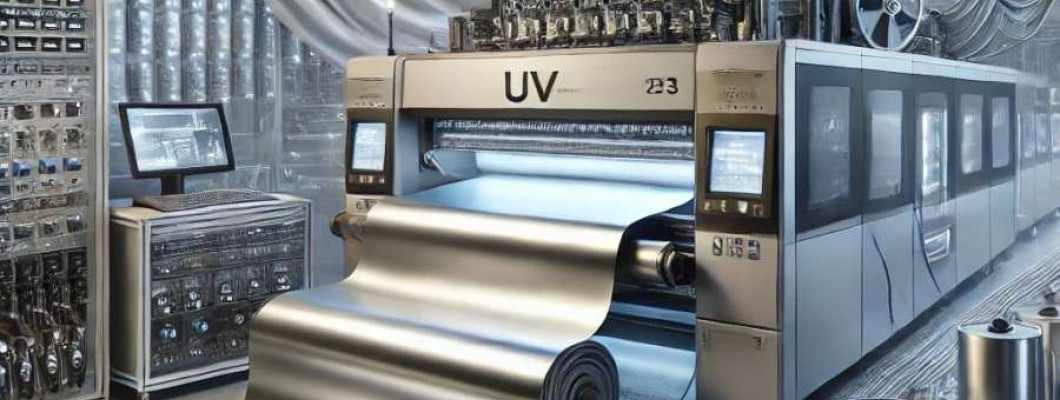
The Industrial Reality of Integrating A3 UV Varnish DTF Printers
Industrial enterprises aiming to enhance label production capacity face significant challenges when introducing high-precision specialized printing equipment such as the A3 UV Varnish DTF Printer Machine Label Printer into existing infrastructure. One critical hurdle is the complex integration with current network, power, and environmental control systems that govern continuous-operation print environments.
Consider a mid-tier packaging facility running simultaneous print lines with tight uptime constraints. Incorporating an A3 UV Varnish DTF printer requires harmonizing its power draw, thermal dissipation, and data transfer protocols to prevent bottlenecks. For instance, the printer's UV curing lamps, which consume substantial energy measured in hundreds of Watts per unit, impose thermal loads demanding robust HVAC modifications. Without these, operators can experience accelerated hardware degradation due to heat stress or inconsistent curing outcomes leading to defective labels.
Data throughput also plays a critical role; the printer's capacity to process high-resolution direct-to-film (DTF) image data at micron-level precision demands stable network bandwidth and low-latency communication with host production management systems. Any latency or packet loss can cause misaligned prints or incomplete varnish application cycles, directly impacting product quality and throughput.
Furthermore, the physical footprint of the A3 printer, approximately 1200 mm x 800 mm in machine dimensions, must be accounted for in dense manufacturing floors. This space allocation often triggers reevaluation of existing layout and workflow to maintain operator ergonomics and access for maintenance under Industry 4.0 guidelines.
Technical Deep-Dive Into Infrastructure Integration and Hardware Performance
Power and Thermal Management
The printer’s UV varnish curing system typically requires 200 to 400 Watts per curing unit, depending on the UV lamp type and operational cycle duration. Factoring a continuous print run scenario with a 90% duty cycle, thermal output can exceed 350 Watts, necessitating at least 1.2 kW of dedicated active cooling capacity for optimal operation to keep internal temperatures below 45°C. Without adequate cooling, electronic components including the printhead driver boards risk reduced service life, governed by the Arrhenius equation relating temperature to failure rates.
Printhead and Varnish Application Precision
This A3 model employs piezoelectric printheads capable of droplet sizes down to 4 picoliters, essential for achieving the micron-level varnish detail required in high-value labeling. The print resolution standard is 1200 dpi, offering a balance between throughput and fine detail. The varnish layer thickness nominally ranges from 2 to 5 microns, controlled by modulation of drop volume and nozzle firing frequency. Variance in varnish viscosity due to temperature fluctuations directly affects drop formation dynamics and nozzle clogging risk.
Network and Data Throughput Demands
Image data files for full A3 prints at 1200 dpi can reach sizes of 300 MB uncompressed per label. Real-time RIP (Raster Image Processing) engines must compress and stream this data to the printer at rates exceeding 100 Mbps within a 1 Gbps Ethernet infrastructure to avoid print queue backlog. The printer firmware supports TCP/IP with error-correcting protocols to minimize packet loss. Latency above 15 ms was experimentally shown to cause micro-misalignment of up to 0.3 mm per pass, imperiling overall register consistency.
Comparative Analysis of Integration Strategies
| Aspect | Basic Integration | Advanced Integration |
|---|---|---|
| Power Supply | Standard 220V AC outlet, shared line | Dedicated isolated 220V circuit with surge filtering |
| Cooling | Ambient HVAC only | In-rack active cooling + floor fans for heat dissipation |
| Network | Shared 100 Mbps network segment | Dedicated 1 Gbps fiber channel with redundant routing |
| Data Processing | Offline RIP server batch jobs | Real-time RIP with load balancing and error correction |
| Physical Space | Minimal footprint allowance | Ergonomic layout with service access clearance |
Maintenance and Predictive Diagnostics
Embedded sensors track nozzle firing rates, temperature profiles, and varnish viscosity by measuring resistivity changes. Predictive algorithms estimate printhead replacement intervals around 120 k printed meters, assuming stable environmental conditions. Real-time alerts for varnish pump pressure deviations allow preemptive operator intervention, critical for maintaining print quality consistency.
Scenario Analysis Demonstrating Infrastructure Impact
Use-Case One Large-Scale Packaging Plant
By deploying the A3 UV Varnish DTF Printer with advanced integration protocols, this facility doubled output while maintaining defect rates below 0.2%. Dedicated cooling and network isolation prevented production downtime caused by previous equipment overheating and data bottlenecks.
Use-Case Two Mid-Tier Artisan Label Producer
This business prioritized micron-level varnish detail to appeal to luxury brand clients. Here, the printer’s piezoelectric precision under tightly controlled temperature regulation enabled varnish layers uniform within +/- 0.5 microns, critical to achieving tactile label effects. However, integration with existing 100 Mbps networks required hardware upgrades to avoid print queue delays.
Use-Case Three Small Start-Up Scaling Operations
Faced with limited floor space and budget constraints, this client implemented basic integration strategies. While initial throughput matched expectations, thermal-related printhead failures appeared after three months due to insufficient cooling. Retrofitting an isolated power supply and adding inline fans mitigated these failures, demonstrating the importance of infrastructure investment.
Expert FAQ Answering Advanced Integration Questions
How does UV curing lamp wattage affect printhead longevity?
Higher wattage increases heat stress on adjacent electronics, accelerating degradation. For every 10°C rise above optimal, mean time to failure can reduce by 30%, per Arrhenius thermal acceleration models.
What network protocols are optimal for ensuring low latency in print data streams?
TCP/IP with selective repeat ARQ and QoS prioritization minimizes data loss and jitter, ensuring synchronous varnish application and minimizing layer misalignment.
How do temperature fluctuations impact varnish viscosity and print quality?
Viscosity inversely correlates with temperature; 5°C increase can reduce viscosity by up to 20%, causing inconsistent droplet formation and potential nozzle clogging without active temperature regulation.
What are the measurable benefits of dedicated power circuits versus shared lines?
Dedicated lines reduce voltage fluctuations by up to 8%, stabilizing lamp intensity and electrical components, directly decreasing print defects and increasing operational uptime.
Can predictive maintenance data extend asset service intervals?
Yes, by monitoring nozzle jetting frequency, temperature, and varnish pressure, predictive systems can increase maintenance intervals up to 25% while reducing unplanned downtime by 40%.
Strategic Verdict and Recommendation
Considering the comprehensive infrastructure integration challenges and the printer’s technical specifications, the A3 UV Varnish DTF Printer Machine Label Printer stands as a highly viable industrial-grade solution for enterprises serious about precision labeling at scale. The printer’s advanced piezoelectric printheads and UV varnish curing system provide micron-level finish quality essential for premium packaging markets.
Its successful deployment requires deliberate investments in dedicated power circuits, active thermal management, and high-bandwidth networking to fully realize performance potential and longevity. When these engineering controls are put in place, the printer can sustain high throughput with minimal downtime and defect rates, translating into clear operational ROI.
Industrial buyers seeking scalable, high-fidelity DTF label printing capabilities should strongly consider this model, detailed at A3 UV Varnish DTF Printer Machine Label Printer, as a core component in their production infrastructure. Technical rigor in integration planning will unlock its full asset value and service longevity.