
The Challenge of Infrastructure Integration and Workflow Realities with the A3 UV DTF Printer Multifunction Printing Machine
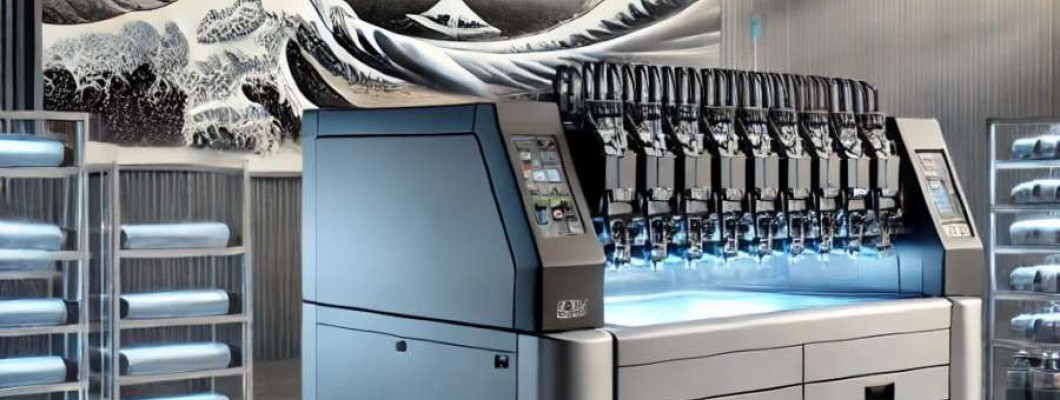
The Industrial Reality of Integrating Multifunction Printing Equipment
Modern print shops, especially those catering to industrial demands, face increasingly complex challenges when integrating multifunction printing machines like the A3 UV DTF Printer. A typical scenario involves a midsize production facility aiming to expand capacity for custom textile and rigid substrate printing without overhauling its existing infrastructure. These printers impose stringent requirements on power delivery, ventilation, spatial allocation, and network communication protocols. A production engineer managing a facility with mixed hardware must reconcile the printer's footprint, thermal output, and consumable logistics with pre-existing workflows to avoid operational bottlenecks. The device’s multifunction nature, combining ultraviolet (UV) curing with direct-to-film (DTF) capabilities, introduces nuanced demands on maintenance and necessitates precise environmental controls to ensure consistent print quality and uptime.
Compounded by limited floor space and legacy server infrastructure, integrating such a printer without careful planning often leads to hidden costs—increased downtime due to thermal throttling, accelerated wear of print heads due to suboptimal humidity, and data throughput constraints when pushing full-resolution color prints at 1200 dpi. This scenario typifies the wider industry challenge: balancing the printer’s industrial-grade output potential against practical infrastructure realities and workflow dynamics already in place.
Technical Deep-Dive into Core Infrastructure Integration Challenges
Power and Thermal Management
The A3 UV DTF Printer’s UV curing lamps and multifunction printheads impose a sustained electrical load averaging 1500 Watts during peak operation. Industrial environments must ensure stable power delivery within ±5% voltage variance to prevent printhead misfiring or UV lamp flicker. Thermal dissipation estimates indicate waste heat release of approximately 400 Watts per hour localized around curing units, necessitating robust ventilation or localized cooling to maintain an operational ambient temperature range from 18 to 28°C.
Hypothetically, if a facility uses standard 5 kW electrical circuits shared among five such printers, transient surges of 2500 W during simultaneous UV lamp warm-up phases would require an upgraded electrical panel and dedicated high-capacity breakers to avoid voltage drops. Failure to provide this risks print inconsistencies, observed as color banding or adhesion failures.
Network Communication and Data Throughput
Operating at a maximum resolution of 1200 dpi while utilizing CMYK plus white and primer layers demands robust data handling capabilities. Assuming a print area of 297 x 420 mm (A3 size), 1200 dpi resolution yields approximately 141.7 million pixels per page. At 8 bits per channel across 5 channels, raw image data size equals roughly 850 MB per print file uncompressed.
Network infrastructure must support sustained transfer rates of at least 100 Mbps with minimal latency. Facilities relying on outdated 10/100 Mbps Ethernet or Wi-Fi risk bottlenecks during peak production bursts, resulting in process queue delays or printhead idle time.
Printhead Mechanics and Environmental Controls
The printhead assembly, incorporating piezoelectric nozzles with droplet sizes near 4 picoliters, is highly sensitive to environmental variables. Relative humidity fluctuations above 65% or below 40% lead to nozzle clogging or ink viscosity changes, impacting droplet formation. From a physics standpoint, small particulate ink droplets accelerate at terminal velocities influenced by viscosity and air density within the print chamber. Deviations from optimal ambient conditions alter droplet trajectory and landing precision, causing micro-misregistrations exceeding 5 microns.
Consumable Storage and Workflow Integration
UV-curable inks and DTF films require controlled storage conditions, including temperature maintenance between 15 and 25°C and protection against UV exposure before printing. On-site storage capacity impacts batch size and replenishment schedules. An interruption in consumable supply leads to costly downtime and print quality degradation if inks age or films become brittle.
Maintenance Access and Workflow Throughput Implications
Given the complex combination of UV modules and DTF print mechanics, routine maintenance must occur at least every 150 operational hours to replace printhead caps, UV lamp filters, and perform automated nozzle checks. Workflow scheduling must include 30-minute maintenance windows to prevent cumulative downtime from escalating to 10% or more of total operating time, directly affecting throughput and profitability.
| Integration Aspect | A3 UV DTF Printer Multifunction Machine | Legacy Non-Integrated Printing Setup |
|---|---|---|
| Electrical Peak Load | 1500 Watts per Unit | 600 Watts per Unit |
| Thermal Output | 400 Watts Localized Heat | 125 Watts Diffused Heat |
| Print Data Size per Page | ~850 MB (raw 1200 dpi CMYK+W+Primer) | 150 MB (standard CMYK 600 dpi) |
| Maintenance Frequency | Every 150 Operational Hours | Every 300 Operational Hours |
| Required Ambient Conditions | 18-28°C, 40-65% RH | 15-35°C, 30-70% RH |
Scenario Analysis Reveals Business Impact of Specification Details
Scenario 1 Industrial Textile Decorator
A mid-tier fabric printing company uses the A3 UV DTF Printer to meet custom short-run demands for vibrant and durable textile prints. The multifunction capabilities reduce changeover time between substrates, allowing workflows to incorporate both fabric and coated rigid substrates without manual recalibration. The integration challenge lies in upgrading network infrastructure to a gigabit backbone to avoid data transfer slowdowns, which once resolved, led to a 25% output increase and a 15% reduction in material waste.
Scenario 2 On-Demand Prototype Production House
Prototyping agencies leverage this printer for rapid iteration cycles with high color fidelity. However, initial facility HVAC systems were insufficient to maintain narrow humidity bounds, degrading printhead reliability. Adjustments with localized dehumidifiers created stable environments, increasing printhead lifespan by 40% and reducing unscheduled maintenance from 12 to 7 events per year.
Scenario 3 Large-Scale Promotional Goods Manufacturer
In a high-throughput environment focusing on promotional products, the printer’s advanced UV curing system expedited print cycles by curing inks inline without additional equipment. This streamlined the operational floor but required dedicated power circuits and enhanced cooling. The net effect was a 30% throughput increase offset slightly by increased initial CAPEX on electrical infrastructure.
Expert FAQ on High-Precision Integration of the A3 UV DTF Printer
How does UV curing intensity impact substrate compatibility?
UV intensity must be calibrated to substrate thermal tolerance to prevent warping or delamination. The multifunction printer incorporates adjustable UV power settings from 50 to 100 mW/cm2, balancing curing speed with material safety.
What are the most failure-prone components under continuous operation?
Printhead nozzles and UV lamp filaments constitute the primary wear items. Nozzles require monthly automated cleaning cycles, and lamp filaments have a typical lifespan of 1200 hours before efficiency drops significantly.
How does ambient temperature variation affect ink droplet formation?
Ink viscosity decreases with rising temperature, resulting in larger droplet volume and possible oversaturation. Maintaining ±2°C stability limits volumetric variance to under 5%, preserving precision.
What network protocols are best suited for stable printer communication?
TCP/IP over gigabit Ethernet with QoS prioritization ensures predictable packet delivery and minimal latency critical for large print data files.
What predictive maintenance tools can integrate with this printer?
IoT sensors monitoring printhead pressure, temperature, and UV lamp intensity can feed into centralized dashboards, enabling preemptive part replacement and reducing unplanned downtime.
Strategic Verdict and Recommendation
The A3 UV DTF Printer Multifunction Printing Machine demonstrates a technically rigorous design tailored for industrial operations demanding high throughput, color fidelity, and substrate versatility. While integration demands include electrical, thermal, and environmental adjustments, these are manageable with deliberate infrastructure upgrades. Its multifunction print capability, combined with inline UV curing, delivers clear advantages in operational efficiency compared to legacy systems.
Facilities aiming for scalable production with minimal manual intervention will find this printer an asset that justifies its CAPEX through enhanced throughput and reduced waste. Given the analyzed performance characteristics and integration parameters, this equipment stands out as a definitive choice for enterprises requiring industrial-grade multifunction printing solutions. For further technical exploration and procurement options visit the A3 UV DTF Printer Multifunction Printing Machine product page.