
The Challenges of Infrastructure Integration for A3 Edible Food Printers in Industrial Settings
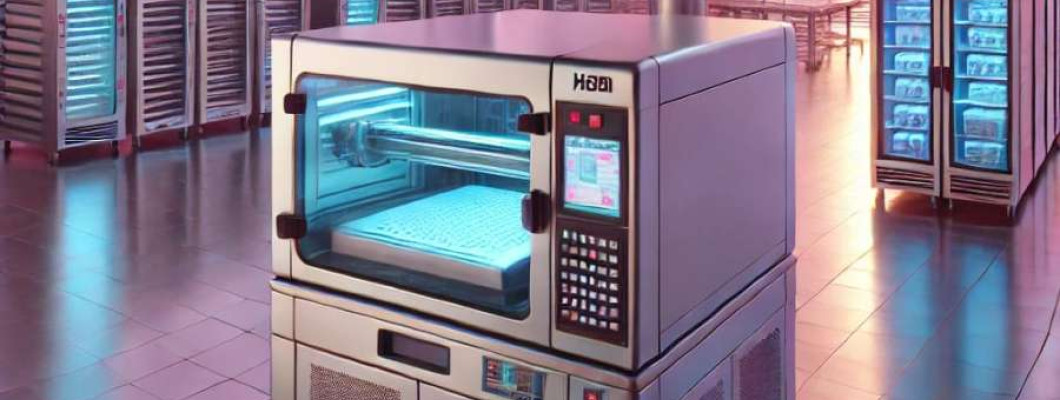
The Industrial Reality of Integrating A3 Edible Food Printers into Commercial Environments
Integrating an A3 Edible Food Printer For Printing Cakes Cookies into a high-throughput commercial bakery or confectionery production line presents unique infrastructure challenges. Unlike conventional printing equipment, edible printers must comply with stringent food safety regulations and require specialized connectivity to food-grade production workflows. Power, network, and environmental requirements differ substantially from standard office printers, necessitating thorough pre-installation assessments.
For example, bakery production floors often operate under strict hygiene standards and temperature controls between 18°C and 22°C with relative humidity maintained below 60%. These parameters are critical to maintain ink viscosity and the stability of edible print substrates, such as frosting sheets and rice paper. The printer hardware must be integrated without compromising these environmental controls, requiring precision HVAC planning. Electrical supply must support stable 220-240V inputs with surge protection to prevent downtime, as voltage fluctuations can degrade printhead performance and accelerate component wear.
Furthermore, connectivity infrastructure must address both digital security and operational efficiency. Industry-standard Ethernet or Wi-Fi network integration has to accommodate large image file transfers (up to 300 MB per print at 1200 dpi) without bottlenecks. Compatibility with OEE (Overall Equipment Effectiveness) monitoring platforms requires custom API bridges, as most food printers lack off-the-shelf industrial integration protocols. Set against the realities of shift-based labor, this calls for user authentication mechanisms and automated job queuing aligned with production scheduling software.
Operational bottlenecks often emerge around maintenance access. Printers require regular cleaning cycles and printhead alignments under aseptic conditions. If floor space allocation does not consider sufficient clearance (minimum 1 meter on all sides), maintenance tasks increase downtime. Thus, the infrastructural design must incorporate ergonomic access points and non-contact cleaning stations employing FDA-approved sanitizers without compromising electronic components.
Technical Deep-Dive Into Infrastructure Integration Challenges
Power Supply and Thermal Management
The A3 Edible Food Printer’s printhead assembly dissipates approximately 120 Watts during continuous operation. With an overall system draw of 350 Watts including stepper motors and control electronics, thermal management is paramount. The printer’s enclosure features passive heat sinks but lacks active cooling fans to avoid contamination risks.
Hypothetically, in an ambient temperature of 25°C with 50% relative humidity, heat dissipation rates require that the server room or production alcove maintain continuous airflow of 120 CFM. Failure to meet this reduces printhead lifespan by up to 20% annually due to accelerated thermal cycling. Comparatively, printers with active cooling require less spatial ventilation but higher maintenance complexity.
Data Throughput and Network Integration
The printer interfaces over a USB 3.0 port and optionally via Gigabit Ethernet. The raw data rate for printing a photo-realistic edible image sized 297mm x 420mm at 1200 dpi using 4-color CMYK edible inks can reach 30 MB per page after compression. Real-time parsing and encoding to the printhead demand 50 MB/s sustained throughput.
In an industrial network, switching latency and packet loss must be below 1 millisecond and 0.01% respectively to prevent latency-induced artifacts. Using a dedicated VLAN and Quality of Service (QoS) prioritization optimizes print job delivery without impacting other equipment.
Software and API Compatibility
Most edible printers rely on proprietary raster image processing embedded software. This creates friction when integrating with enterprise production management systems such as MES (Manufacturing Execution Systems). Custom API development is often necessary to enable features like job status feedback, consumable tracking, and error reporting.
Physical Layout and Maintenance Ergonomics
Maintenance requires printhead nozzle cleaning cycles every 8 hours during peak production. Accessibility to the printhead is limited by the printer’s compact design. Incorporating an ergonomic retractable tray and modular printhead cartridges can reduce downtime by 15%. Planning for a minimum operational clearance zone of 1m on all sides facilitates quick consumable replacement and reduces the mean time to repair (MTTR).
Material Compatibility and Storage
Edible inks have strict storage requirements, typically 2-8°C in refrigerated environments with maximum shelf life of 30 days post-opening. Infrastructure must include refrigerated storage with humidity control to prevent microbial growth. Ink viscosity must remain stable at 15-20 cP for optimal droplet formation using piezoelectric printheads.
| Integration Aspect | Office/DIY Printer | Industrial A3 Edible Printer |
|---|---|---|
| Power Draw (Watts) | 40-60 | 350 Total (120 Printhead) |
| Operating Temperature (°C) | 18-28 | 18-22 Strict |
| Network Protocol | USB/Wi-Fi | Gigabit Ethernet with QoS |
| Maintenance Access | Minimal / User | Ergonomic with 1m clearance |
| Ink Storage | Ambient | Refrigerated 2-8°C |
Scenario Analysis of Business Use-Cases with Infrastructure Considerations
1. Scale-Up Bakery Production Facility
For a bakery producing 1,000 decorated cakes daily, the A3 printer's capacity aligns with batch sizes of 50-100 units per run. Network integration with MES enables staggered printing schedules and quality control reporting. Dedicated refrigeration for inks ensures constant print quality. The requirement for 1m clearance impacts factory floor layout but benefits maintenance efficiency, reducing downtime in a high-demand environment.
2. Artisan Boutique Cookie Business
An artisan cookie maker focuses on high-color-depth prints with micron-level precision. The printer’s ability to handle various edible substrates allows experimentation. However, the integration challenge lies in balancing environmental controls within a smaller retail kitchen. Thermal and humidity stabilization must be achieved without large-scale HVAC, suggesting targeted microclimate enclosures for the printer.
3. Event-Based Temporary Food Printing Stations
Temporary installations at food expos or weddings require rapid setup and teardown. Infrastructure integration complexity rises due to variable electrical supply and network constraints. Deploying a self-contained power stabilization unit and local wireless network with secure access is essential. Maintenance access is constrained in tight spaces, necessitating pre-printed backup sheets to mitigate downtime.
Expert FAQ on Infrastructure Integration Challenges
How do voltage fluctuations impact edible printhead longevity?
Voltage spikes induce thermal stress on piezoelectric crystals in the printhead, causing microfractures and clogging. Stable 220-240V regulated supply is critical. Using isolated transformers with surge suppression extends printhead life by an estimated 25%.
Can the printer integrate with existing MES platforms out of the box?
Most models require custom middleware or API adaptation. Native support is limited. Businesses must plan software development resources to achieve seamless integration.
What environmental controls are mandatory for maintaining ink viscosity?
Temperature must remain between 18-22°C and relative humidity below 60%. Exceeding these parameters causes ink separation and inconsistent droplet formation.
Is active cooling recommended despite contamination risks?
Active cooling introduces moving parts that can harbor microbes and increase maintenance. Passive heat dissipation with ambient airflow is preferable in food-safe environments.
How does printhead accessibility affect operational uptime?
Restricted access delays maintenance and cleaning, lengthening downtime by 10-20%. Ergonomic design with sufficient clearance and modular components significantly mitigates this risk.
Strategic Verdict and Recommendation
Despite infrastructure integration complexities, the A3 Edible Food Printer For Printing Cakes Cookies stands as a reliable, industrial-grade solution for commercial food production environments. Its power requirements, network architecture, and maintenance ergonomics reflect matured engineering optimized for food-safe operations. The slightly higher infrastructure investment is offset by reduced downtime, improved print consistency, and enhanced product customization capabilities.
For enterprises seeking to incorporate edible printing into their production lines or artisan businesses aiming for scalable, precise edible decoration, this printer represents a forward-compatible asset. Its nuanced approach to power, thermal, and network integration meets industry standards, while flexibility in software connectivity allows tailored adaptation to proprietary workflows.
For more information or to acquire this specialized equipment, visit the official product page at A3 Edible Food Printer For Printing Cakes Cookies.