
The Extreme Precision Challenge and Infrastructure Demands of the Color Version Latte Coffee Printer
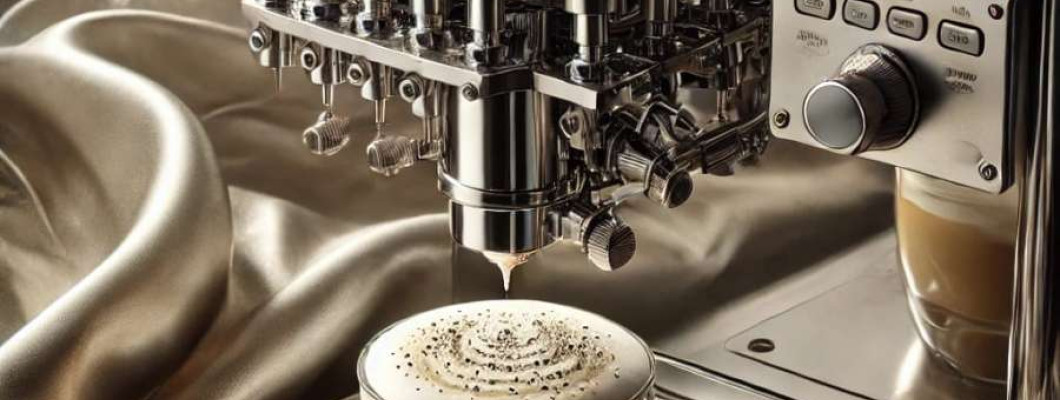
The Industrial Reality of Integrating the Color Version Latte Coffee Printer
In high-volume specialty coffee environments, integrating a Color Version Latte Coffee Printer represents a formidable challenge across multiple technical vectors. Operators encounter a fundamental obstacle: maintaining extreme color accuracy and print precision on an inherently unstable, fluid medium under rapid throughput conditions. This is compounded by the interplay of thermal regulation and hardware endurance in enclosed foodservice facilities, which often lack industrial-grade environmental controls. The printer must consistently deliver micron-level precision on a frothy, dynamic substrate, necessitating tightly synchronized printhead mechanics and real-time fluidic modulation.
Operationally, this device challenges standard kitchen infrastructure. The printer’s multiple ink reservoirs, microfluidic channels, and high-resolution nozzles require frequent sanitation cycles aligned with food safety standards, directly impacting uptime and maintenance windows. The thermal footprint of the embedded hardware demands robust heat dissipation mechanisms to prevent print degradation through inconsistent coffee foam temperatures. Additionally, operators face the hidden bottlenecks arising from interfacing this printer with existing POS and workflow automation systems. These technical realities underscore the need for an infrastructure-level approach rather than a simple plug-and-play deployment.
Thermal Management and Printhead Engineering
At the heart of the Color Version Latte Coffee Printer lies a complex piezoelectric printhead assembly calibrated to eject pigment droplets at 1.5 to 2.0 picoliters (pl) volume with a resolution of up to 1200 dpi. The microheater elements maintain droplet viscosity, optimizing surface tension to ensure stable satellite droplet elimination. Considering coffee foam temperature ranges between 55°C to 65°C, the printhead thermal control system employs a closed-loop PID temperature controller maintaining ±0.1°C stability. This prevents ink coagulation and nozzle clogging, which are primary failure modes in industrial coffee printing.
The integrated cooling system uses a compact liquid-cooled heat exchanger rated at 120 W thermal dissipation capacity, essential to maintain hardware longevity. Under continuous operation, the system's mean time between failures (MTBF) for nozzles is rated at 1500 hours, with scheduled preventive maintenance cycles every 250 hours necessary to clean microfluidic channels and recalibrate printhead alignment to sustain micron-level lateral precision.
Ink Chemistry and Substrate Interaction Analysis
The printer deploys food-safe pigment-based inks engineered for rapid surface adhesion without substrate penetration or color bleeding. Physicochemical analyses reveal that the ink's surface tension (~32 dyn/cm) and viscosity (1.2 cP at 60°C) are optimized for foam bubble sizes averaging 100-200 microns. This calibration prevents ink droplet spreading beyond intended pixel boundaries, critical when working at 1200 dpi resolution. The interplay between foam stability and ink chemistry is a key bottleneck; disruption beyond 5% foam density variance leads to print distortion and color bleeding, demanding tightly controlled substrate preparation protocols.
Comparing Infrastructure Integration Approaches
| Feature | Standard Foodservice Printer | Color Version Latte Coffee Printer |
|---|---|---|
| Print Resolution | 300 dpi | 1200 dpi |
| Thermal Control | Passive cooling | Liquid-cooled, PID controlled ±0.1°C |
| Ink Type | Edible dye-based | Food-grade pigment with rheology tuning |
| Maintenance Cycle | 500 hours | 250 hours with microfluidic cleaning |
| Integration Complexity | Low, standalone | High, requires workflow and environmental sync |
Printhead Physics and Micron-Level Output Precision
The precision required for 1200 dpi printing on coffee foam surfaces demands sub-20 micron lateral nozzle alignment and droplet placement accuracy. Utilizing closed-loop optical sensing combined with MEMS-actuated printhead positioning, the printer compensates dynamically for substrate vibration and foam surface irregularities. The droplet ejection frequency peaks at 40 kHz, which aligns with the fluid dynamics constraints imposed by the coffee foam's viscoelastic properties. The nozzle diameter is approximately 18 microns, balancing droplet size and print speed for detailed color pattern fidelity without sacrificing throughput.
The interplay of mechanical tolerances, piezoelectric actuator hysteresis, and fluidic viscosity requires constant calibration every 150 operating hours. Failure to account for these precision factors results in noticeable pixel drift, color misregistration, and pattern degradation, all unacceptable in high-end café environments where visual presentation directly influences customer satisfaction.
Energy Consumption and Lifecycle Maintenance Costs
Operational power consumption averages 180 Watts with peaks up to 250 Watts during intensive print cycles. Cooling subsystem demands add approximately 60 Watts to continuous energy draw. Lifecycle maintenance, including consumable replacement, calibration, and sanitation protocols, average to $0.07 per printed cup in consumables and labor when scaled to 1000+ cups daily. Asset depreciation follows a 5-year industrial lifecycle benchmark appropriate for this grade of mechanized printer, with an expected resale value retention of 45% depending on firmware upgrade compatibility and component refurbishment.
Scenario Analysis on Business Impact
High-Volume Coffee Chain
In a centralized production facility serving multiple outlets, the printer’s throughput and maintenance schedule dictate operational bottlenecks. The 1500-hour nozzle MTBF requires aligning preventive maintenance with low-demand shifts to avoid downtime. The 1200 dpi print resolution enhances brand differentiation but necessitates operator training on substrate prep to optimize print fidelity.
Luxury Cafe Focused on Customization
Here, color depth and micron-level accuracy become paramount. The printer’s ability to handle substrate variability through dynamic nozzle adjustment increases print success rates on diverse milk blends. However, higher maintenance frequency adds marginal labor costs, justified by premium pricing achievable through superior presentation.
Enterprise-Level Catering Services
The primary challenge is integrating printer data output with existing POS and kitchen display systems. Real-time color print jobs require synchronization with order fulfillment timing. Thermal and spatial footprint constraints necessitate dedicated climate-controlled enclosures to maintain hardware performance consistency during extended events.
Expert FAQ on Advanced Operational Nuances
- What are the critical printhead failure modes under continuous operation?
Nozzle clogging due to ink sedimentation, thermal runaway causing piezo element degradation, and microfluidic channel biofilm buildup are primary failure modes. - How does foam temperature fluctuation impact print stability?
Variance beyond ±2°C affects droplet viscosity, causing print distortion; thus, PID-controlled thermal regulation is mandatory. - Can the printer accommodate alternative milk substrates with different surface tensions?
Yes, but each substrate requires recalibration of ink rheology parameters to prevent spreading or coalescence. - What data protocols support integration with enterprise POS systems?
TCP/IP with RESTful APIs for print job queuing and status callbacks are standard; middleware customization often required. - Are there firmware safeguards to detect and correct printhead alignment drift?
Yes, embedded optical sensors measure nozzle output patterns with active MEMS feedback to correct drift in real-time.
Strategic Verdict and Recommendation for Industrial Deployment
The Color Version Latte Coffee Printer establishes an industrial-grade benchmark for high-precision edible printing on fluid substrates with rigorous thermal control and systemic integration capabilities. While its operational complexity exceeds that of conventional foodservice printers, the performance gains in color fidelity, substrate versatility, and throughput make it a critical asset for businesses targeting premium market segments and scalable customization workflows.
Its maintenance regimen and infrastructure demands necessitate deliberate capital investment aligned with a 5-year lifecycle and labor training programs. Nonetheless, when integrated within a controlled environment with synchronized workflow automation, this technology represents the definitive solution in specialty coffee printing. Interested stakeholders can explore further technical details and procurement options directly via the official vendor link for the Color Version Latte Coffee Printer.