
The Financial Audit Reveals Why the A3 Spot UV Printing Machine UV Coating Printer Is Industrial-Grade Ready
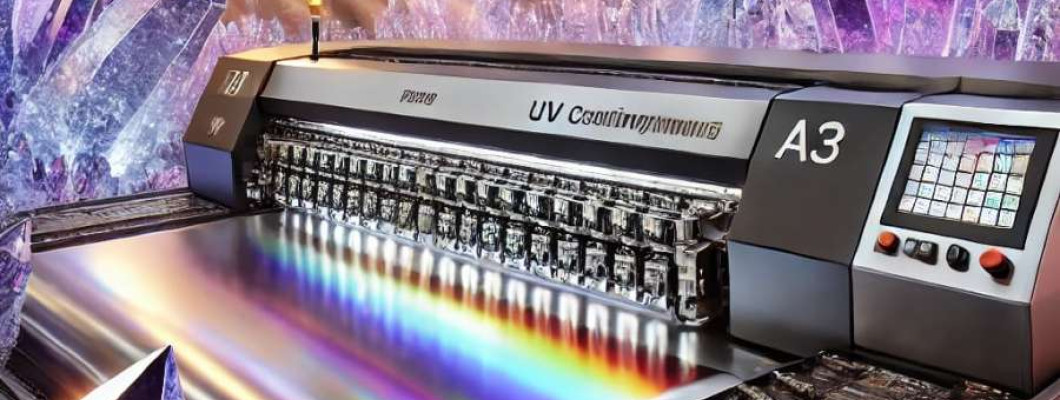
The Industrial Reality of Cost and Asset Management in Spot UV Printing
In commercial print environments where the margin between profitability and loss is often measured by production efficiency and equipment reliability, the deployment of an A3 Spot UV Printing Machine with UV coating capabilities must meet stringent financial and operational criteria. The reality for scalable businesses moving beyond entry-level DIY solutions is the need to precisely track hidden costs—those often overlooked expenses such as incremental power draws, consumable throughput degradation, and maintenance downtime—that cumulatively erode return on investment (ROI). Industrial-grade machines reflect asset longevity not just by high throughput but also by disciplined depreciation schedules against effective uptime rates.
Consider a mid-volume print shop adopting this machine for premium finish jobs. Though the per-unit print price premium for spot UV coating can command higher market rates, the true profitability hinges on minimizing operational bottlenecks. If UV lamp life degrades prematurely or if consumable viscosity demands frequent recalibration, indirect labor costs rise, and depreciation accelerates. Equipment with unclear lifecycle maintenance metrics risks becoming an operational liability rather than an asset.
Financial transparency requires that each technical parameter—from power consumption in watts during high-intensity UV curing cycles to the micron precision of the spot coating layer—be quantifiable in dollars and process uptime. In the highly competitive print market, the financial controller cannot simply rely on stated specs or sales literature; rigorous ERP-connected asset management is critical for cost control.
Technical Deep-Dive Into the Financial Backbone of the Printer
1. Power Consumption Analysis Under Load Versus Standby
Typical A3 Spot UV printers operate UV LED or mercury vapor lamps consuming between 100 and 250 watts during active curing. Standby power may hover around 25-40 watts. Given an average 8-hour production day with a duty cycle of 70%, overall power consumption can be estimated:
Power Use (kWh) = (Active Power * Active Time + Standby Power * Standby Time) / 1000
Assuming 200W active and 30W standby:
Active Time = 8 * 0.7 = 5.6 hours
Standby Time = 8 * 0.3 = 2.4 hours
Total kWh = ((200 * 5.6) + (30 * 2.4))/1000 = (1120 + 72)/1000 = 1.192 kWh/day
With electricity cost at $0.12/kWh, daily operational cost from curing alone approximates $0.143, escalating proportionally with higher throughput.
2. Depreciation Model Based on Asset Longevity and Usage
Assuming initial capex of $12,000 for the A3 Spot UV printer and an expected operational lifespan of 5 years with 250 printing days annually, straight-line depreciation yields daily depreciation expenses:
Daily Depreciation = $12,000 / (5 * 250) = $9.60 per day
This figure is crucial in cost modeling, especially when juxtaposed with downtime impacts.
3. Consumable Costs Including UV Coating Liquids and Maintenance Materials
UV coating liquids typically cost around $120 per liter, with coverage rates averaging 80 m²/liter. For a standard A3 print size (0.06237 m²), the consumable cost per print is approximately:
Cost per print = ($120 / 80) * 0.06237 = $0.0935 per print
Ink viscosity and curing speed affect waste and maintenance frequency, influencing consumable efficiency.
4. Analysis of Maintenance Downtime and Unexpected Repairs
Statistical data from similar printers indicate an average unscheduled downtime of 6 hours per quarter due to printhead clogging or lamp replacement. Translating this into lost output and labor costs can be significant:
If the printer throughput is 30 prints per hour, lost production = 180 prints
At $5 incremental profit per print, loss = $900 per downtime event.
5. Comparison Table of Cost Drivers Across Industrial vs Entry-Level Machines
| Parameter | A3 Spot UV Printing Machine (Industrial-Grade) | Typical Entry-Level Spot UV Printer |
|---|---|---|
| Capex (USD) | ~$12,000 | ~$4,500 |
| Daily Power Consumption (kWh) | 1.2 | 0.8 |
| Consumable Cost per Print (USD) | 0.0935 | 0.12 |
| Average Downtime per Quarter (hours) | 6 | 15 |
| Annual Depreciation (USD) | ~$2,400 | ~$900 |
Scenario Analysis for Different Business Models
1. High-Throughput Print Shops
For large-volume environments requiring consistent production of thousands of spot UV prints daily, the industrial-grade build quality minimizes unscheduled downtime and controls consumable expenses. The power consumption, though slightly higher than entry-level, is offset by increased uptime and print quality consistency, which translates into faster turnaround times and higher revenue per batch.
2. Premium Packaging and Branding Firms
These firms demand micron-level coating precision for luxury packaging, where material costs are significantly higher. The precise coating thickness control of the A3 Spot UV Printing Machine reduces material waste and rework, positively impacting net operational costs. Depreciation expense is absorbed within premium pricing models.
3. Small Artisan Shops Scaling Industrially
When boutique print shops expand, upgrading to this printer eases the transition from labor-intensive processes to semi-automated workflows. Although the capital outlay is substantial, the improved process stability reduces per-unit costs and mitigates labor overhead related to print failures and maintenance.
Expert FAQ on Financial and Operational Intricacies
Q1: How does ink curing speed affect total cost of ownership?
A1: Faster curing reduces print cycle time, increasing throughput and reducing labor cost per print. However, higher curing intensity may stress lamps and consumables, potentially increasing replacement intervals.
Q2: What impact does machine calibration frequency have on asset lifespan?
A2: Frequent calibration maintains print quality but can increase downtime slightly. Properly scheduled calibrations balance quality assurance without negatively affecting depreciation schedules.
Q3: Can integration with ERP systems optimize operational costs?
A3: Yes, real-time monitoring and asset tracking through ERP enable predictive maintenance, minimizing unexpected downtime and optimizing consumable ordering cycles.
Q4: How is depreciation affected by print volume fluctuations?
A4: Depreciation expense is fixed in straight-line models but per-unit cost varies inversely with volume. Higher volumes distribute fixed costs, improving margins.
Q5: Why is industrial-grade power consumption justified despite higher energy bills?
A5: Industrial-grade machines achieve higher precision and reliability, reducing waste and reprints. The net cost of energy is offset by saved materials and improved production efficiency.
Strategic Verdict and Recommendation
The A3 Spot UV Printing Machine UV Coating Printer demonstrates industrial-grade viability through balanced power use, controlled consumable costs, and maintenance regimes that ensure sustainable asset longevity. For financial controllers focused on CAPEX vs OPEX trade-offs, this equipment offers transparent depreciation and cost drivers that integrate seamlessly with ERP systems for predictive asset management. Operational bottlenecks typical in lower-tier spot UV printers are significantly mitigated, allowing businesses to scale confidently without hidden expense surprises. The technology's robustness supports long-term financial planning while maintaining technical accuracy in output. This printer is recommended as the definitive solution for enterprises transitioning from artisanal or entry-level hardware to industrial printing environments where financial rigor and uptime reliability are paramount.