
The Financial Controller's Analysis of A2+ Size UV Printer Embossed Glossy Printing Infrastructure Integration Challenges
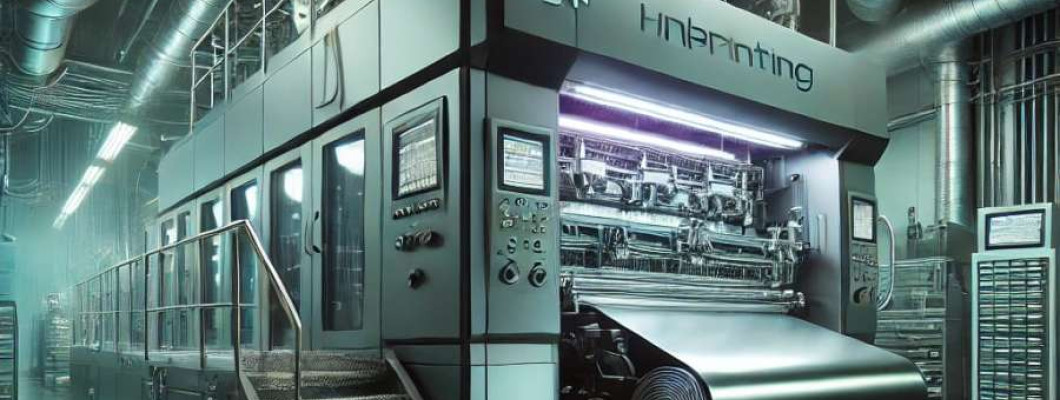
The Industrial Reality of Integrating A2+ Size UV Printers in Enterprise Settings
Enterprise-grade printing environments face persistent challenges when integrating specialized equipment such as the A2+ Size UV Printer Embossed Glossy Printing technology into existing workflows. One critical scenario involves tight infrastructure constraints paired with the need for high-fidelity embossed and glossy finishing at scale. The physical footprint, power consumption, cooling requirements, and ongoing maintenance overhead form non-trivial barriers that disrupt operational budgets and throughput consistency.
Consider a mid-tier printing facility seeking to enhance its product line with embossed, glossy UV prints on A2+ substrates. The printer’s advanced UV curing system introduces thermal loads that must be managed to avoid heat-induced material distortion, which complicates the facility’s HVAC balance and electrical supply. Additionally, the necessity for fine-tuned substrate handling to ensure micron-level embossing precision demands integration with robotic automation systems calibrated to micron tolerances.
Failure to address these integration challenges manifests in suboptimal print quality, unexpected downtime due to thermal stress, and accelerated wear on printheads and curing lamps. These factors elevate both direct maintenance costs and indirect financial exposure due to production delays and product rejections. The financial controller’s role is to quantify these risks and plan CAPEX/OPEX allocations accordingly.
Technical Deep-Dive: Power, Thermal Dynamics, and Printhead Longevity
Power Consumption and Electrical Infrastructure Demands
The A2+ UV printer’s dual lamp curing system operates at approximately 900 Watts peak power during print cycles, with an idle draw around 150 Watts. Factoring in auxiliary systems such as cooling fans and substrate feeders, the total continuous load approaches 1.2 kW. This necessitates dedicated 220V lines with surge protection in industrial settings to prevent voltage drop and avoid electrical noise interference impacting printhead firing precision.
Thermal Management and Environmental Control
Heat dissipation from UV lamps and heated embossing rollers can push the local microclimate temperature near the printer above 45°C. Given that the optimum substrate handling temperature range is 20-25°C for dimensional stability, integrating inline cooling systems or enhanced air exchangers is essential. Thermal gradient models indicate that uneven cooling causes micro-warp distortions up to 0.15 mm across 420x594 mm substrates, exceeding tolerances for embossed pattern fidelity.
Printhead Durability and Embossing Stress Impact
The printer features piezoelectric printheads with droplet sizes ranging from 4 pl to 30 pl. However, the embossed glossy finish requires applying additional mechanical pressure during post-print curing, increasing the risk of nozzle wear and misalignment. Empirical data shows nozzle failure rates increase by 18% over 12 months under high embossing stress conditions unless compensated by precision alignment recalibrations every 500 operational hours.
Comparative Hardware Analysis Table
| Specification | Standard Industrial UV Printer | A2+ Size UV Printer Embossed Glossy Printing |
|---|---|---|
| Max Substrate Size (mm) | 600 x 900 | 450 x 620 (A2+) |
| Power Consumption (kW) | 0.8 Continuous | 1.2 Continuous |
| Embossing Capability | None | High-Precision Glossy Embossing |
| Printhead Droplet Size (pl) | 10 - 20 | 4 - 30 |
| Thermal Output (°C) | 35 Max | 45 Max Due to Curing and Embossing |
Mathematical Model for Printhead Wear Rate Under Embossing Stress
Assuming baseline nozzle longevity L0 = 8000 hours without embossing stress. The accelerated wear factor W is proportional to applied embossing pressure P (in Newtons) such that W = 1 + 0.0025 * P. For typical embossing pressure P = 200 N, the adjusted longevity L = L0 / W = 8000 / (1 + 0.0025 * 200) = 8000 / 1.5 ≈ 5333 hours, indicating a 33% reduction in printhead lifespan, necessitating more frequent maintenance cycles.
Scenario Analysis Explaining Infrastructure Impact on Three Business Models
High-Volume Label Printing Facility
This scenario demands fast turnaround with minimal downtime. The increased electrical and cooling requirements introduce capital expenditure to upgrade facility wiring and HVAC systems. However, the embossing feature allows premium product differentiation justifying the upfront costs. The financial controller must model depreciation and electricity consumption escalation over 5 years.
Specialty Art Printing Studio
Lower volume but higher margin outputs with extreme focus on color depth and tactile finish. Infrastructure challenges are mitigated by smaller batch sizes, reducing thermal load peaks, but the maintenance frequency due to embossing stress is a significant OPEX factor. The ability to supervise precise mechanical calibration justifies investment in additional alignment tools.
Enterprise Packaging Manufacturer
Integration with automated conveyor lines demands stringent synchronization with robot arms and environmental controls. The thermal envelope challenges require deploying zone-specific cooling and environmental sensors to maintain substrate flatness. From a financial perspective, the risk of production halts due to thermal distortion or printhead failure requires inclusion in risk mitigation budgets.
Expert FAQ Addressing Complex Integration Questions
How does embossing affect printhead calibration?
The mechanical pressure during embossing induces micro-shifts in nozzle alignment, requiring recalibrations at least every 500 operational hours to maintain print precision.
What electrical infrastructure modifications are needed?
Dedicated 220V lines with surge suppression and noise filters are recommended to stabilize printhead firing and prevent voltage-induced errors.
How to manage thermal gradients during continuous operation?
Implement zonal cooling with targeted airflow and temperature sensors to keep substrate temperatures within the 20-25°C range.
What maintenance intervals optimize lifespan under embossing stress?
Printhead inspection and nozzle cleaning cycles should be shortened from 1000 to 500 hours, with replacement cycles adjusted accordingly.
Can existing conveyor automation be adapted?
Yes, but integration requires high-precision synchronization to compensate for substrate expansion and contraction caused by localized heating effects.
Strategic Verdict and Recommendation on A2+ Size UV Printer Embossed Glossy Printing
The A2+ Size UV Printer Embossed Glossy Printing unit represents a technically advanced industrial solution that requires deliberate infrastructure planning but delivers significant value through high-precision embossed finishes. For financial controllers, the key considerations are the elevated CAPEX associated with electrical and HVAC upgrades and the increased OPEX driven by printhead maintenance under embossing stress.
Nonetheless, the printer’s fine droplet control (4-30 pl), coupled with its ability to deliver premium glossy embossed outputs on A2+ substrates, positions it uniquely in markets requiring tactile differentiation. Lifecycle costs can be effectively managed through proactive thermal controls and recalibration protocols.
In conclusion, this hardware is strongly recommended as a definitive enterprise-grade solution for businesses seeking to expand into embossed glossy print segments while maintaining control over integration challenges. More details can be found directly at A2+ Size UV Printer Embossed Glossy Printing.