
The Financial Controller's Guide to Evaluating the 40x60CM Heat Press Machine
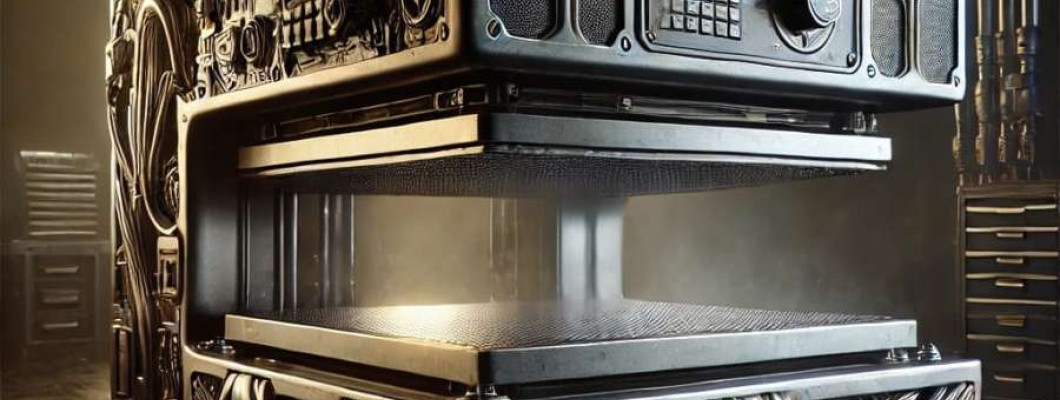
The Industrial Reality of Heat Press Investments
Within the white-hot competitive environment of industrial print operations, capital expenditures must consistently justify operating costs and lifespan performance. A 40x60CM Heat Press Machine represents a midpoint asset class: larger than hobbyist-sized units yet below full industrial platen presses with automated loading. For a financial controller, the critical challenge is to decipher how such a press fits within cost models and depreciation schedules, avoiding hidden expenses that erode ROI over time.
Consider a mid-tier customization provider that scales monthly orders from 500 to 2500 printed substrates. The heat press becomes a pivotal bottleneck, necessitating an analysis of cycle time, energy consumption, maintenance windows, and asset longevity. Given the heat press’s thermal element power draw, platen temperature stability, and mechanical robustness, the financial controller faces the task of quantifying the asset not just as a discrete purchase but a continually depreciating entity whose uptime directly correlates with revenue throughput.
Moreover, industrial-grade safety and environmental compliance influence the total cost of ownership (TCO). Devices lacking certifications may necessitate costly retrofits or increase insurance premiums. In addition, the possibility of downtime due to mechanical malfunction can dramatically alter financial forecasts. The 40x60CM Heat Press Machine must, therefore, be scrutinized for its real-world operational durability, integration ease, and predictable maintenance cycles to ensure that the asset contributes positively to capital efficiency.
Technical Deep Dive into Heat Press Financial Implications
Power and Energy Consumption Analysis
The typical heating element in a heat press of this size ranges between 800 to 1500 Watts, with the platen area approximately 2400 cm2. To maintain 180°C operational temperature, power cycling with PID control algorithms is used to avoid overshoot. Assuming a 1200W average draw and 8-hour daily use, the daily consumption is roughly 9.6 kWh. At an industrial electricity rate of $0.12/kWh, this amounts to $1.15/day or about $345/year solely in energy.
Depreciation and Asset Longevity Modeling
Assuming a purchase price of $1200 for a 40x60CM Heat Press Machine, with a straight-line depreciation over 5 years and zero residual value, the annual depreciation expense is $240. Factoring in an estimated 10% unexpected maintenance reserve ($120/year), the effective annual ownership cost approaches $465 before operating costs.
Maintenance Cycles and Consumables
Heat presses require periodic replacement of rubber platen pads, which degrade due to heat and compressive stress. Typical pad replacement intervals range from 12 to 18 months under industrial throughput, costing approximately $50 per replacement. Temperature sensor recalibration or heating element replacement may be necessary every 3 years, with labor costs annually averaging $75 depending on in-house technical proficiency.
Operational Throughput Versus Labor Cost Tradeoffs
Typical cycle times for the 40x60CM Heat Press range from 15 to 45 seconds depending on substrate and print method. Factoring setup and substrate handling, an optimistic throughput is around 120 pieces per hour per operator. With industrial labor averaging $25/hour including benefits, the relative throughput cost is approximately $0.21 per piece, which scales inversely with batch sizes and operator experience.
Comparative Cost Table for Heat Presses
| Specification | 40x60CM Heat Press Machine | Full Industrial Automatic Heat Press |
|---|---|---|
| Purchase Price | $1200 | $25,000+ |
| Power Consumption (kW) | 1.2kW | 5kW+ |
| Cycle Time (sec) | 15-45 | 5-15 |
| Annual Maintenance | $120-$200 | $1000+ |
| Uptime % | ~95% | ~99% |
| Labor Requirement | 1 operator per machine | 1 operator per 3-5 machines |
Scenario Analysis of Diverse Business Use-Cases
Scenario 1 Industrial Custom Apparel Printer
A mid-sized print shop running seasonal campaigns relies on batch runs of 1000+ pieces per job. The 40x60CM Heat Press Machine, while manual, allows sufficient throughput for these batch sizes. However, longer cycle times and labor intensity add to operating expenses. The financial model must incorporate increased labor and marginally higher maintenance versus faster automated presses, making it suitable only as a secondary or low-volume asset.
Scenario 2 Local Print Boutique Specializing in Premium Prints
Here the focus is on precision and minimal batch sizes with high substrate diversity, from cotton blends to synthetic fabrics. The 40x60CM Heat Press Machine’s size and stability provide excellent uniform heat distribution necessary for specialty substrates, reducing rejects and warranty costs — enhancing the financial equation through quality rather than quantity.
Scenario 3 On-Demand Industrial Prototyping
Prototyping startups benefit from the flexibility and cost-effectiveness of the 40x60CM Heat Press Machine. It offers professional-grade temperature control without the capital outlay of automatic presses. The financial controller must weigh the amortized cost over fewer prints, balancing skill-training and maintenance risks.
Expert FAQ for Advanced Financial Controllers
1. How does platen size affect depreciation schedules?
Larger platen sizes typically correlate with higher initial CAPEX but can amortize more effectively over volume, making smaller units like 40x60CM a pragmatic midpoint.
2. Can energy consumption be optimized under variable load?
Yes, advanced PID controllers modulate heating elements to minimize overshoot and idle power use, significantly impacting OPEX at scale.
3. What contingencies should be budgeted for unexpected downtime?
It is standard to allocate around 5-10% of asset cost annually for unplanned repairs and lost revenue due to downtime.
4. How is labor cost sensitivity modeled in throughput calculations?
Throughput sensitivity is a function of cycle time variance and operator skill; marginal improvements yield nonlinear savings.
5. Are there tax incentives for investing in energy-efficient heat press technologies?
Certain jurisdictions provide incentives for energy-saving equipment; verifying local policies is essential for total cost assessment.
Strategic Verdict and Recommendation
From a financial perspective, the 40x60CM Heat Press Machine offers a well-balanced investment opportunity for businesses weighing CAPEX against operational reliability. Its moderate power draw, manageable maintenance cycles, and competitive throughput make it an attractive asset for firms targeting a transitional scale between entry-level and full industrial automation. While it cannot compete with fully automated lines on sheer volume, its depreciation profile and flexible application yield strong cost predictability. For detailed specifications and procurement, consider the 40x60CM Heat Press Machine as a definitive solution for industrial printing financial portfolios seeking durable capital assets with operational rigor.