
The Financial Realities and Printhead Physics of the A3 Edible Food Printer For Printing Cakes Cookies
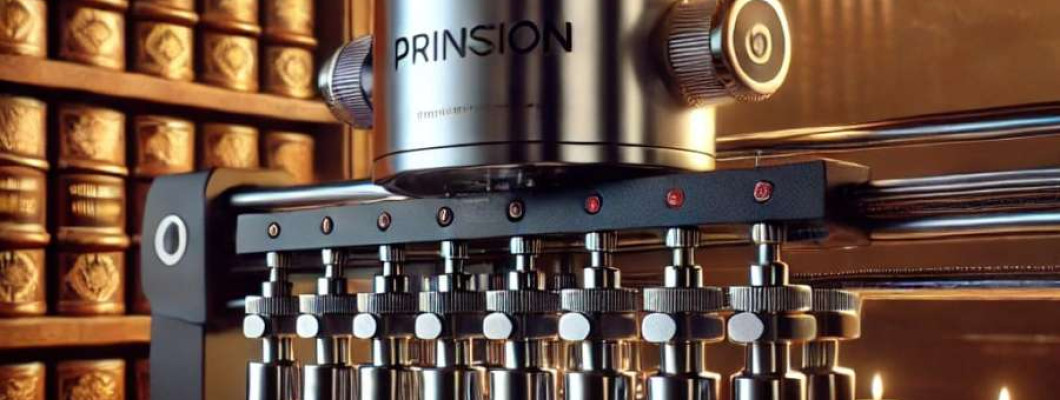
The Industrial Reality of Edible Food Printing in Commercial Operations
In the realm of high-precision edible food printing, the transition from traditional decorative methods to automated digital food printers presents a unique economic and operational paradigm. The A3 Edible Food Printer For Printing Cakes Cookies is designed to bridge artisanal creativity with industrial-grade throughput, but pragmatic challenges manifest prominently under rigorous commercial conditions. Industrial bakeries and confectionery outfits face intense pressure on print cycle speed, consumable ink costs, and ongoing maintenance to retain aesthetic fidelity and operational uptime. The core challenge is balancing the seemingly conflicting priorities of print quality, asset longevity, and cost containment.
Unlike standard office or graphic printers, edible food printers must seamlessly integrate thermally sensitive edible inks with specialized printheads operating under stringent hygiene standards. This introduces nuanced failure modes that exacerbate wear and maintenance intervals. Moreover, asset depreciation must factor in not only mechanical components but also consumable ink chemistry volatility and rapid nozzle clogging. Hence, the financial evaluation of the A3 Edible Food Printer cannot be disconnected from its printhead physics and ink lifecycle.
Operational bottlenecks often emerge as hidden costs in production workflows. Print speed limitations—dictated by the physics of ink droplet ejection at micron-level precision—directly impact throughput. Downtime incurred through maintenance of printheads and ink replenishment cycles can silently erode profitability if left unaccounted for. Labor cost implications also weigh heavily, as operator expertise influences both maintenance efficacy and print quality consistency.
Printhead Physics and Ink Chemistry Drive Maintenance Costs
The A3 Edible Food Printer utilizes piezoelectric inkjet technology optimized for edible inks. This technology involves rapid mechanical deformation of piezo crystals creating pressure pulses that precisely eject droplets ranging typically between 4 to 8 picoliters (pl). The droplet size directly governs resolution measured in dots per inch (dpi) and sharpness critical to high-definition cake and cookie surface aesthetics.
Heat transfer within the printhead is a crucial variable. Excessive temperature causes edible inks to alter viscosity and color stability. Effective thermal management stabilizes droplet formation and mitigates printhead nozzle clogging due to sugar crystallization or pigment sedimentation. Operational data estimates that a printhead operating above 40 °C experiences a 25% increase in clogging frequency, thereby doubling maintenance cycles.
The durability of the printhead is further compromised by the particulate nature of edible pigments. Unlike dye-based inks used in non-food printers, edible inks locally suspend carbon-based or plant-extract pigments that pose abrasion risks to nozzle plates. The typical lifespan of a printhead under industrial edible ink use is approximately 6 months at 50% duty cycle, compared to 18 months under conventional ink usage.
Asset Depreciation and Hidden Operational Bottlenecks
The capital expenditure (CAPEX) for an A3 edible food printer integrates cost for precision mechanics, specialized electronics, and hygienic printpath components. Depreciation schedules must be aggressively calibrated to reflect accelerated wear from food-safe inks and daily cleaning procedures. A conservative asset life of 5 years is realistic, but operational bottlenecks such as frequent unscheduled maintenance can reduce effective usage, increasing total cost of ownership (TCO).
Hidden bottlenecks are often incurred from spare part lead times and consumable supply chain disruptions. Printhead modules, costed typically between $800 and $1200 USD, require factory calibration and are not field reparable. Downtime incurred during part replacement directly impacts throughput, compounding labor and opportunity costs. Additionally, the specialized edible ink cartridges have shelf lives between 3 to 6 months, demanding tight inventory control to avoid spoilage.
Comparative Analysis of Printhead Technologies for Edible Applications
| Specification | Piezoelectric Printhead (A3 Food Printer) | Thermal Inkjet Printhead |
|---|---|---|
| Droplet Size (pl) | 4-8 | 10-15 |
| Resolution (dpi) | 600-1200 | 300-600 |
| Printhead Lifespan (months) | 6 (edible ink) | 3-4 (edible ink) |
| Thermal Stress on Ink | Low (No heat applied) | High (Heating element used) |
| Maintenance Frequency | Moderate (Every 2000 prints) | High (Every 1000 prints) |
This comparison illustrates the superior print quality and durability of the piezoelectric printhead implemented within the A3 Edible Food Printer. The lower thermal impact preserves ink chemistry stability, critical for edible applications.
The Financial Audit of Operational Workflow Costs
Calculating total operational expense (OPEX) requires incorporating ink consumption rate, maintenance frequencies, labor, and downtime. For example, the A3 printer consumes roughly 2.5 ml of ink per A3 sheet. With edible ink costing approximately $60 per 100 ml cartridge, the ink cost per A3 print approximates $1.50. Maintenance parts and labor, averaged at $200 monthly for a 40-hour operational week, add indirect costs to each print.
Assuming a throughput of 80 prints per week, total weekly variable cost including ink and maintenance reaches approximately $320, translating to $4 per print excluding labor and fixed costs. Factoring labor at $25/hour and 2 hours weekly dedicated to printer upkeep adjusts cost per print margin further.
Scenario Analysis of Business Use-Cases
1. Boutique Artisan Bakery
Priority lies in print precision and color fidelity for limited batch productions. The A3 Edible Food Printer offers micron-level resolution and a broad edible color gamut essential for premium customer demands. Although throughput is modest, the superior printhead technology ensures low downtime and consistent quality, justifying higher asset costs.
2. Large-Scale Confectionery Manufacturer
Here, throughput and operational uptime dominate. The printer’s maintenance frequency aligns with scheduled production pauses minimizing workflow disruptions. The piezoelectric printhead’s longevity reduces spare part turnover, optimizing operational efficiency. Controlled print speeds avoid compromising throughput despite higher initial capital investment.
3. Event Catering Services
The need for rapid customization on-site favors printers with quick setup and streamlined maintenance. The A3 printer’s manageable footprint and rapid print cycles enable catering teams to deliver personalized products with industrial-grade quality. Ink cartridge shelf life and storage protocols are critical considerations to prevent wastage during intermittent use.
Expert FAQ on Industrial-Grade Edible Food Printing
Q1 How does temperature variation affect droplet formation in edible food printers?
Temperature fluctuations alter ink viscosity and surface tension, impacting droplet size and trajectory. The piezoelectric printhead minimizes thermal exposure, stabilizing drop ejection and print uniformity.
Q2 What maintenance routines most effectively extend printhead lifespan?
Routine flushing with food-safe solvents and scheduled nozzle inspections prevent clogging. Automated cleaning cycles combined with manual verification optimize printhead performance.
Q3 How does the particulate nature of edible inks influence printhead wear?
Solid pigment particles mechanically abrade nozzle plates over time. Formulated ink with optimally sized particles mitigates wear, but eventual printhead replacement is inevitable under heavy industrial use.
Q4 What supply chain factors influence operational continuity?
Dependence on specialized edible inks and precision parts mandates robust supplier relationships and proactive inventory management to circumvent production halts.
Q5 How does the A3 Edible Food Printer integrate with existing food production lines?
Its compact design and standard digital interfaces allow straightforward incorporation into bakery lines with minimal infrastructure modifications, supporting automation and scalability.
Strategic Verdict and Recommendation
The A3 Edible Food Printer For Printing Cakes Cookies represents a convergence of specialized printhead physics, edible ink chemistry, and operational economics tailored for industrial food decoration. Its piezoelectric printhead technology delivers superior resolution and extended service life compared to thermal inkjets, mitigating typical edible printing bottlenecks. Although ink and maintenance costs are significant, the printer’s design optimizes uptime and quality consistency essential for scalable food businesses.
For enterprises aiming to scale decorative customization with controlled operational expenses, this printer is a technically and financially sound investment. The embedded thermal management strategies and printhead durability ensure predictable asset depreciation, critical for long-term capital planning. The printer’s adaptability across diverse commercial environments—from boutique bakeries to mass production—further underscores its industrial-grade credentials.
It is recommended to evaluate the A3 Edible Food Printer For Printing Cakes Cookies as a key component in modern, automated edible decoration workflows where print quality, asset longevity, and operational cost control are paramount.