
The Gap Between DIY and Industrial Grade A3 Roll DTF Printers for Scalable Business Owners
The Industrial Reality of Scaling Direct-to-Film Printing
Imagine a mid-sized apparel customization business aiming to expand throughput without compromising quality or labor efficiency. The transition from desktop or hobbyist DTF printers to industrial-grade hardware is fraught with challenges. Standard DIY printers deliver low volume at inconsistent quality and frequent downtime, creating operational bottlenecks when scaled. The need to handle continuous rolls of substrate, consistent ink layering, and rapid drying cycles requires specialized engineering beyond consumer-grade physical tolerances.
For a scalable business owner, the printer must guarantee repeatable output with minimal manual intervention while fitting into existing workflow automation. Thermal management, printhead longevity, and seamless substrate handling are paramount. An industrial printer must also integrate with existing enterprise software and maintain uptime despite shifts in environmental conditions. These demands illustrate the chasm separating typical desktop DTF devices and professional industrial solutions.
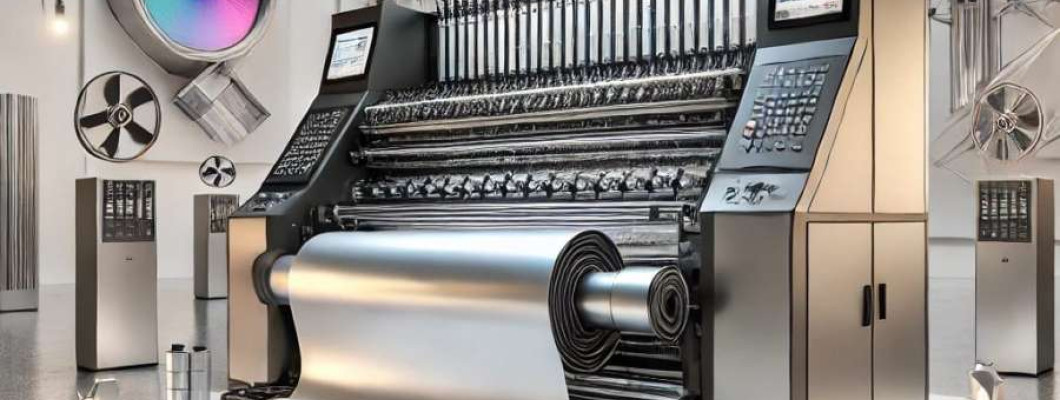
The A3 Roll DTF Printer fills this operational niche. Its roll-to-roll design supports continuous production at widths optimized for most apparel applications. This addresses throughput targets at the hardware level while minimizing manual substrate alignment errors. The printer employs industrial-grade printheads engineered for longevity under high-speed cyclic loading, minimizing downtime due to maintenance or print failures. Furthermore, the thermal and drying systems are calibrated to industrial performance ranges, ensuring ink adhesion and curing meet repeatable industry standards.
Without this class of equipment, facilities relying on DIY or small-form-factor printers face hidden costs such as unplanned downtime, quality variability, excess labor for post-processing, and frequent consumable replacements that erode profit margins and limit scalability.
Technical Deep Dive into the A3 Roll DTF Printer Engineering
Printhead Configuration and Ink Deposition Physics
The printer typically uses piezoelectric drop-on-demand printheads. These heads control drop size to a precision range of 4-10 picoliters, enabling fine control over ink volume per pixel. Such sizing balances color saturation and drying speed. Based on nozzle jetting frequencies exceeding 20 kHz and a nozzle density of 180 nozzles per inch, raw data throughput exceeds 7200 dpi at peak operation. By comparison, consumer-grade printheads often max out at 300 dpi nozzle density with lower jet frequencies, resulting in slower print times and reduced color depth.
Roll Feed Mechanism and Substrate Tension Control
The continuous feeding mechanism manages roll widths generally spanning 320-420 mm, matching the A3 form factor. A closed-loop tension control system ensures substrate flatness within a 0.2 mm tolerance during high-speed runs up to 150 mm/s. This minimizes banding and alignment drift common in DIY machines that lack tension sensors. The feedback loop employs optical encoders paired with spring-loaded rollers, maintaining constant substrate engagement force.
Thermal and Drying Systems
Ink curing relies on an integrated thermal curing module delivering uniform temperature profiles around 90-110°C. Thermal uniformity measured via embedded thermocouples is ±0.5°C across the entire print width. This precision ensures consistent ink polymerization without substrate distortion, which is key for garment printing where fabric stretch tolerance is limited. Many small-scale printers utilize ambient or passive drying, which introduces ink variability and longer processing times.
Control Electronics and Interface
Embedded firmware supports real-time color management and error detection. The system processes RIP (Raster Image Processing) instructions internally with a high-resolution 32-bit processor operating at 200 MHz, enabling advanced halftoning and dithering algorithms. The printer supports standard industrial communication protocols including USB 3.0 and Ethernet with TCP/IP support for networked production. This allows integration into MES (Manufacturing Execution Systems) that streamline job scheduling and monitoring.
Consumables and Maintenance Considerations
Ink chemistry is formulated for high pigment density with rapid curing, formulated to resist substrate washout up to 50 industrial wash cycles. Maintenance intervals average 2000 print hours between nozzle cleanings, a 4x improvement over hobbyist alternatives. Consumable costs are optimized by bulk ink cartridge designs compatible with various pigment bases and adhesion promoters, reducing frequent cartridge swaps common in consumer-grade cartridges.
| Specification | DIY/Consumer-grade DTF | A3 Roll DTF Printer |
|---|---|---|
| Print Resolution (dpi) | 300-600 | 7200 (nozzle density basis) |
| Maximum Print Speed (mm/s) | 50-70 | 150 |
| Substrate Width Tolerance (mm) | ±3.0 | ±0.2 |
| Printhead Maintenance Interval (hours) | 400-500 | 2000 |
| Thermal Curing Accuracy (°C) | Passive/Ambient | ±0.5 Uniformity |
Scenario Analysis of Business Impact
Scenario one is a print shop expanding to automated apparel decoration with contracts requiring 500+ garments daily. The roll-fed A3 printer supports this by minimizing manual substrate handling and delivering consistent color matching, lowering rejects that plague desktop printers.
Scenario two involves a medium-sized vertical apparel manufacturer integrating the printer inline before post-processing finishing stages. The printer's network capabilities allow centralized job management, reducing operator errors and downtime spikes common in manual workflow.
Scenario three is a custom merchandise startup scaling from prototype to batch production. The advanced curing and substrate tension controls reduce rework caused by ink bleeding or fabric distortion, preserving brand reputation and controlling costs through predictable yields.
Expert FAQ
Q1: How does nozzle density affect the color gradient smoothness in DTF printing?
A1: Increased nozzle density directly enhances the printer's ability to deposit finer ink droplets, enabling smoother gradients and subtler color transitions by reducing dithering artifacts.
Q2: What are the implications of thermal curing uniformity on polyester fabric quality?
A2: Uniform curing prevents localized overheating, which can distort fabric fibers or cause uneven adhesion, impacting both durability and tactile qualities of polyester prints.
Q3: How critical is substrate tension feedback in maintaining repeatability?
A3: Substrate tension feedback eliminates print banding by maintaining consistent material alignment, a factor often overlooked in lower-tier models that rely on manual adjustment.
Q4: What is the trade-off between higher print speeds and ink curing requirements?
A4: Increased print speed demands faster ink curing systems to prevent smudging; otherwise, throughput gains are negated by longer post-print drying times.
Q5: How does network integration improve operational uptime in industrial DTF printers?
A5: Network integration enables remote diagnostics and predictive maintenance alerts, reducing unplanned downtime by addressing issues before failure.
Strategic Verdict and Recommendation
The A3 Roll DTF Printer emerges as a definitive industrial-grade solution bridging the operational divide between low-volume hobbyist printers and scalable enterprise production equipment. Its engineered specifications—high-resolution printheads, precise thermal control, automated roll feeding, and networked control electronics—offer throughput, reliability, and quality at an industrial scale. For scalable business owners seeking to increase automation, reduce labor overhead, and maintain consistent high-quality output, this printer is a strategic asset whose performance characteristics align with rigorous production demands.
While the initial CAPEX surpasses consumer-grade alternatives, the extended maintenance intervals and reduced operational bottlenecks deliver a compelling ROI. The data-driven hardware design addresses hidden costs often unquantified in small-run environments, providing confidence in long-term operational stability. Integration capability with enterprise workflow systems further future-proofs the investment.
In summary, the A3 Roll DTF Printer represents a forward-looking platform engineered to meet the exacting needs of growing apparel customization and direct-to-film printing businesses. Its robust design validates it as the industrial solution of choice in a market where scalability and precision govern success.