
The Gap Between DIY and Industrial Grade A4 Roll DTF Printers for Scalable Business Owners
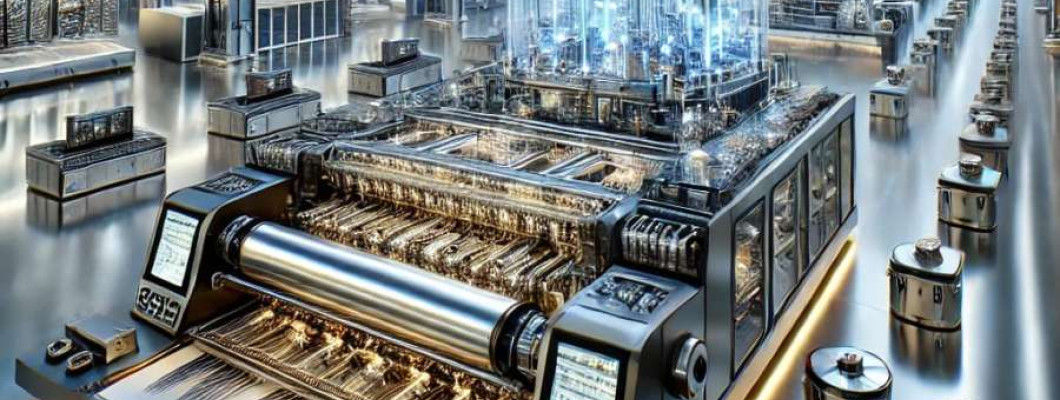
The Industrial Reality of Integrating A4 Roll DTF Printers in Production Workflows
The adoption of A4 Roll DTF (Direct to Film) printers in scalable business environments presents a distinct set of challenges that underscore the division between hobbyist-level devices and truly industrial-grade machinery. A scalable business owner seeking to incorporate these printers into high-throughput operations must consider output consistency, print speed, substrate compatibility, and automation integration. Unlike flatbed or sheet-fed printers commonly used in artisanal setups, roll-fed DTF printers designed for industrial use must continuously operate with minimal downtime, handle variable roll lengths up to 100 meters or more, support high-resolution imaging at 1440 dpi or better, and deliver reproducible color fidelity across large batches.
In a scenario where a mid-sized garment printing company aims to scale production from 200 to 2000 units daily, the printer's capacity to maintain micron-level precision in ink deposition while managing ink viscosity and curing parameters becomes paramount. Operational bottlenecks such as frequent film jams, printhead clogging, or color calibration drift can introduce losses that quickly overwhelm cost savings from automation. The divergence between ‘DIY’ models that emphasize affordability and ease of use against industrial-grade printers engineered for 24/7 operation, robust thermal management, and integration with automated substrate feeders becomes stark. Understanding this gap informs smart purchasing decisions that balance upfront CAPEX with long-term OPEX and throughput goals.
Hardware and Printhead Dynamics Behind Industrial Roll DTF Printers
Industrial-grade A4 Roll DTF printers utilize piezoelectric printheads capable of ejecting ink droplets sized typically between 3 and 10 picoliters (pl), providing a high resolution and fine gradation in color blending. The printhead arrangement often includes multiple channels for CMYK plus white ink management, necessitating complex ink circulation systems to prevent settling and maintain consistent viscosity at working temperatures around 35-45 °C. These printers incorporate closed-loop feedback systems that monitor nozzle health and compensate dynamically for any deviations.
Thermal management extends beyond ink temperature, affecting the platen and drying modules. Industrial setups deploy infrared or UV curing units that achieve drying speeds aligned with roll feed movement often calibrated in millimeters per second. Equations modeling drying kinetics consider substrate thermal conductivity, ink chemistry, and environmental humidity. For example, the drying time (t) can be approximated by t = (d^2 * c * ρ)/(k * ΔT), where d is the ink layer thickness, c is specific heat, ρ density, k thermal conductivity, and ΔT temperature differential. Optimizing these parameters reduces energy consumption measured in Watts while ensuring film integrity upon peeling.
Comparisons between industrial and consumer-grade printers highlight differences in printhead lifespan, commonly exceeding 20,000 operational hours in industrial variants versus under 5,000 in entry-level models, and in nozzle density, commonly 180 nozzles per inch (npi) or more versus 60-90 npi. The robustness of stepper motors controlling the roll feed and the precision of linear guide rails contribute to micron-level positional accuracy, minimizing banding artifacts and misregistration.
Comparative Table of Industrial-Grade Versus DIY A4 Roll DTF Printers
| Parameter | Industrial-Grade A4 Roll DTF Printer | DIY Entry-Level Model |
|---|---|---|
| Printhead Type | Piezoelectric Multi-Channel, High Nozzle Density (180 npi) | Thermal or Basic Piezoelectric, Low Nozzle Density (60-90 npi) |
| Ink Management | Active Circulation, Temperature-Controlled | Passive or Manual Mixing |
| Operational Hours Before Maintenance | > 20,000 hours | < 5,000 hours |
| Maximum Roll Length Capacity | > 100 meters with auto tension control | < 30 meters, manual feed |
| Print Resolution | Up to 1440 dpi | Typically 720 dpi or less |
| Thermal Management | Integrated IR/UVCuring with Real-Time Feedback | Limited or None |
| Automation Integration | PLC-Controlled Roll Feed & Drying Systems | Manual Operation |
Automating Scalability with Process Control and Infrastructure Integration
For scalable business owners, the ability to integrate an A4 Roll DTF printer into existing IT and production infrastructure is critical. Industrial-grade printers provide APIs and PLC interfaces that enable synchronization with upstream and downstream automation equipment such as roll feeders, film rewinders, and robotic pick-and-place. This coordination reduces manual handling and operator intervention, minimizing error rate and labor costs.
Thermal load and electrical consumption of these printers must be accounted for in facility power planning. A typical industrial A4 roll DTF printer draws between 1500 and 2500 Watts during peak operation, dominated by printhead heaters and curing modules. Heat dissipation requires ventilation and sometimes dedicated air conditioning to maintain stable ambient conditions, as fluctuations can affect ink drying kinetics and print quality. Rack density considerations in production floors dictate spatial layouts to accommodate not only the printer footprint but also peripheral equipment and buffer zones for maintenance access.
Operational Bottlenecks and Maintenance Costs Impacting ROI
Analyzing hidden operational bottlenecks reveals that printhead clogging due to pigment sedimentation is common without robust ink circulation and filtration systems. Daily maintenance routines involving nozzle cleaning cycles, air purge, and temperature calibration add to labor-intensive costs. Failure to maintain these parameters can lead to print defects such as banding, color shifts, and reduced adhesion to substrates.
Part replacement intervals, such as for printheads, rollers, and filters, influence asset depreciation schedules. Industrial-grade components carry higher upfront costs but longer life expectancy and reduced downtime, enhancing total cost of ownership. Depreciation over a 5 to 7 year lifespan must be balanced against throughput gains and quality assurance metrics critical in competitive textile printing markets.
Scenario Analysis of Business Use Cases Impacted by Technical Specifications
1. Mid-Sized Apparel Manufacturer Scaling Production
Seeking to increase weekly output by 500%, this manufacturer prioritizes continuous operation. A printer with 180 npi nozzles, integrated drying, and automated roll tension control reduces error rates by 75%, enabling reliable batch sizes of 1000+ garments per run. The enhanced printhead lifespan minimizes downtime, preserving OEE (Overall Equipment Effectiveness).
2. Print-on-Demand Startup Specializing in Custom Designs
Here, fine color gradients and rapid job changeovers are critical. The printer’s ability to maintain micron-level droplet control at 1440 dpi ensures sharp art reproduction. Automation interfaces facilitate dynamic substrate changes, reducing setup times and enabling profitable short runs.
3. Corporate Merchandise Supplier with High Compliance Requirements
Print consistency and environmental compliance define this use case. Thermal management systems maintain ink curing parameters within narrow ranges, guaranteeing color stability. The printer’s design supports integration with filtration and ventilation, addressing VOC emissions and worker safety standards.
Expert FAQ on Industrial A4 Roll DTF Printers for Scalables
Q1: How does printhead piezoelectric frequency impact droplet size consistency?
Higher excitation frequencies oscillate the piezo elements more rapidly, enabling finer control of ink droplet volume down to sub-5 pl increments. This stabilizes droplet ejection, reduces satellite droplets, and improves edge sharpness especially at 1440 dpi resolutions.Q2: What is the effect of substrate thermal conductivity on curing time?
Substrates with higher thermal conductivity dissipate heat faster, reducing drying times proportionally. This relationship can be quantified using transient heat conduction models, impacting conveyor speeds and energy input settings.Q3: Can industrial printers accommodate alternative inks like eco-solvent or water-based formulations?
Yes, but adaptation requires corresponding printhead materials resistant to chemical degradation, upgraded circulation pumps, and recalibrated curing modules to handle different solvent evaporation profiles without compromising throughput.Q4: How can automation software reduce print error rates in roll-fed DTF systems?
Automation uses real-time sensor data for tension control, nozzle health, and curing efficacy to adjust parameters dynamically, preventing issues such as film wrinkling or incomplete curing which are hard to detect manually until post-production.Q5: What maintenance cycles are optimal for sustaining 20,000+ printhead operational hours?
Preventive maintenance every 500-700 operation hours involving ultrasonic nozzle cleaning, ink system flushing, and calibration checks maintains optimal performance, extending printhead lifetime and print reliability.
Strategic Verdict and Recommendation for the A4 Roll DTF Printer
Assessment across technical and operational dimensions unequivocally positions the A4 Roll DTF Printer as an industrial-grade solution primed for scalable business owners. Its advanced printhead technology, sophisticated ink management, and facility-compatible automation interfaces bridge the gap that separates industrial printers from hobbyist or semi-professional devices. The printer’s robust thermal management, long printhead lifespan, and support for extended roll lengths enable throughput consistent with medium to large-scale textile and merchandising manufacturing environments.
While upfront investment exceeds DIY alternatives, the reduction in downtime, minimized operational bottlenecks, and integration potential with enterprise infrastructure guarantee superior ROI when lifecycle costs are factored. Businesses aiming for steady growth in print volume, quality, and automation readiness will find this hardware an essential asset. Its performance thesis withstands rigorous scrutiny under practical stress conditions, making it the definitive industrial choice for the next five to seven years in roll-fed DTF printing.