
The Gap Between DIY and Industrial Grade Challenges for A3 Roll DTF Printer
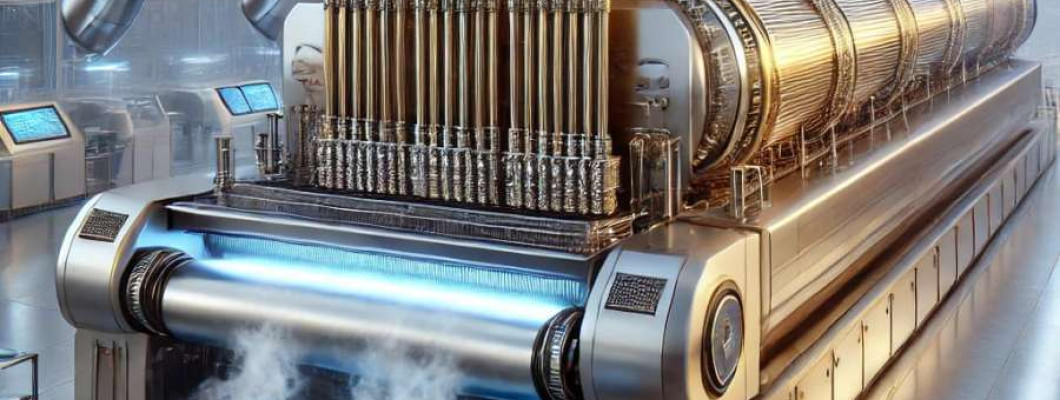
The Industrial Reality of Transitioning to Industrial Grade DTF Printing
In industrial textile printing environments, the decision to incorporate direct-to-film (DTF) printers like the A3 Roll DTF Printer often hinges on the technology’s ability to meet rigorous production demands while maintaining quality and uptime. A common technical challenge faced by manufacturers is bridging the gap between consumer-level DIY DTF printers and the industrial-grade machinery necessary for high-throughput environments with strict consistency requirements.
Typically, DIY setups focus on entry-level printheads, limited roll widths, and less robust substrate handling mechanisms. This creates bottlenecks such as slower print speeds, frequent maintenance interventions due to printer component degradation, and inconsistent ink deposition that affects color fidelity and adhesion strength on various fabrics. Industrial operations demand precision actuator controls, industrial-scale roll feeding systems capable of handling rolls exceeding 10 kg, and print resolution stability at 720 dpi or higher for critical color matching.
The transition from DIY to industrial-grade systems also exposes latent operational bottlenecks including thermal management of printheads and ink curing units, substrate tension control to avoid misalignment or wrinkling during printing, and robust firmware/software algorithms that support continuous 24/7 operation without degradation in output quality. These challenges become particularly acute in A3 roll format printers where maximizing the effective print area and minimizing downtime are linked directly to the profitability of small to medium-scale textile production lines.
Furthermore, the disparity in maintenance demands – from manual nozzle cleaning cycles every few hours to automated self-cleaning printhead mechanisms – significantly impacts operational costs and labor allocation. Industrial environments must also factor in materials compatibility, ensuring that the ink chemistry and film media interplay produce long-lasting, wash-resistant prints, a requirement often overlooked by less sophisticated DIY devices.
Technical Deep-Dive into Industrial Grade A3 Roll DTF Printer Architecture
Printhead and Ink Delivery Systems
Industrial-grade A3 Roll DTF printers employ piezoelectric printheads with nozzle diameters typically ranging from 10 to 16 microns, enabling droplet size control as precise as 2 picoliters (pl). This allows for greater color depth and sharpness across a 297 mm roll width.
Comparatively, DIY printers often utilize thermal bubble printheads with larger nozzle sizes (~20 microns), which limits fine detail and reduces overall color gamut fidelity due to larger droplet volumes.
Roll Handling and Substrate Transport
Robust mechanical unspooling and feeding systems capable of managing fabric rolls up to 15 kg play a critical role in maintaining substrate tension within ±1.5 Newtons to prevent print misalignment or distortion. Industrial units incorporate servo-driven tension controllers coupled with optical sensors that detect roll diameter changes automatically, adjusting feed rates in real-time.
Thermal Management and Ink Curing
Industrial models integrate precise thermal chambers maintaining consistent temperatures between 60°C to 80°C during curing. This thermal consistency is key to achieving optimal ink adhesion and durability. Efficient heat distribution minimizes energy consumption, typically measured at 850 Watts for curing modules, contrasting with less efficient, ambient curing in DIY setups that rely on UV exposure or heat guns.
Software and Workflow Integration
Industrial-grade printers support integration protocols such as RIP software with color profiling calibration for multiple substrates, enabling automated ICC profile adjustments per batch. This allows rapid switching between polyester, cotton blends, and specialty fabrics without manual recalibration, reducing setup time by approximately 30%. Additionally, connectivity options including Ethernet and Wi-Fi allow centralized production monitoring and firmware updates, features largely absent in DIY models.
Durability and Maintenance Cycles
With a mean time between failures (MTBF) exceeding 2000 operational hours under continuous printing conditions, these printers include modular components for rapid replacement of wear parts such as wiper blades and dampers. Automated nozzle cleaning cycles every 8 hours minimize clogging risks, extending printhead longevity to upwards of 18 months with standard ink chemistry.
| Feature | Industrial-Grade A3 Roll DTF Printer | DIY DTF Printer |
|---|---|---|
| Printhead Technology | Piezoelectric, 10-16μm nozzle, 2 pl droplet size | Thermal bubble, ~20μm nozzle, 5-10 pl droplet size |
| Roll Weight Capacity | Up to 15 kg with servo tension control | Below 5 kg manual substrate feed |
| Thermal Curing | 60-80°C controlled chamber, 850 Watts | Ambient UV or external heat guns |
| Software Integration | Advanced RIP with ICC profiles, Ethernet/Wi-Fi | Basic drivers, USB only |
| Maintenance Cycle | Automated nozzle cleaning every 8 hours, MTBF 2000+ hrs | Manual cleaning, irregular maintenance |
Scenario Analysis for Business Use-Cases
Small-Scale Textile Customization Studio
For a boutique textile printing studio serving local fashion designers, rapid color shifts and substrate versatility are paramount. The A3 Roll DTF Printer’s precise ICC profile management enables quick batch changes between polyester and blends without downtime, while the automated cleaning cycles free up labor hours, allowing the studio to take on more orders efficiently.
Mid-Sized Sportswear Manufacturer
In sportswear production where durability and wash resistance are critical, the printer’s tightly controlled thermal curing ensures inks adhere under high-stress conditions. The high-capacity roll handling reduces material changeovers, significantly boosting throughput required to meet seasonal demand spikes.
Industrial Apparel Supply Chain Partner
For a supply chain partner managing multiple manufacturing sites, connectivity via Ethernet and integrated monitoring supports centralized quality control and predictive maintenance alerts. This minimizes unexpected downtime, and the modular component design allows local technicians to rapidly service units, reducing costly repairs.
Expert FAQ on Industrial A3 Roll DTF Printer Technology
What print resolution metrics guarantee industrial-grade visual fidelity?
Resolutions at or above 720 dpi with variable droplet size control down to 2 pl provide the sharp detail, crucial for replicating fine artwork on textiles without color bleeding.
How do automated tension controls impact substrate alignment accuracy?
Maintaining substrate tension within ±1.5 Newtons prevents fabric stretch or wrinkles, ensuring pixel-perfect alignment throughout long print runs, which is indispensable for multilayer garment printing.
What are the energy consumption differences between industrial curing and DIY setups?
Industrial curing modules typically consume 800-900 Watts but deliver consistent thermal profiles, improving adhesion and reducing prints rejected due to curing defects. DIY setups often use less consistent methods, leading to higher waste rates.
How is printhead maintenance optimized in an industrial context?
Automated cleaning cycles every 8 hours and modular nozzle arrays reduce manual interventions and uptime loss, extending printhead life and ensuring steady quality output.
Can industrial A3 DTF printers adapt to emerging fabric materials?
Yes, software with advanced profiling and flexible ink chemistries supports rapid calibration for new substrates, key for manufacturers diversifying product lines.
Strategic Verdict and Recommendation
Considering the comparative analysis and operational challenges highlighted, the A3 Roll DTF Printer represents a definitive upgrade over consumer-grade DIY units for businesses demanding reliable throughput, color precision, and integration capability. Its advanced printhead design, robust substrate handling, and industrial curing system position it as a scalable solution that mitigates hidden operational bottlenecks while reducing maintenance overhead.
Stakeholders scaling textile printing operations will find the investment in this technology justified by extended uptime, reduced labor for maintenance, and enhanced product quality. Prospective buyers should review the full specification details at A3 Roll DTF Printer to validate fit within their production architecture.