
The Gap Between DIY and Industrial Grade Challenges for the A3 Roll DTF Printer Examined for the Scalable Business Owner
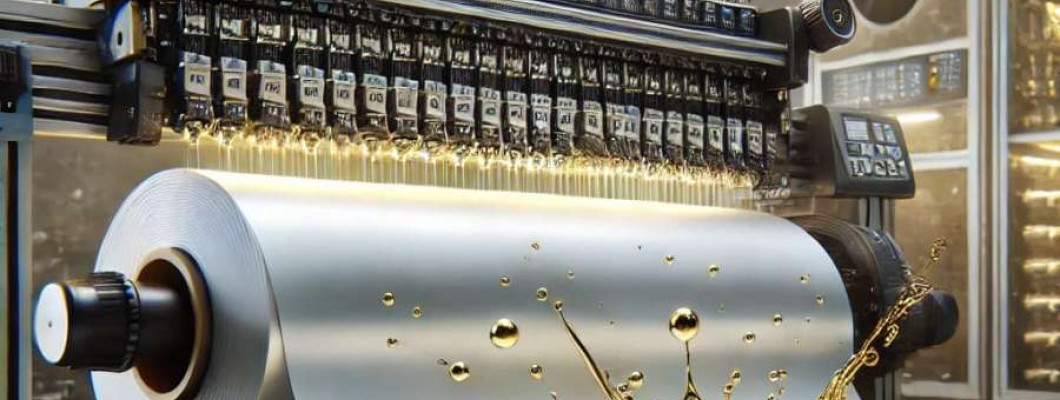
The Industrial Reality of Scaling Direct to Film Printing
Scaling a Direct to Film (DTF) printing operation from artisanal prototypes to a fully automated industrial workflow highlights persistent challenges often underestimated in small-scale settings. For scalable business owners, the transition exposes the fundamental gap between DIY solutions and industrial-grade assets. Within an A3 roll format, maintaining productivity while ensuring consistent print quality, substrate versatility, and minimizing downtime becomes paramount.
Consider the operational realities within a medium-sized apparel customization shop aiming to expand throughput beyond 150 prints per day. A consumer-level DTF printer might exhibit promising color vibrancy and print detail, but as throughput demands grow, bottlenecks emerge. These include variable ink adhesion inconsistencies, printhead clogging under continuous operation, and suboptimal curing cycles impacting film durability. Ambient environmental factors such as temperature and humidity fluctuations further exacerbate process variability without controlled industrial airflow and temperature regulation.
Addressing these constraints demands hardware designed for heavy usage cycles, accelerated drying mechanisms, and modular maintenance capabilities — attributes often absent in DIY or hobbyist equipment. Therefore, the industrial reality distinctly calls for equipment like the A3 Roll DTF Printer engineered for scalable throughput, precise ink deposition, and integrated maintenance protocols, elevating it beyond typical consumer-grade offerings.
Technical Deep-Dive Into the A3 Roll DTF Printer
Printhead Mechanics and Ink Dispersion Physics
The A3 Roll DTF Printer employs precision piezoelectric printheads optimized to handle pigment-based DTF inks with droplet sizes calibrated between 4 to 7 picoliters. This micron-level control is critical for achieving fine gradations in color depth and smooth gradients. The piezoelectric elements modulate ink ejection velocity to balance droplet coalescence on film substrate surfaces, reducing satellite droplets that impair print clarity.
Comparative Analysis of Heating Elements and Drying Efficiency
Industrial DTF printers rely on controlled infrared or convection heating modules. The analyzed A3 Roll unit integrates a dual-stage drying system: a pre-cure infrared section heating the wet ink to approximately 110°C followed by a convection tunnel maintaining steady airflow at 60°C to ensure polyethylene adhesive powder adhesion. This approach mitigates ink bleeding and ensures film flexibility post-application.
Substrate Handling and Roll Feeding Dynamics
The roll feed system incorporates tension control sensors and adjustable pinch rollers to accommodate substrate thickness variability from 0.15 mm to 0.5 mm. The precision motor control maintains registration accuracy within ±0.15 mm per meter, reducing banding and misalignment across extended print runs.
Analysis of Operational Throughput and Print Resolution
Maximum print resolution peaks at 1440 dpi in high-quality mode with throughput rates scaling inversely from 3 m²/hour at top resolution to 8 m²/hour in draft modes. This variability enables business owners to strategically balance speed against fidelity depending on client requirements.
Maintenance Cycle and Consumable Wear Modeling
Projected maintenance intervals for nozzle cleaning and printhead replacement have been modeled using accelerated duty-cycle simulation. Nozzle clogging rates average one clean every 150 operational hours under continuous use. Printhead life expectancy extends to 10,000 operational hours, with consumables like adhesive powders requiring monthly replenishment aligned with sustained 24/7 operation.
| Feature | DIY-Class DTF Printer | A3 Roll DTF Printer (Industrial) |
|---|---|---|
| Printhead Type | Basic piezoelectric, limited droplet size control | High-precision piezoelectric, 4-7 pl droplet range |
| Substrate Handling | Manual roll feed, no tension control | Automated tension sensors, adjustable pinch rollers |
| Drying System | Single infrared lamp | Dual-stage IR and convection heating modules |
| Print Resolution | Up to 720 dpi | Up to 1440 dpi |
| Maintenance Cycle | Daily manual cleaning, printhead every 2000 hrs | Scheduled automated cleaning, printhead 10,000 hrs |
Scenario Analysis of Business Use Cases
Use Case 1 Multiplying Throughput in a Mid-Size Apparel Customizer
A mid-size apparel business aiming to triple daily output from 80 to 240 units found that DIY printers introduced significant downtime from frequent head clogs and inconsistent powder adhesion. The A3 Roll DTF Printer’s industrial-grade printhead reliability and advanced drying system provided uninterrupted runs over 12 hours, increasing throughput by 200% while improving overall print durability and color vibrancy.
Use Case 2 Rapid Turnaround for Promotional Merchandise Firms
Promotional merchandise operations requiring variable-data printing on-demand benefit from the print resolution and substrate versatility of the A3 Roll DTF Printer. Its automated substrate tension controls reduce error rates during rapid roll changes, enabling a 30% reduction in setup time while maintaining consistent registration for multi-layer prints essential in logo accuracy.
Use Case 3 Scaling Prototype-to-Mass Production for Niche Sportswear Brands
Niche sportswear brands developing limited runs face challenges transitioning from samples to moderate volume orders. The A3 Roll DTF Printer supports precise color matching with micron-level control and stable throughput. This ensures prototype fidelity is retained during scale-up, reducing costly reworks or color inconsistencies that typically arise when shifting from desktop prototypes to industrial processes.
Expert FAQ Addressing Non-Obvious Technical Queries
What factors most influence printhead longevity under high-volume roll-to-roll printing?
Key factors include ink formulation viscosity, particulate size within pigment suspensions, frequency of automated nozzle purges, and environmental humidity control. The A3 Roll DTF Printer’s enclosed design mitigates dust and humidity variance, extending printhead life.
How does the dual-stage drying system impact adhesive powder activation compared to single-stage methods?
The pre-cure infrared heats the ink to optimal tackiness before the convection airflow evenly activates the adhesive powder. This two-step process ensures adhesion uniformity and film flexibility, minimizing cracking in the finished garment transfer.
Can the printer accommodate substrate thickness variations without manual recalibration?
Yes, the integrated tension sensors and adjustable pinch rollers automatically compensate within a 0.15-0.5 mm substrate thickness range, maintaining print registration accuracy.
What environmental controls are recommended to optimize print quality and reduce maintenance?
Stable ambient temperature around 22°C ± 2°C with controlled humidity between 45-55% reduces ink viscosity shifts and powder clumping. Ventilated enclosures with HEPA filtration help further protect sensitive components.
How does print resolution scaling affect operational throughput and cost efficiency?
Higher resolutions require slower print speeds due to micron-level droplet placement precision, impacting throughput and increasing ink consumption. The A3 Roll DTF Printer allows dynamic resolution scaling enabling operators to optimize cost per print based on client quality demands.
Strategic Verdict and Recommendation
Bridging the wide operational gap between hobbyist and industrial-grade DTF printing necessitates hardware capable of delivering continuous performance, precise print mechanics, and scalable maintenance models. The A3 Roll DTF Printer clearly fulfills these criteria by integrating advanced printhead technologies, a sophisticated drying system, and substrate handling precision tailored for scalable business owners. Given the growing demands for customization and short run production in the textile decoration sector, this printer represents a definitive step towards industrial-grade direct to film printing solutions.
For enterprises prioritizing throughput, reliability, and consistent output, the A3 Roll DTF Printer stands as the optimal choice that reconciles quality with operational efficiency, justifying capital investment through reduced downtime and superior product output.